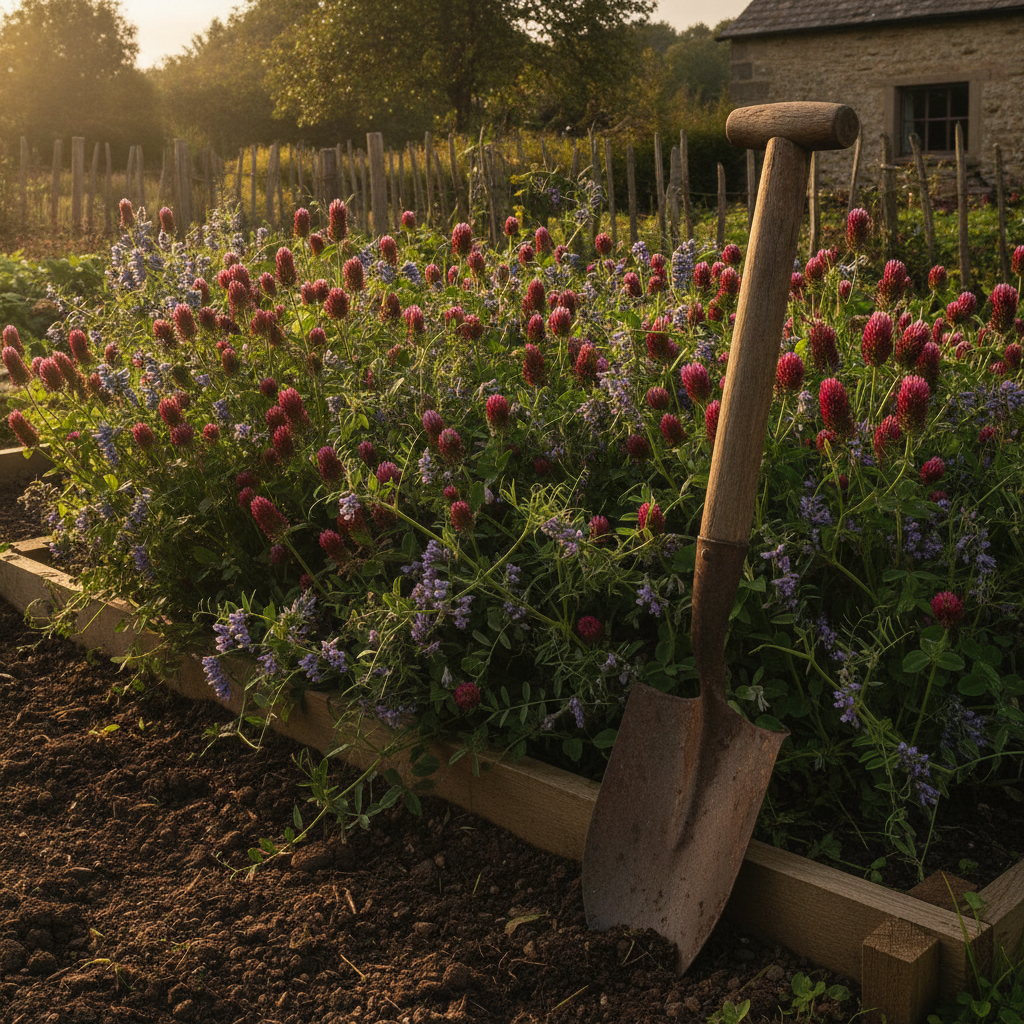
Green Manure Crops: The Plow-Under Secret
Before the first bag of synthetic nitrogen ever hit a store shelf, farmers were growing their own fertilizer — and then burying it alive. They called them green manure crops, and the technique was so effective that it fed the world’s soils for centuries without a single factory involved. If your garden soil feels tired, compacted, or just plain hungry, this forgotten practice might be exactly the reset it needs.
In this post, you’ll learn which plants work best as green manures, how to time your cut-and-dig for maximum nutrient release, and why this old rotation trick outperforms most store-bought soil conditioners. You’ll also walk away with a practical planting calendar you can start using this very season.
What Are Green Manure Crops — and Why Did Farmers Bury Them?
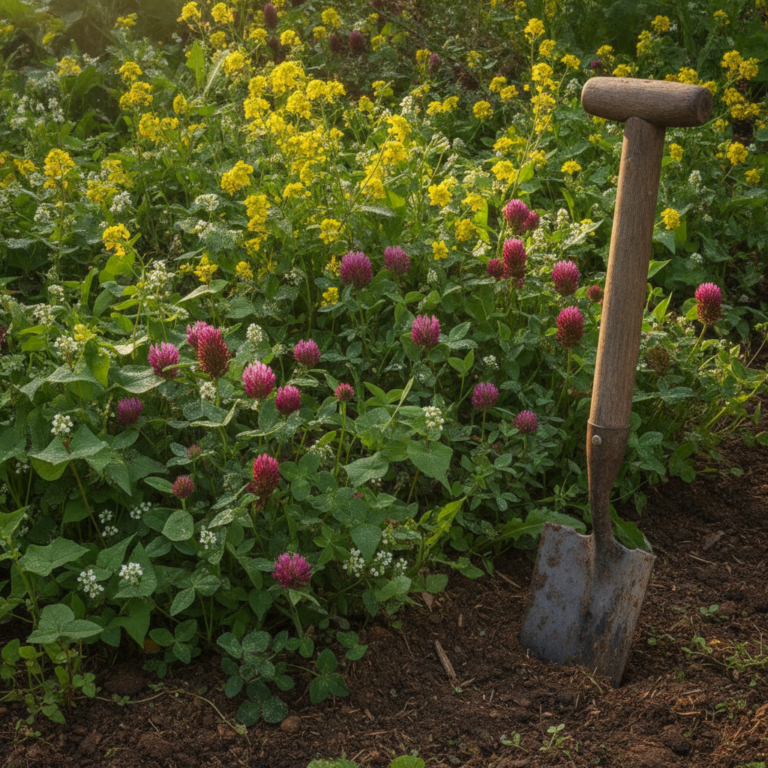
A green manure crop is any plant grown specifically to be chopped down and dug back into the soil while still fresh and green. You are not growing it to eat. You are growing it to feed the ground beneath your feet.
The logic is beautifully simple. Living plants pull carbon from the air, absorb minerals from deep in the soil profile, and build root networks that improve structure. When you bury that biomass at the right moment, all of those resources decompose in place. Microbes feast on the fresh organic matter, releasing nitrogen and other nutrients in a slow, steady form that future crops can actually use.
Before synthetic nitrogen existed, this was standard farm practice. Farmers rotated green manure crops into every field as a matter of survival. Somewhere along the way, the fertilizer bag replaced the shovel — and most home gardeners never learned what they were missing.
If you want to understand what your soil is actually asking for before you start, take a look at Soil Sense Without the Lab: Read Your Dirt, Fix It Fast. Knowing your starting point makes green manuring even more effective.
The Best Green Manure Crops for Home Gardens
Not every plant makes an equally good green manure. The best ones either fix their own nitrogen from the air, produce enormous amounts of leafy biomass, or both. Here are the top performers, organized by season.
Spring and Summer Options
Crimson Clover is one of the finest all-around green manures you can grow. It is a legume, which means it partners with soil bacteria to pull nitrogen directly from the atmosphere. A thick stand of crimson clover can fix between 100 and 150 pounds of nitrogen per acre. For a home garden bed, that translates to a genuinely meaningful fertility boost.
Buckwheat grows incredibly fast in warm weather — ready to turn under in as little as five to six weeks. It is not a legume, so it does not fix nitrogen. However, it produces dense, succulent biomass and is exceptionally good at scavenging phosphorus from the soil, making it available for the next crop. It also smothers weeds almost completely.
Cowpeas (Southern Peas) thrive in heat and drought. They fix nitrogen aggressively, grow fast, and produce heavy vine growth that breaks down quickly once buried. Perfect for summer fallow beds in warmer climates.
Fall and Overwintering Options
Winter Rye is the workhorse of cool-season green manures. It germinates in cold soil, grows steadily through autumn, survives frost, and puts on a big flush of growth in early spring. Its extensive root system breaks up compaction and adds significant organic matter when turned under.
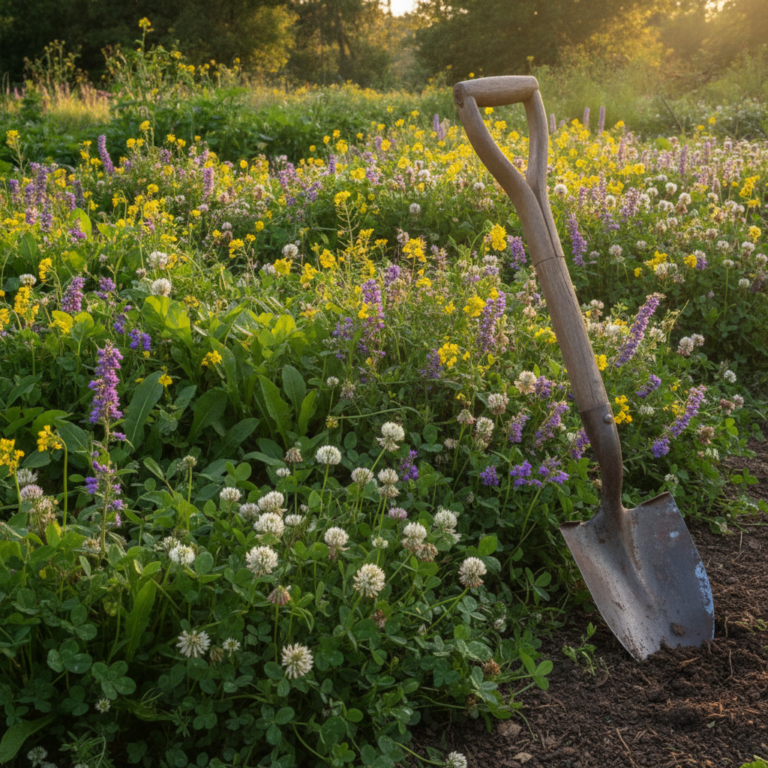
Hairy Vetch is a cool-season legume that fixes substantial nitrogen over winter. It is remarkably cold-hardy and pairs beautifully with winter rye — the rye supports the vetch’s vining habit, and together they create a dense, weed-suppressing mat.
Field Peas are another excellent fall choice for zones 5 and warmer. They establish quickly, fix nitrogen, and winter-kill in colder regions, leaving a ready-to-dig mat of soft biomass by spring.
How to Time the Cut-and-Dig for Maximum Nitrogen Release
Timing is everything with green manure crops. Bury them too early, and you lose potential biomass. Wait too long, and the stems turn woody and decompose slowly — locking up nitrogen instead of releasing it.
The sweet spot is just before or at the very beginning of flowering. At this stage, the plants contain maximum nitrogen and water content. The tissue is still soft and tender, which means soil microbes can break it down rapidly. Within two to four weeks of burial, a significant flush of available nitrogen enters the soil.
Here is the practical process:
- Mow or cut the crop down to a few inches above the soil surface.
- Let the cut material wilt for one to two days — this prevents it from re-rooting.
- Turn the material into the top six to eight inches of soil with a fork or spade.
- Water if the soil is dry, then wait two to three weeks before planting your main crop.
That waiting period matters. Fresh green material temporarily ties up soil nitrogen as it decomposes. Give microbes time to do their work, and your next planting will step into genuinely enriched soil.
If you want to plan your green manure rotation around your broader growing calendar, Climate-Proof Your Crops: A 30-Day, Microclimate–Aware Planting Plan is an excellent companion resource.
Why Green Manure Crops Outperform Most Bagged Amendments
Here is something the fertilizer aisle will never tell you: most bagged amendments deliver a narrow range of nutrients in a form your soil cannot always use efficiently. Green manures work differently.
First, they improve soil structure physically. Roots penetrate compacted layers and leave behind channels when they decompose. This improves drainage, aeration, and water-holding capacity simultaneously — something no granular amendment can do.
Second, the nutrients released from decomposing green matter are tied to organic compounds. They release slowly, in sync with microbial activity, rather than flooding the soil in a soluble spike. That means less leaching, more efficient uptake, and a more balanced soil ecosystem over time.
Third, green manure crops suppress weeds, reduce erosion, and keep soil biology active during fallow periods. A bare bed in between crops is a missed opportunity. A bed covered in buckwheat or clover is a bed actively building future fertility.
Fourth — and perhaps most importantly — green manures are essentially free once you have a seed source. Many can be direct-seeded at the cost of a few cents per square foot.
This is the kind of layered, low-input thinking that sustainable gardeners build their entire practice around. If you are just starting to develop that approach, Layered Learning: A Gardener’s Progressive System That Grows with You is worth bookmarking.
A Practical Green Manure Planting Calendar
Below is a seasonal framework you can adapt to your climate zone. Use it as a starting template and adjust timing by two to four weeks depending on your first and last frost dates.
Early Spring (4–6 Weeks Before Last Frost)
Sow field peas or winter rye into beds that will not be planted until early summer. Turn under four to five weeks after sowing, or at first flower.
Late Spring to Early Summer (After Last Frost)
Sow buckwheat or cowpeas into empty beds. These grow fast in warm soil. Turn under in five to six weeks. Wait two weeks, then plant your summer crops.
Midsummer (Into Fallow Beds)
Sow a second round of buckwheat or a heat-tolerant clover such as Balansa clover into any bed finishing its spring crops. This suppresses late-summer weeds and builds fertility for fall planting.
Late Summer to Early Fall (6–8 Weeks Before First Frost)
Sow hairy vetch and winter rye together as an overwintering mix. They will grow through autumn, survive the winter in most zones, and be ready to turn under in early spring — just in time to enrich beds for your first transplants.
Fall (Before Ground Freezes)
In milder climates, sow crimson clover for a late-season nitrogen fix. In colder zones, focus on winter rye alone as a soil-protecting cover that will be turned under in spring.
If you are building out a more complete seasonal gardening system, Garden Storylines: A Month-by-Month Narrative Approach to Grower Growth offers an excellent framework for weaving practices like this into a full-year rhythm.
Getting Started This Season
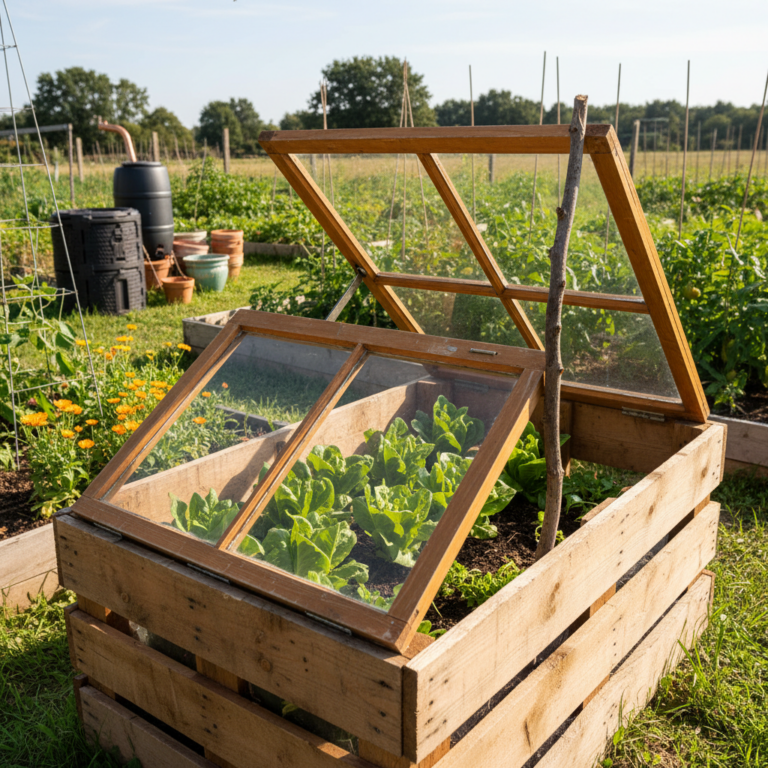
You do not need a large garden to make green manuring work. Even a single four-by-eight-foot raised bed can benefit from a fast buckwheat rotation between crops. The key is to never leave soil bare and idle when you could be feeding it instead.
Start with one bed this season. Sow buckwheat after your spring harvest. Watch it grow. Cut it at first flower, dig it in, and wait three weeks. Then plant your fall crops and notice the difference in how those plants establish. That single cycle will teach you more about living soil than any bag of fertilizer ever could.
Green manure crops are not a complicated technique. They are simply the practice of treating your soil as a living system that needs to be fed — not just depleted and replenished with chemistry. Your grandparents knew this. The farmers who grew food for centuries before synthetic inputs knew this. And now, so do you.
The shovel is waiting. The seeds are inexpensive. The soil is ready to be remembered.