Green Manure Crops: The Plow-Under Secret
Before the first bag of synthetic nitrogen ever appeared on a store shelf, farmers already knew how to feed their soil for free. They grew green manure crops — specific plants cultivated purely to be chopped down and buried while still green and leafy. No bags, no mixing, no guesswork. Just living biology returned straight to the earth. If you have ever wondered why your grandparents never seemed to need much fertilizer, this might be exactly the secret they carried.
What Are Green Manure Crops, Exactly?
A green manure crop is any fast-growing plant you deliberately grow and then turn into the soil before it sets seed. The goal is not harvest. The goal is soil food.
When you bury fresh, nitrogen-rich plant material, soil microbes get to work immediately. They break it down, release stored nutrients, and weave new organic matter into the soil structure. The result is looser, darker, more alive soil — sometimes within a single season.
This is fundamentally different from compost. Compost is decomposed before it reaches your beds. Green manures decompose inside your beds, feeding soil life in place. That distinction matters more than most gardeners realize.
If you are still learning how to read what your soil actually needs, the post Soil Sense Without the Lab: Read Your Dirt, Fix It Fast gives you a smart, chemical-free starting point before you even pick your first green manure seed.
The Best Green Manure Crops for Home Gardeners
Not every plant works equally well as a green manure. The best ones are fast-growing, easy to cut, and ideally nitrogen-fixing — meaning they pull nitrogen from the air and store it in their roots. Here are the top performers.
Legumes: The Nitrogen Factories
Legumes are the gold standard for green manure crops. Their root nodules host bacteria that fix atmospheric nitrogen into a form your soil can use directly.
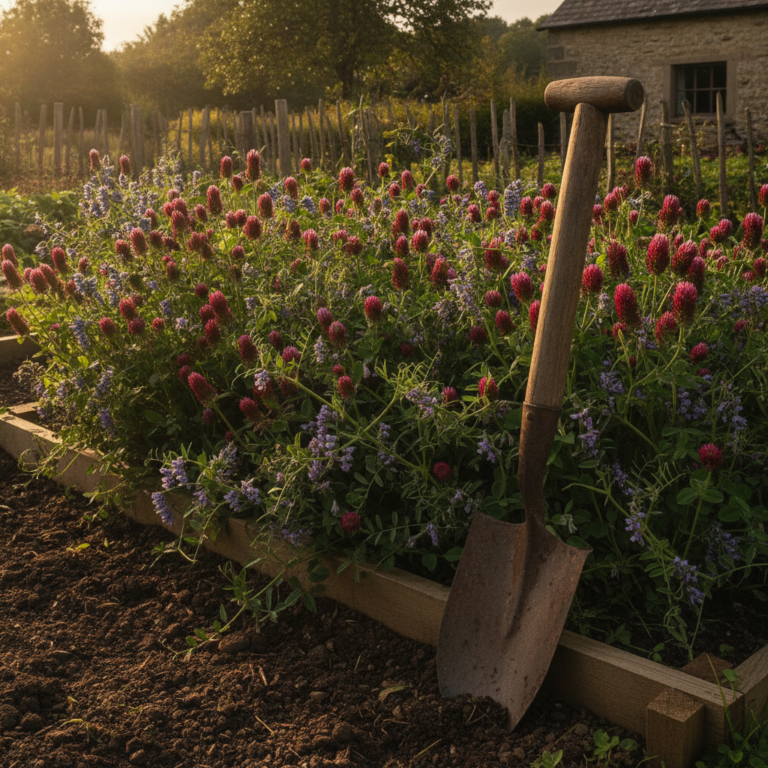
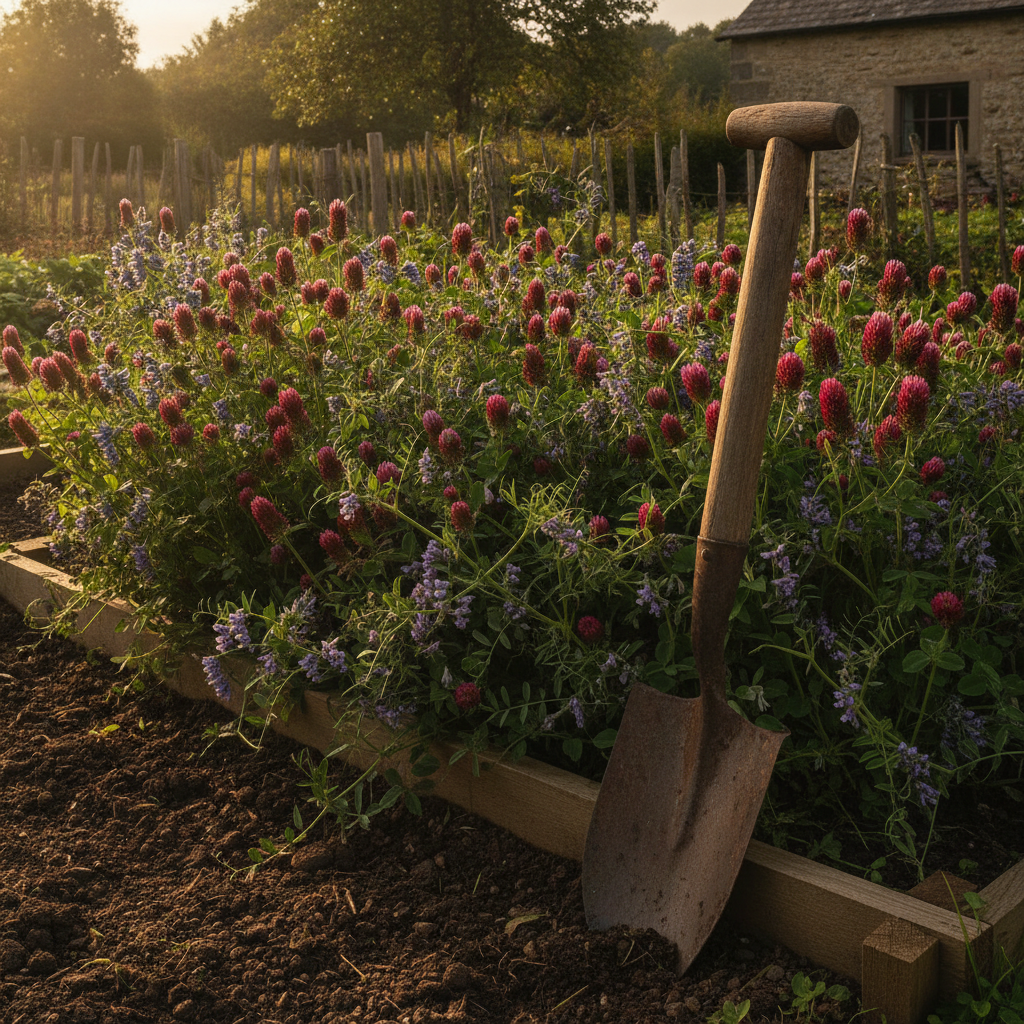
- Crimson Clover — Beautiful, cold-tolerant, and one of the most reliable nitrogen fixers. Great for spring and fall planting.
- Hairy Vetch — A powerhouse nitrogen fixer that handles hard winters. Especially useful before heavy-feeding crops like corn or tomatoes.
- Field Peas — Fast-growing and easy to turn under. Excellent in cool spring or autumn windows.
- Fava Beans — Fix more nitrogen than almost any other cover crop. Ideal in mild-winter climates.
Non-Legumes Worth Knowing
Legumes fix nitrogen, but non-legume green manures add organic matter, suppress weeds, and break up compacted soil.
- Buckwheat — Incredibly fast, ready to cut in just 5–6 weeks. Suppresses weeds aggressively and opens up heavy clay soils.
- Phacelia — Stunning purple flowers, beloved by pollinators, and one of the quickest to decompose after burial.
- Winter Rye — Tough, cold-hardy, and brilliant for protecting bare soil through winter before a spring turn-under.
- Mustard — Acts as a mild soil fumigant, suppressing certain soil-borne diseases while adding organic matter.
Timing the Cut: When to Chop and Bury
Timing is everything with green manure crops. Cut too late and the stems become woody and slow to decompose. Cut too early and you lose the maximum nutrient accumulation the plant has been building.
The sweet spot for most green manures is just before or at first flower. At this stage, the plant holds peak nitrogen and sugar in its tissues. It is still soft enough to break down quickly once buried. You want the knife to go in before seeds form.
Here is the practical rule: chop and dig two to three weeks before you plan to plant your next crop. That gap gives soil microbes enough time to begin breaking down the fresh material without leaving raw, partially decomposed plant matter that could temporarily lock up nitrogen.
How Deep Should You Bury?
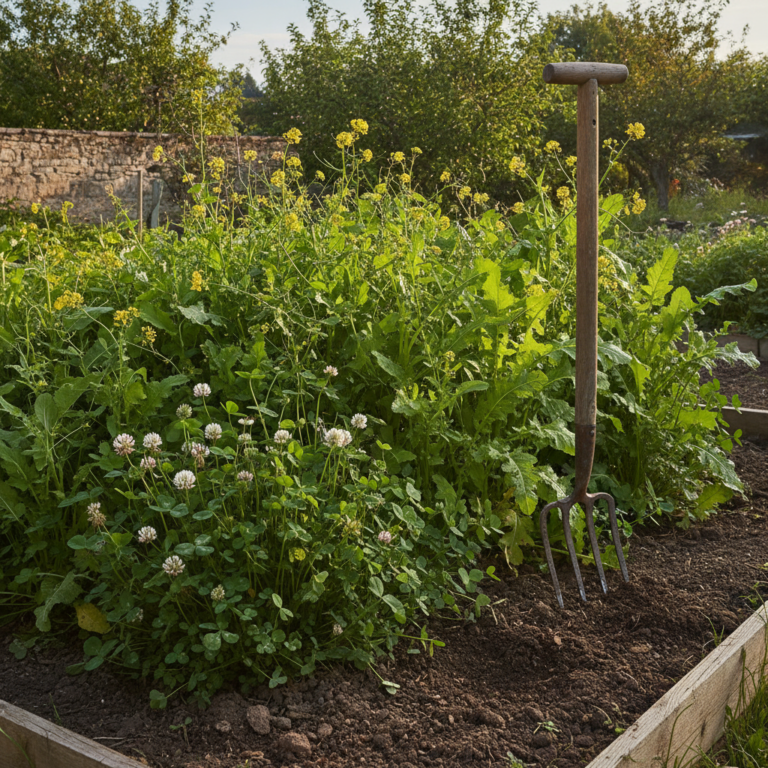
You do not need to bury deeply. Six to eight inches is enough. Chop the green tops roughly with a spade or sharp hoe, fold the material into the top few inches of soil, and firm it down gently. In warm weather, breakdown begins within days. In cool weather, allow a full three weeks before planting.
A garden fork is your best friend here. If you want guidance on choosing tools that actually hold up season after season, Tools That Grow with You: Durable Gear and Smart Maintenance for Every Skill Level is a reliable reference.
A Practical Green Manure Planting Calendar
The beauty of green manure crops is that they fit into the gaps your garden already has. Empty beds between seasons are wasted opportunity. Here is how to use them.
Spring (March–May)
As soon as soil can be worked, sow field peas or crimson clover. These tolerate light frost and establish quickly. By late spring or early summer, cut and bury them two to three weeks before planting tomatoes, squash, or beans.
Summer (June–August)
Buckwheat is your summer workhorse. Sow into any bed that will sit empty for six to eight weeks. It shades out weeds, attracts beneficial insects, and breaks down rapidly when turned under. A summer buckwheat rotation before a fall brassica planting is one of the most effective soil-building moves you can make.
Autumn (September–October)
After your summer crops finish, sow hairy vetch or winter rye immediately. These establish before frost and keep working through winter, protecting your soil from erosion and nutrient leaching. In spring, you turn them under and plant into genuinely enriched beds.
Winter (November–February)
In mild climates, fava beans sown in autumn can overwinter and fix impressive amounts of nitrogen by early spring. In cold climates, winter rye holds the fort and is turned under as temperatures rise.
For matching this calendar to your specific local conditions, the Climate-Proof Your Crops: A 30-Day, Microclimate–Aware Planting Plan will help you adjust timing based on your unique garden environment rather than generic dates.
Why Green Manure Crops Beat Most Store-Bought Conditioners
Here is the honest comparison most gardening content skips.
Bagged fertilizers deliver specific nutrients, often at the cost of long-term soil health. They feed the plant but not the soil life. Over time, soils managed with synthetic inputs tend to compact, lose microbial diversity, and require ever-increasing inputs to deliver the same results.
Green manure crops do the opposite. They feed soil microbes, improve structure, increase water retention, and build organic matter — all at once, and all for free. The investment is seed and time, not money and dependency.
Research consistently shows that soils regularly amended with green manures contain higher levels of beneficial fungi, bacteria, and earthworms than synthetically fertilized soils. That underground biology is what makes plants genuinely resilient — not just fed, but thriving.
Common Mistakes to Avoid
A few simple errors trip up first-time green manure gardeners. Avoid these and your results will be noticeably better.
- Letting them go to seed. Once seeds form, green manures become future weeds. Cut before seed set, always.
- Planting too close to harvest. Leave your two-to-three-week gap after burial. Impatient planting into fresh material can cause seedling problems.
- Using only one species. Mixing a legume with a non-legume — clover and rye, for instance — gives you nitrogen fixation plus organic matter in one pass.
- Forgetting dry spells. Newly seeded green manures need moisture to establish. If you are working with a dry or warm microclimate, check out Microclimate Makeovers: Simple Tweaks That Boost Yields Without Expanding Your Space for practical solutions.
Starting Your First Green Manure Rotation This Season
You do not need a large plot to start. A single raised bed or even a container-sized patch will show you the results firsthand. Choose one empty space, scatter clover or buckwheat seed, water it in, and watch what happens over the next six weeks.
When you cut and turn it under, dig a handful of soil from that bed and compare it to untreated soil nearby. You will likely notice it already smells earthier, darker, and crumblier. That change is real. That is what your grandparents were managing every season, quietly and effectively, before fertilizer bags existed.
Green manure crops are not a trend. They are a recovery — a return to understanding that the soil is not a medium to pour nutrients into, but a living system to work with. The more you give it, the more it gives back.
If you are building your gardening skills more broadly and want to connect this technique to a larger seasonal plan, the Layered Learning: A Gardener’s Progressive System That Grows with You is an excellent next step.
Start this season. Pick one bed. Grow your first green manure. Your soil will remember it.