Green Manure Crops: The Plow-Under Secret
Before synthetic nitrogen existed, farmers across every continent used green manure crops to rebuild exhausted soil. They didn’t buy bags of fertilizer. Instead, they grew specific plants, then chopped and buried them while still green — letting the soil itself do the digesting. The result was rich, dark, living earth that grew bigger harvests year after year. This ancient rotation trick is just as powerful today, and most home gardeners have never heard of it.
What Are Green Manure Crops and Why Do They Work?
A green manure crop is any plant grown specifically to be turned back into the soil before it sets seed. You’re not growing it to eat. You’re growing it to feed your ground. When you chop and bury the plant material at the right stage, soil microbes break it down rapidly — releasing nitrogen, carbon, and a cascade of trace minerals that synthetic fertilizers simply can’t replicate.
The magic happens because fresh plant tissue is full of soluble nutrients. Microbes feast on it quickly. That feeding frenzy warms the soil, aerates it with microbial tunneling, and produces the sticky compounds that hold soil particles together in crumbly, workable aggregates. No bag of granules does all that at once.
If you’ve been reading about how to understand what your soil actually needs, our guide to Soil Sense Without the Lab: Read Your Dirt, Fix It Fast pairs perfectly with this technique. Knowing your soil type helps you choose the right green manure for your conditions.
The Best Green Manure Crops for Home Gardens
Not every cover crop makes an equally good green manure. You want plants that grow fast, produce bulk, and ideally fix atmospheric nitrogen through root nodules. Here are the top choices organized by season.
Spring and Summer Green Manures
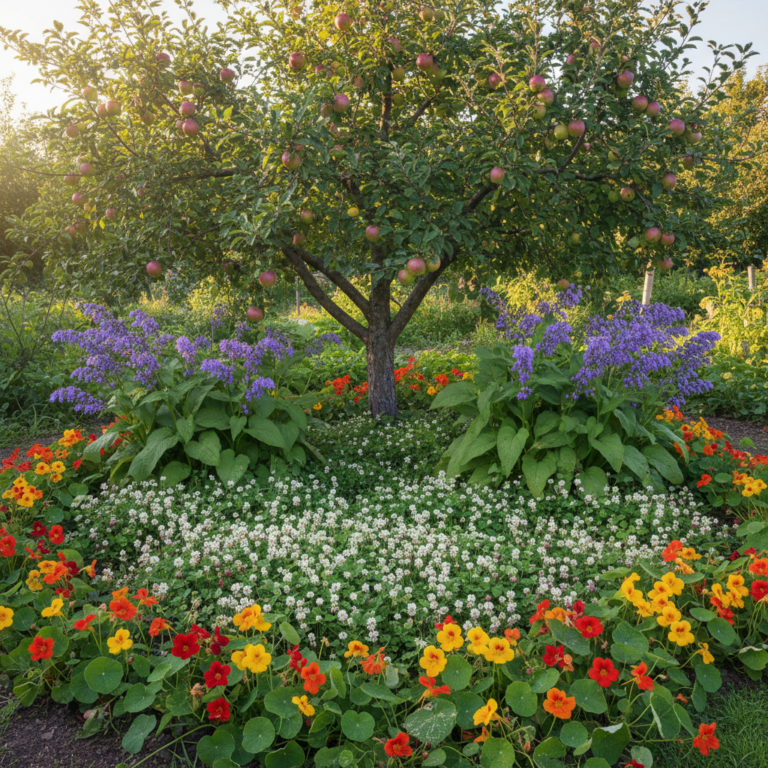
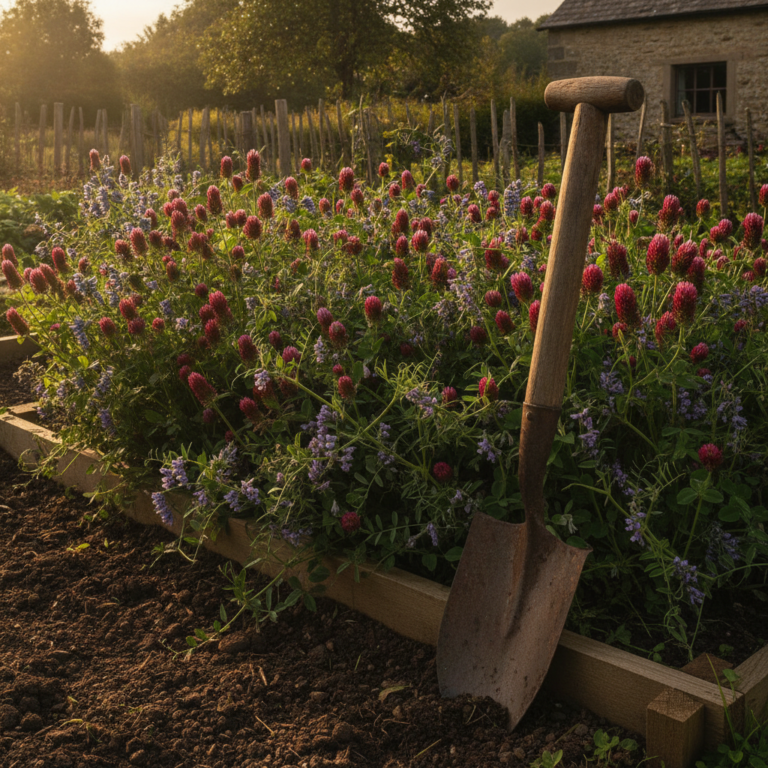
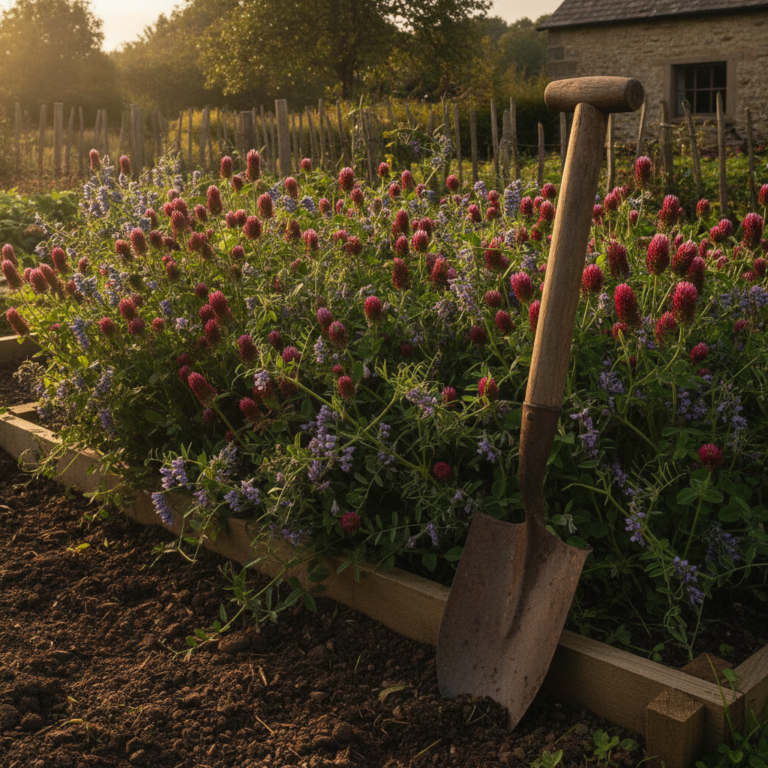
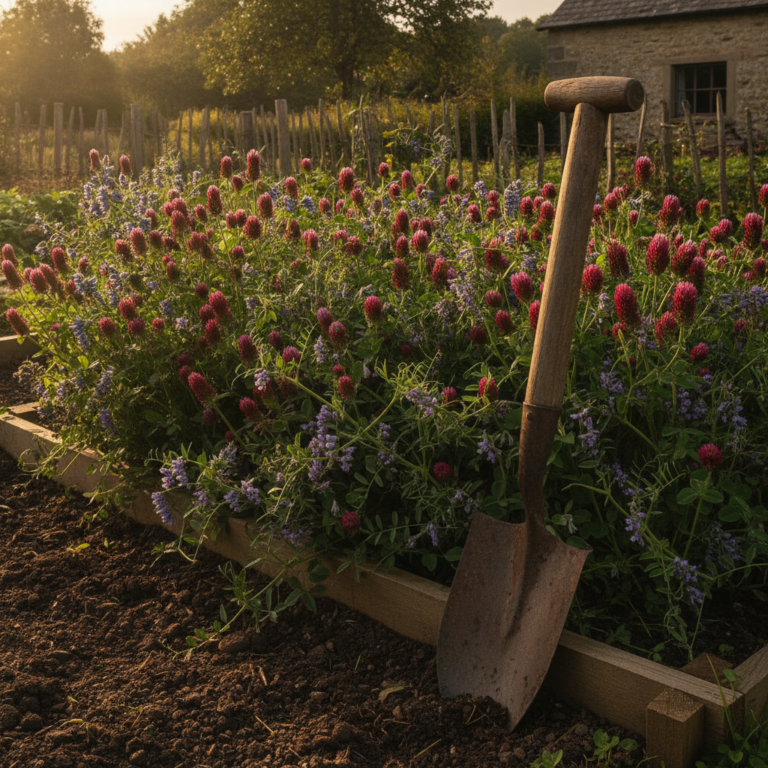
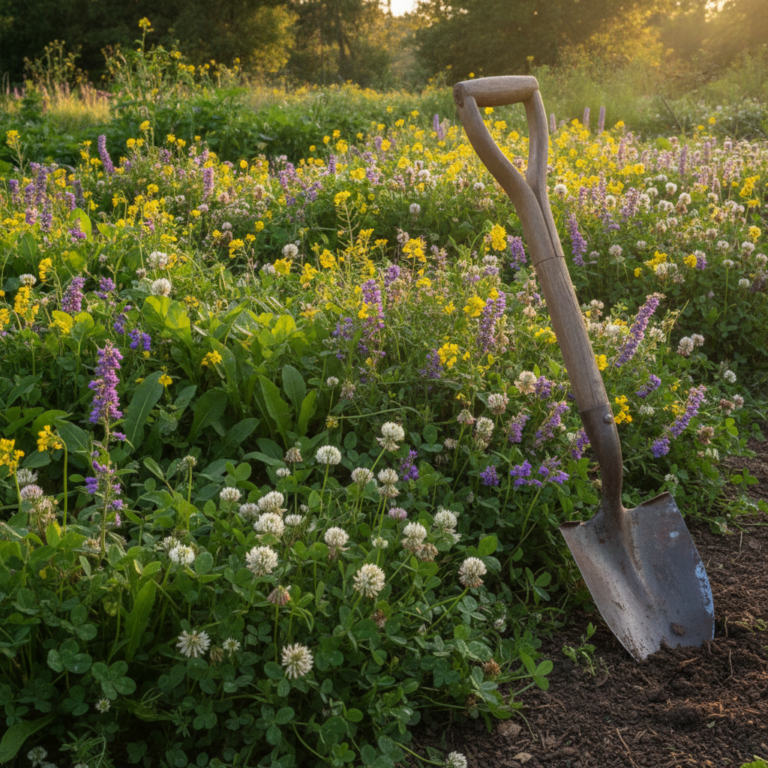
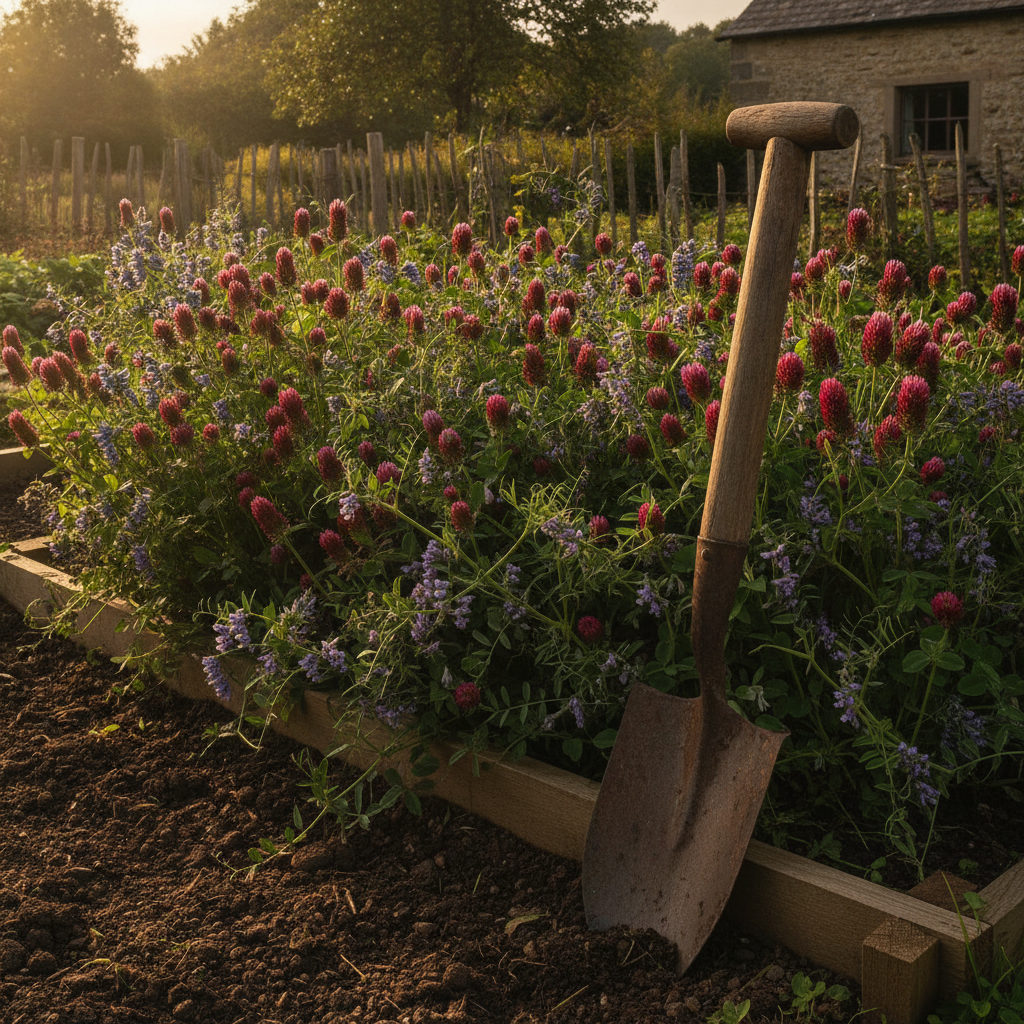
Crimson Clover is the gold standard for warm-season nitrogen fixing. It’s beautiful, draws pollinators, and fixes up to 200 pounds of nitrogen per acre when turned under at peak bloom. For a home garden bed, that translates to noticeably darker, looser soil within one season.
Buckwheat grows incredibly fast — smothering weeds in just three to four weeks. It doesn’t fix nitrogen, but it mines phosphorus from deep in the soil profile, making it available when you turn it under. It’s perfect for reclaiming neglected or compacted beds.
Cowpeas (Southern Peas) thrive in hot, dry summers when other crops sulk. They fix nitrogen aggressively and produce enormous amounts of leafy biomass. Plant them in July after early crops finish and you’ll have a ready-to-bury green manure by early September.
Fall and Winter Green Manures
Hairy Vetch is one of the most powerful nitrogen fixers available to home gardeners. It survives hard frosts, keeps growing in cold soil, and can fix 100–150 pounds of nitrogen per acre over a winter season. Turn it under in early spring before planting tomatoes or corn.
Winter Rye isn’t a nitrogen fixer, but its value lies in biomass. It produces massive root systems that break up clay, and its carbon-rich stems feed soil fungi when buried. Pair it with hairy vetch for a nitrogen-plus-carbon combination that’s almost unbeatable.
Field Peas are milder nitrogen fixers but germinate quickly in cool fall soil. They’re a good beginner choice because they’re forgiving, cheap, and easy to turn under before they get too woody.
How to Time the Cut-and-Bury for Maximum Nitrogen Release
Timing is everything with green manure crops. Turn them under too early and you lose biomass. Wait too long and the stems become woody — high in carbon, slow to break down, and temporarily locking up nitrogen rather than releasing it. The sweet spot is just before or at first flower.
At the flowering stage, plants are at peak nitrogen content. Leaves and stems are still soft and succulent. Soil microbes can break down this tender material in two to four weeks, releasing a flush of plant-available nitrogen right when your next crop needs it.
Here’s a simple three-step process:
- Cut or crimp the green manure using a sharp spade or scythe. Chop it into rough sections no longer than six inches.
- Dig or till it in to the top six to eight inches of soil. You don’t need to go deep. Surface incorporation keeps breakdown in the aerobic zone where microbes are most active.
- Wait two to four weeks before planting your next crop. During this window, microbial activity is intense. Planting too soon can cause seedling stress as gases from decomposition build up in the soil.
This waiting window is also a great time to plan your next succession. If you’re working on building a more intentional planting rhythm, the Climate-Proof Your Crops: A 30-Day, Microclimate–Aware Planting Plan gives you a framework for slotting green manure intervals into your overall garden calendar without losing growing time.
A Practical Green Manure Planting Calendar
Here’s a season-by-season schedule you can adapt to most temperate climates. Adjust timing based on your last and first frost dates.
Spring (March–May)
- Sow field peas or crimson clover as soon as soil can be worked.
- Turn under at first flower — typically 6 to 8 weeks after sowing.
- Wait 3 weeks, then plant summer crops like tomatoes, squash, or corn.
Summer (June–August)
- After early crops are harvested, sow buckwheat immediately.
- Buckwheat reaches flower stage in 35–45 days — turn under before seed sets.
- Follow with a quick succession crop or sow fall green manure.
Fall (September–October)
- Sow hairy vetch mixed with winter rye at a ratio of roughly 1:2 by weight.
- Let the mix overwinter and grow through early spring.
- Turn under in April when vetch begins flowering.
Winter (November–February)
- In mild climates, field mustard or phacelia can still be sown in protected beds.
- In cold climates, use this period to plan next year’s green manure rotations.
- Check seed catalogs and order hairy vetch, crimson clover, and cowpea seed.
For gardeners just starting to build their soil knowledge, our post on Smart Starts: A 4-Week Skill-Build Plan for Complete Garden Beginners offers a gentle on-ramp that includes soil-building basics alongside your first planting projects.
Why Green Manure Crops Outperform Bagged Amendments
Store-bought fertilizers deliver nutrients, but that’s almost all they do. Green manure crops do something fundamentally different. They rebuild the biological infrastructure of your soil. Every pound of buried plant matter feeds millions of bacteria, fungi, earthworms, and nematodes. That community of organisms is what transforms a dead, compacted patch of dirt into living, productive earth.
Bagged compost improves structure. Blood meal adds nitrogen. Kelp meal adds trace minerals. But none of them do all three things at once while also suppressing weeds, preventing erosion, and attracting beneficial insects during their growing phase. Green manures are working the entire time they’re in the ground — above and below the surface simultaneously.
There’s also the cost factor. A pound of hairy vetch seed costs a few dollars and covers a large bed. It will outperform fifty dollars of bagged fertilizer in terms of long-term soil improvement. The results compound every season you practice it.
Common Mistakes to Avoid
The most common error is waiting too long to turn the crop under. Once stems lignify and turn woody, breakdown slows dramatically. You shift from feeding your soil nitrogen to temporarily starving it. Watch your plants closely and act at first flower — don’t let life get in the way of the timing.
Second mistake: planting your food crop too soon after incorporation. Give the soil its two-to-four-week rest. Use that time productively — sharpen tools, start transplants indoors, or update your garden notes. If you’re not already keeping track of what works and what doesn’t in your garden, our Garden Journaling for Mastery: Ready-to-Use Templates and Prompts makes it simple to record green manure experiments and their results season by season.
Third mistake: skipping the practice entirely because the bed looks fine. Soil health is invisible until it isn’t. By the time your yields drop or your plants look stressed, years of depletion have already occurred. Green manure crops are preventive medicine for your garden — far easier than the cure.
Start This Season, Even in a Small Space
You don’t need a large plot to use green manure crops effectively. A single four-by-eight raised bed can be rested and replenished with a six-week buckwheat or clover rotation between your main crops. Even container gardeners can pot up a few clover plants to chop and add as a nitrogen-rich top dressing.
The old farmers who used these techniques weren’t doing anything mysterious. They were simply paying attention to what the soil needed and working with natural cycles rather than against them. Every time you grow and bury a green manure, you’re doing the same thing — and your soil will thank you for it in ways no fertilizer bag ever could.
Start small. Pick one bed. Sow crimson clover or buckwheat this season. Turn it under at flowering. Then plant your next crop and watch what happens. You’ll be a convert by harvest time.