Green Manure Crops: The Plow-Under Secret
Before the first bag of synthetic nitrogen ever hit a farm store shelf, farmers fed their soil a completely different way. They grew green manure crops — plants raised not to eat, not to sell, but to chop down and bury alive. This forgotten rotation trick built some of the most productive farmland in history. And the best part? You can do it in your backyard garden this season, with almost no cost and a lot of long-term payoff.
What Are Green Manure Crops and Why Did Farmers Love Them?
Green manure is simply a plant grown specifically to be turned back into the soil while it’s still green and actively growing. The idea sounds almost too simple. But the science behind it is quietly powerful.
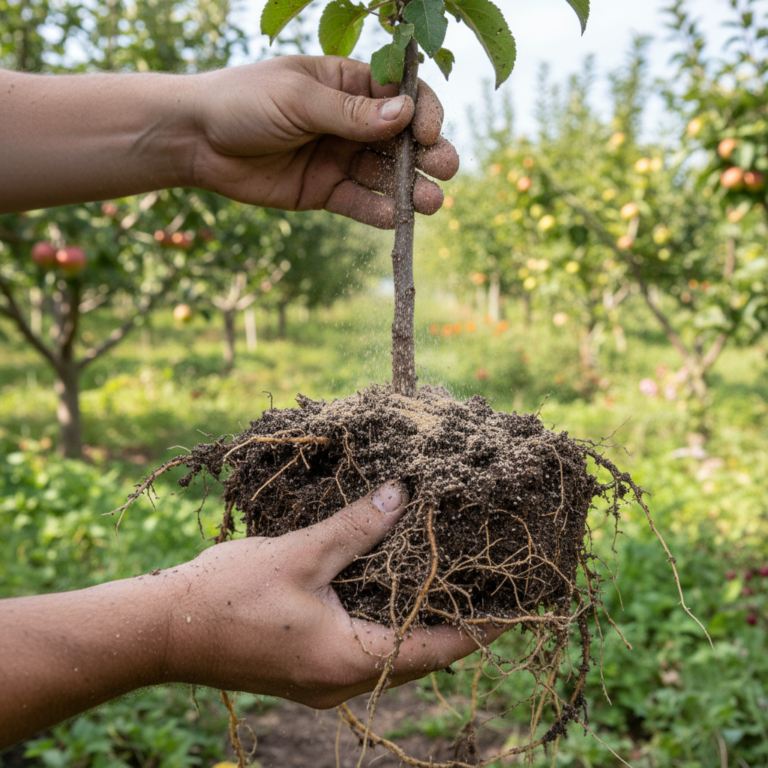
When you chop and dig in a young, leafy plant, you’re adding a rush of fresh organic matter right where your vegetables need it most — in the root zone. That organic matter feeds soil bacteria, improves drainage, and in the case of legumes, releases a genuine burst of nitrogen that rivals what you’d get from a bag of fertilizer.
Farmers used this technique for centuries. It showed up in ancient Rome, in traditional Asian rice paddies, and across the American prairie before chemical agriculture took over. Modern gardeners are rediscovering it — and finding it works just as well on a 10-by-10 bed as it did on a hundred-acre field.
If you’re still figuring out what your soil actually needs before you plant, take a few minutes to read Soil Sense Without the Lab: Read Your Dirt, Fix It Fast. Knowing your baseline makes the green manure strategy even more effective.
The Best Green Manure Crops for Home Gardeners
Not every plant makes a good green manure. You want fast growth, high nitrogen content or high organic bulk, and an easy kill. Here are the top performers worth knowing:
Legumes: The Nitrogen Fixers
Legumes are the stars of the green manure world. Their roots form partnerships with bacteria that pull nitrogen straight from the air and lock it into the soil. When you turn them under, all that stored nitrogen becomes food for your next crop.
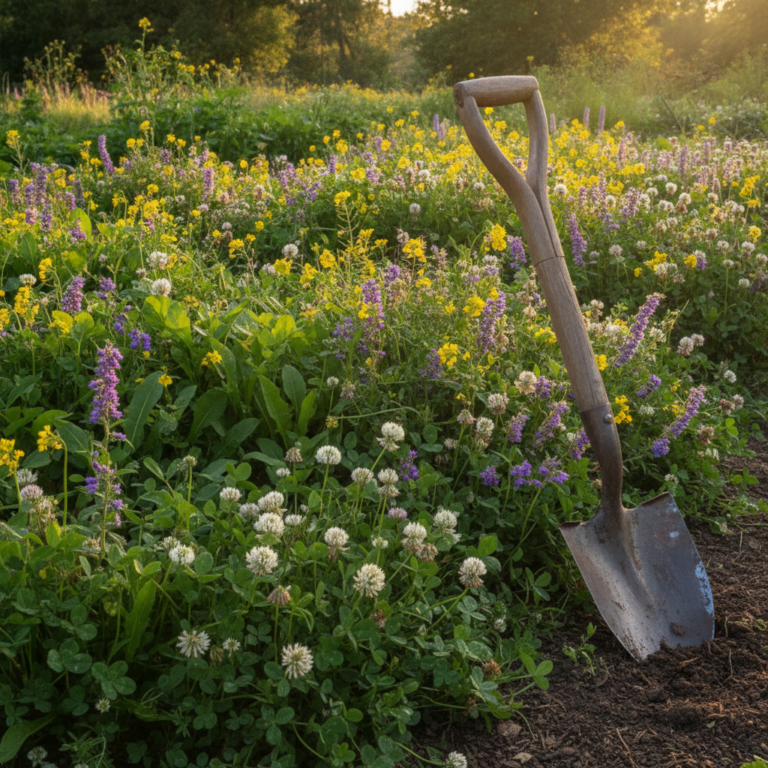
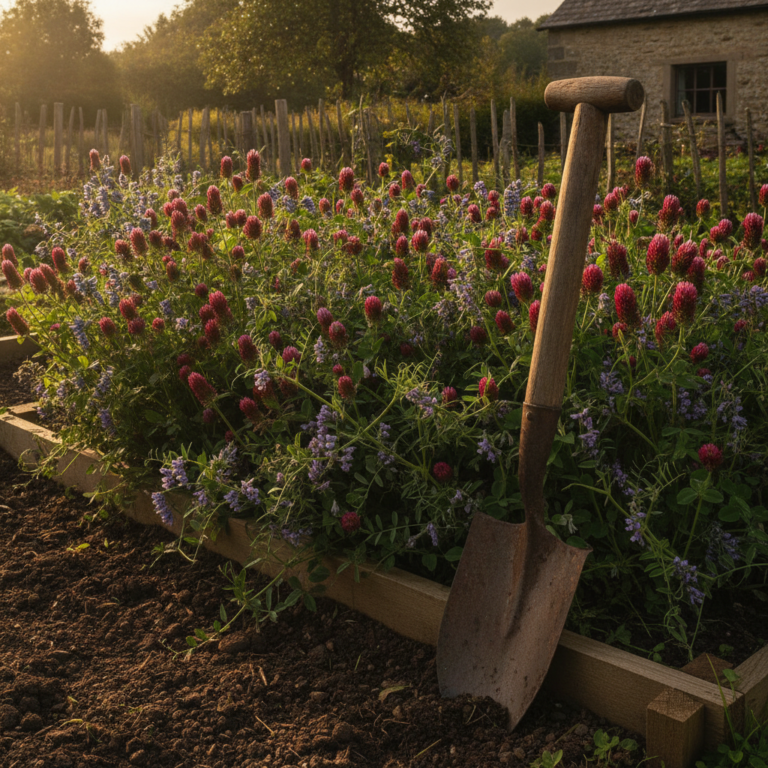
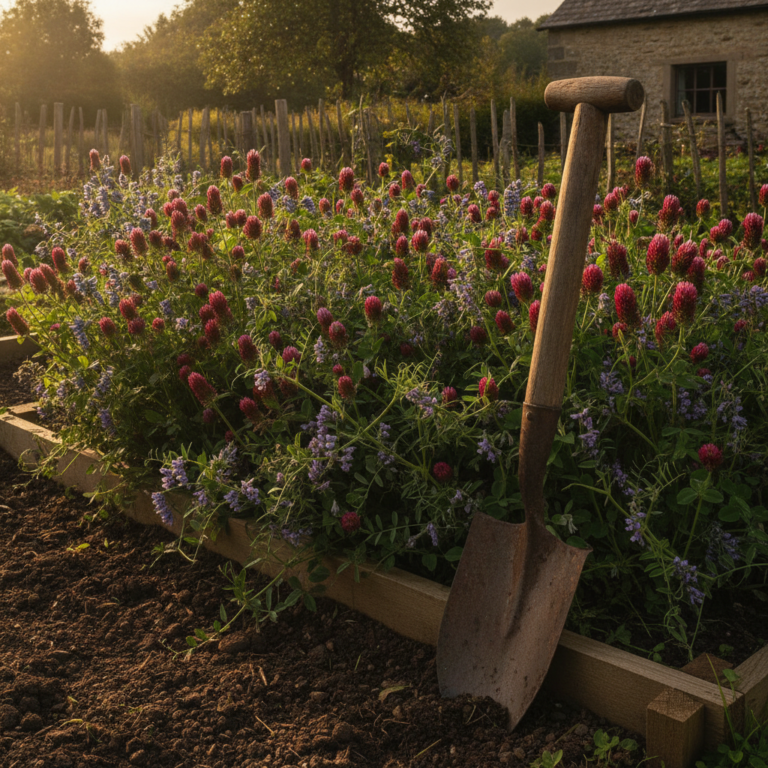
- Crimson clover — Fast-growing, beautiful in bloom, fixes up to 200 lbs of nitrogen per acre. Excellent for spring and fall planting.
- Field peas (Austrian winter peas) — Hardy, cold-tolerant, and quick to establish. Great for early spring or fall rotations.
- Hairy vetch — A powerhouse nitrogen fixer. Slightly slower to establish, but produces massive organic matter when turned under.
- Fava beans — Deep-rooted and frost-tolerant. Especially good for breaking up compacted soil while fixing nitrogen.
Non-Legumes: The Organic Matter Builders
These crops don’t fix nitrogen, but they build soil structure in ways legumes can’t. Use them when you need to add bulk, suppress weeds, or break disease cycles.
- Buckwheat — Grows fast in summer heat. Scavenges phosphorus from the subsoil and brings it to the surface. Smothers weeds aggressively.
- Oats — A cool-season workhorse. Adds masses of organic matter and winter-kills in most climates, making spring tillage easy.
- Phacelia — A somewhat obscure European favorite. Grows quickly, produces stunning purple flowers that attract pollinators, and breaks down fast after cutting.
- Mustard — A biofumigant as well as a soil builder. The glucosinolates released as it breaks down can suppress soilborne pathogens and nematodes.
Mixing legumes with non-legumes gives you the best of both worlds — nitrogen fixation and organic bulk in a single planting.
How to Time the Cut-and-Dig for Maximum Nitrogen Release
Timing is everything. Cut too early and you lose organic mass. Cut too late — especially after flowering — and the plants shift from building nitrogen to building seeds. That nitrogen you wanted for your tomatoes gets locked up in woody stems instead.
The golden window is just before or at first flower. At that point, the plants are at peak nitrogen content, the stems are still soft enough to break down quickly, and the root system is fully developed.
Here’s a simple rule to follow: chop and dig at least three to four weeks before you plan to plant your next crop. This gives the green material time to break down and start releasing nutrients rather than competing with your seedlings for nitrogen as it decomposes.
Step-by-Step: The Plow-Under Process
- Mow or chop the green manure crop down to a few inches above the soil.
- Let it wilt for one to two days. This makes it easier to work in.
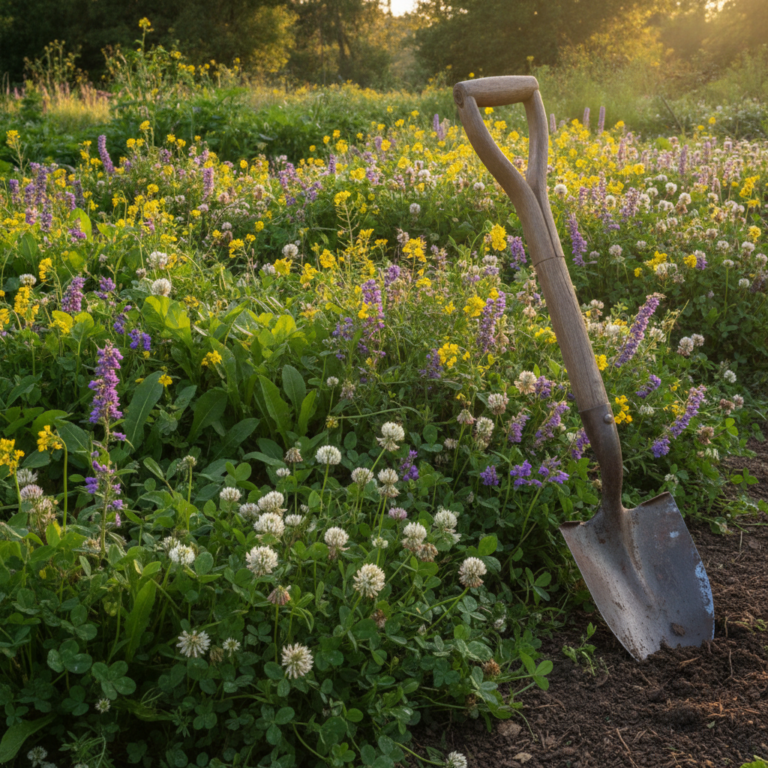
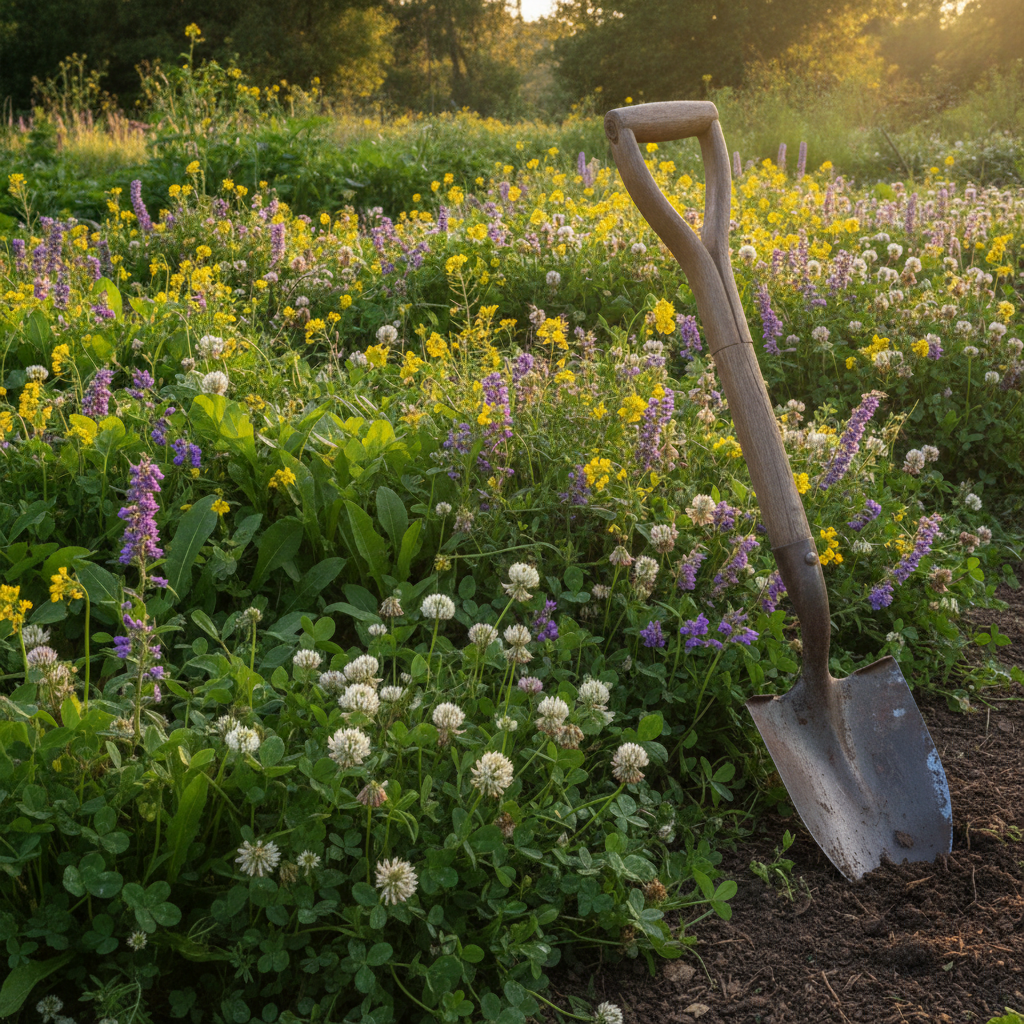
- Turn it under with a spade or fork to a depth of four to six inches. You don’t need to bury it deeply — just get it covered.
- Water the bed if it’s dry. Decomposition needs moisture to work.
- Wait three to four weeks. Then plant as usual.
In small raised beds, a broadfork and a sharp spade are your best friends here. If you’re unsure which tools hold up best for this kind of work, Tools That Grow with You: Durable Gear and Smart Maintenance for Every Skill Level has solid, practical guidance.
A Practical Green Manure Planting Calendar
The beauty of this system is that there’s almost no gap in your season. You’re either growing food or feeding your soil. Here’s a simple rotation you can start using right now:
Spring (March–May)
As soon as soil can be worked, sow field peas or crimson clover into any empty beds. These establish fast in cool conditions. Cut and turn under in late May or early June — four weeks before transplanting summer crops.
Early Summer (June–July)
After harvesting spring greens or early crops, sow buckwheat into the cleared bed. It germinates in days and fills the space for four to six weeks. Cut just before it flowers fully. Then plant fall crops in late July or August.
Late Summer to Fall (August–October)
After summer crops come out, sow hairy vetch mixed with oats. This is the classic overwinter combination. Oats winter-kill in most zones, leaving the vetch to fix nitrogen through early spring. Turn the whole thing under in April.
Winter (November–February)
In mild climates, fava beans or Austrian winter peas can go in for an overwintering green manure. In cold zones, let the vetch-oat mix do its work undisturbed.
This calendar works especially well when combined with a solid understanding of your garden’s microclimates. Some beds warm up weeks earlier than others. Knowing which beds to seed first — and which to protect — can dramatically improve your results. Mapping Your Garden Microclimates: Turn Sun, Wind, and Shade into Higher Yields is a great companion read for this kind of seasonal planning.
Why Green Manure Crops Beat Most Bagged Amendments
Bags of fertilizer give you numbers. Green manure crops give you life.
When you turn under a living crop, you’re not just adding nutrients. You’re adding carbon, which feeds the fungal networks in your soil. You’re adding root channels, which improve drainage and aeration. You’re feeding billions of bacteria that, in turn, make other nutrients more available to your plants.
A bag of 10-10-10 fertilizer does none of that. It gives a short-term nutrient hit and then it’s gone. After a few seasons of using green manure crops consistently, your soil structure changes in ways that store-bought products simply can’t replicate.
There’s also a financial case. A small packet of clover or field pea seed costs a dollar or two and covers a bed. One season of green manuring can replace multiple bags of compost, bone meal, and blood meal combined.
If you’re just getting started with this kind of thinking and want a broader path into organic methods, Layered Learning: A Gardener’s Progressive System That Grows with You lays out a really clear way to build these skills one step at a time.
Common Mistakes to Avoid
Even a simple technique like this has a few pitfalls worth knowing about before you start.
- Letting it go to seed. Always cut before the plant sets seed. Otherwise you’re planting next season’s weed problem.
- Planting too soon after turning under. Decomposing green matter temporarily ties up nitrogen. Wait the full three to four weeks.
- Skipping the wilt step. Fresh, turgid stems are hard to dig in cleanly. Let them wilt a day or two first.
- Using the same family year after year. Rotate your green manure crops just like your food crops to avoid building up pests or diseases.
Start This Season — Even in a Small Space
You don’t need acres of farmland to make green manure crops work for you. A single raised bed can run a full rotation. Even a container garden benefits from adding chopped buckwheat or clover to the potting mix at the end of each season.
The old farmers weren’t just being thrifty when they buried their crops. They were building something that took years to fully understand — a living, self-sustaining soil ecology that made every season better than the last.
Start with one bed. Sow some crimson clover or field peas this week. Watch it grow, cut it at first flower, and dig it in. Then stand back and watch what your soil does over the next growing season.
That’s the plow-under secret. It was never really a secret at all. It was just waiting for you to rediscover it.