Green Manure Crops: The Plow-Under Secret
Long before a bag of synthetic nitrogen ever sat on a garden center shelf, farmers had a quiet secret: they grew crops they never planned to harvest. They planted them, let them bulk up, then chopped them down and buried them alive. This was the power of green manure crops — and it worked so well that modern soil science is only now catching up to explain why. If you’re tired of feeding your garden from a bag, this old-time technique is worth a serious look.
What Are Green Manure Crops, Exactly?
A green manure crop is any plant grown specifically to be cut down and incorporated into the soil while it’s still green and full of nutrients. The goal is not a harvest. The goal is to feed the earth itself.
Think of it as composting in reverse. Instead of collecting organic matter and piling it up outside the bed, you grow the organic matter inside the bed — right where it’s needed. When you turn it under, soil microbes go to work immediately, breaking down the plant tissue and releasing nitrogen, phosphorus, and a cascade of trace minerals.
This is not a fringe idea. It’s one of the oldest soil-building methods on record. Roman farmers used lupins as green manures. Asian rice paddies have been planted with Azolla fern for centuries. Your great-grandparents likely called it a “turn-under crop” and rotated it between every vegetable bed without thinking twice.
The modern garden world largely replaced this practice with bagged amendments. But if you want to understand your soil more deeply, start with Soil Sense Without the Lab: Read Your Dirt, Fix It Fast — because knowing what your soil lacks will help you choose exactly the right green manure to fill the gap.
The Best Green Manure Crops for Home Gardeners
Not all plants make equally good green manures. The best ones grow fast, produce a lot of biomass, and — ideally — fix nitrogen from the air through root-dwelling bacteria. Here are the top choices to know.
Nitrogen Fixers (Legumes)
These are the heavy hitters. Legumes form partnerships with Rhizobium bacteria in their roots, pulling nitrogen directly from the atmosphere and locking it into the soil when turned under.
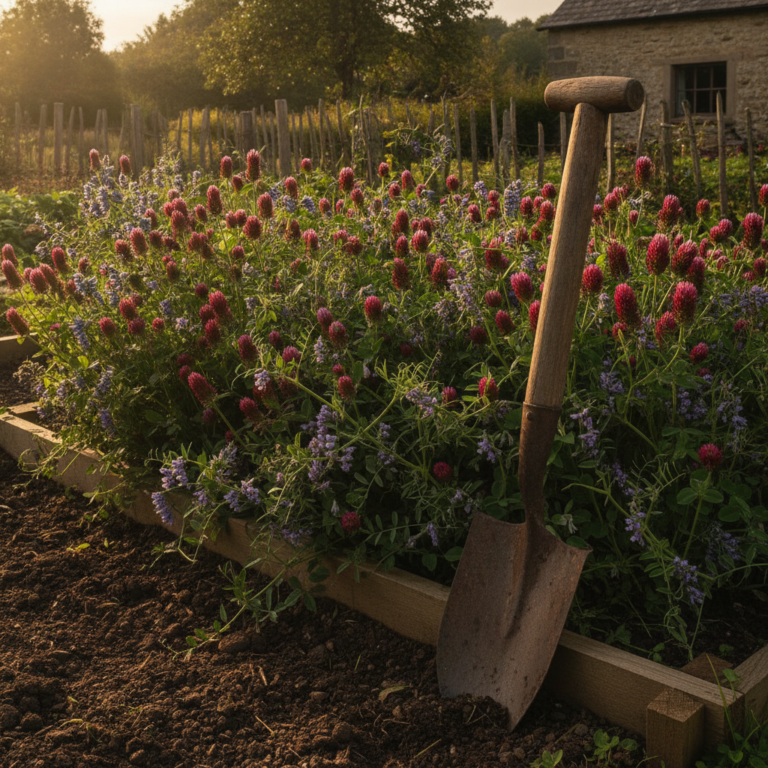
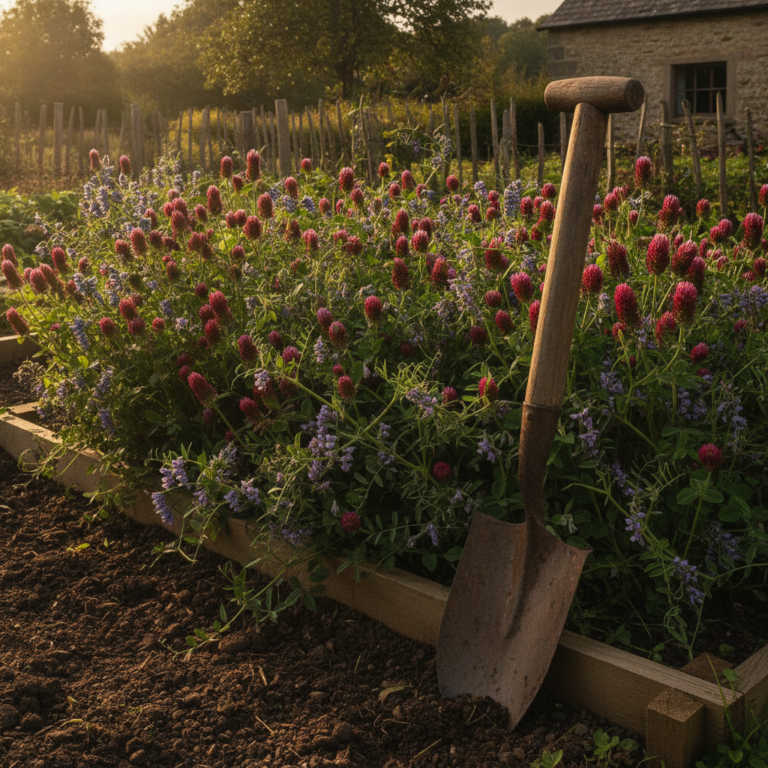
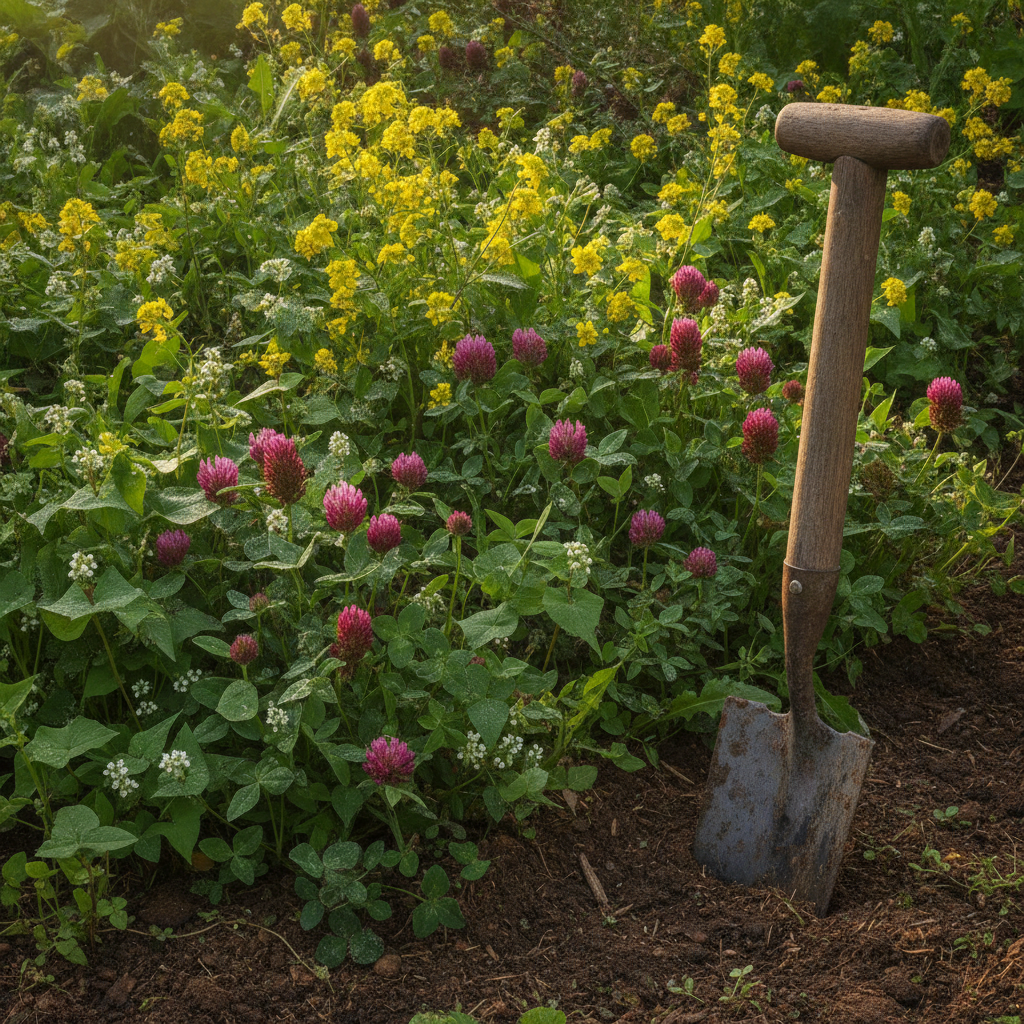
- Crimson Clover — Fast-growing, frost-tolerant, and wildly attractive to pollinators before you cut it. Fixes up to 150 lbs of nitrogen per acre.
- Field Peas (Austrian Winter Peas) — Excellent cold-season green manure. Plant in early spring or fall.
- Fava Beans — Deep-rooted and powerful. Great for breaking up compacted subsoil while feeding the surface.
- Hairy Vetch — One of the best nitrogen fixers available. Pairs beautifully with rye as a mixed cover crop.
Biomass Builders (Non-Legumes)
These don’t fix nitrogen, but they add enormous amounts of organic matter, suppress weeds aggressively, and improve soil structure dramatically.
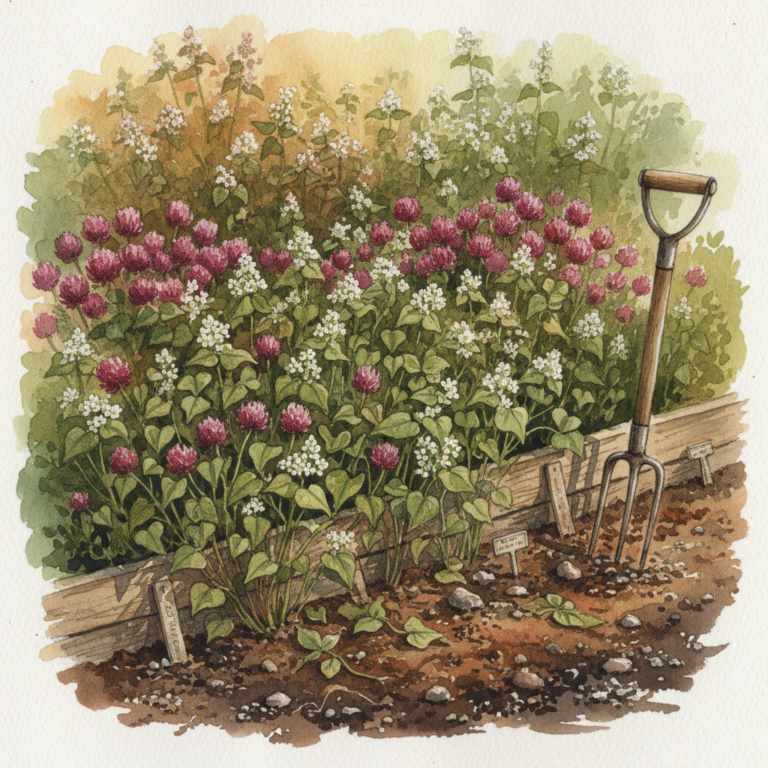
- Buckwheat — The summer standout. Germinates in days, smothers weeds, and unlocks phosphorus that was locked in the soil. Ready to turn under in just 5–6 weeks.
- Mustard — Acts as a mild biofumigant, suppressing soil-borne pathogens as it breaks down. Brilliant between vegetable rotations.
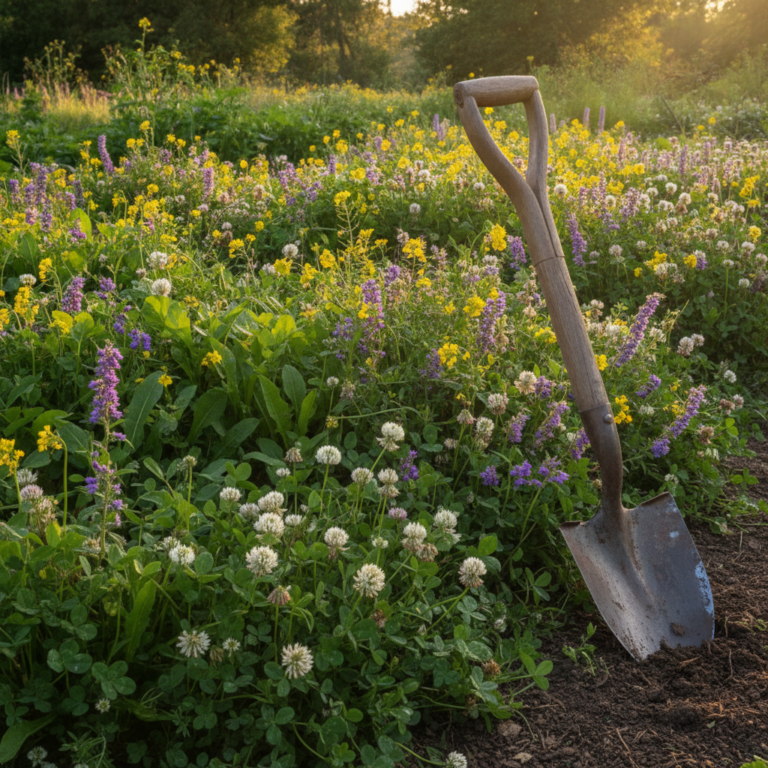
- Phacelia — Gorgeous purple flowers, extremely fast growth, and a fine texture that breaks down quickly. One of the most underrated options available.
- Oats or Winter Rye — Tough, cold-hardy, and exceptional at preventing erosion and winter nutrient leaching.
Mixing a legume with a non-legume — clover with oats, vetch with rye — gives you both nitrogen and biomass at once. This is exactly what traditional farm rotations relied on.
How to Time the Cut-and-Bury for Maximum Nitrogen Release
Here is where most gardeners get it wrong. They either cut too early, before enough biomass has built up, or too late, after the plant has gone to seed and the nitrogen has already moved into reproduction. Timing is everything.
The sweet spot is just before or at the very beginning of flowering. This is when the plant holds the highest concentration of nutrients in its leaves and stems. It hasn’t yet hardened off. It breaks down fast.
Follow these simple steps:
- Cut the plants down with shears, a scythe, or a sharp hoe. Chop them into smaller pieces if possible — smaller pieces decompose faster.
- Let them wilt on the surface for 24–48 hours. This begins the breakdown process and makes turning easier.
- Turn them into the top 6–8 inches of soil using a fork or broadfork. You don’t need to go deep.
- Wait 2–4 weeks before planting. This is critical. Decomposing green matter temporarily ties up nitrogen as microbes feast on it. Plant too soon and your seedlings will suffer.
In warm weather, breakdown happens in 2–3 weeks. In cooler conditions, give it 4 weeks minimum. If you want to speed it up, water the bed and cover it with a tarp to trap warmth and humidity.
This waiting window is a great time to plan your next planting sequence. The Climate-Proof Your Crops: A 30-Day Microclimate-Aware Planting Plan is an excellent resource for mapping out exactly what goes in after your green manure comes down.
Why Green Manure Crops Beat Most Bagged Amendments
Let’s be honest about what a bag of granular fertilizer does. It delivers a narrow spectrum of nutrients in a form that’s immediately available — and then it’s gone. There’s no lasting structural benefit. No microbial stimulation. No improvement to water retention or drainage.
Green manure crops do all of that simultaneously.
When you turn under a thick stand of crimson clover or buckwheat, you’re delivering:
- Slow-release nitrogen that feeds plants for weeks, not days
- Organic matter that improves soil texture and drainage
- Food for earthworms, fungi, and the full microbial ecosystem underground
- Root channels that aerate compacted layers
- Weed suppression during the growing period
No bagged product does all of that at once — and none of them cost only a packet of seeds.
If you’re newer to thinking about your garden’s soil ecosystem, the Layered Learning: A Gardener’s Progressive System That Grows with You breaks down how soil health fits into your growing skills at every level.
A Practical Green Manure Planting Calendar
Here’s a simple season-by-season guide you can start using this year. Adjust by a week or two based on your climate zone.
Spring (March–May)
- Sow field peas, crimson clover, or phacelia as soon as the soil can be worked.
- Cut and turn under 6–8 weeks later, just before flowering.
- Wait 3 weeks, then plant summer crops like tomatoes, squash, or beans.
Summer (June–August)
- After an early harvest (peas, lettuce, spinach), sow buckwheat immediately.
- Buckwheat is ready to turn under in just 5–6 weeks — before it sets seed.
- Follow with a fall crop of brassicas or root vegetables.
Fall (September–October)
- Sow hairy vetch and winter rye together as a classic mixed green manure.
- Let it overwinter. It will protect the soil from erosion and leaching.
- Turn under in early spring, 3–4 weeks before planting.
Winter (November–February)
- In mild climates, try a mustard cover for biofumigation between beds.
- In cold climates, leave the rye/vetch mix in place and plan your spring rotations.
This rotation rhythm — grow, bury, wait, plant — becomes second nature quickly. Once you’ve done it one full season, you’ll see the difference in your soil’s texture, color, and smell. Your plants will show you too.
Getting Started This Season
You don’t need to convert your entire garden. Start with one bed. Sow a packet of crimson clover or buckwheat in a space that just finished a crop. Watch it grow. Cut it before it flowers. Turn it under. Wait. Then plant.
That one small experiment will teach you more about soil biology than most books ever could. And if you want to keep that experimental spirit going, Garden Experiments: 3 Safe, Small-Scale Trials That Grow Your Gardening Confidence is full of low-risk ways to test new techniques without risking your whole harvest.
Green manure crops aren’t a new trend. They’re a proven, time-tested method that fed civilizations for millennia before the fertilizer bag ever existed. Your grandparents knew this. Your soil is waiting to remember it. Give it one season — and it will thank you for years.