Copper Wire Soil Energizing: Grandpa’s Electric Garden
There’s a quiet revolution happening in backyard gardens — and it started long before your grandfather was born. Copper wire soil energizing is one of those forgotten techniques that pre-chemical farmers swore by. They buried copper wire beneath their beds, watched their plants thrive, and never felt the need to explain why it worked. They just knew it did. Today, a growing number of curious home gardeners are digging up this old wisdom and finding surprisingly strong results.
If you’ve been skeptical of chemical fertilizers and hungry for something more natural, this might be exactly the rabbit hole you’ve been waiting to fall into.
What Is Copper Wire Soil Energizing?
At its heart, copper wire soil energizing is simple. You bury lengths of bare copper wire in your garden beds in specific patterns. The idea is that copper — one of nature’s best electrical conductors — interacts with the weak electromagnetic fields already present in soil. This interaction is thought to stimulate root activity, improve nutrient uptake, and encourage stronger, more vigorous plant growth.
This isn’t science fiction. Copper is already an essential micronutrient for plants. It plays a role in photosynthesis, enzyme function, and cell wall development. So the question isn’t whether copper matters to plants — it’s whether subtle conductivity adds an extra layer of benefit.
Old-time farmers didn’t have peer-reviewed journals. But they kept careful notes. Many observed that beds with buried copper wire produced noticeably healthier crops over multiple seasons. That kind of long-term field observation deserves respect.
The Science Behind the Soil Electricity
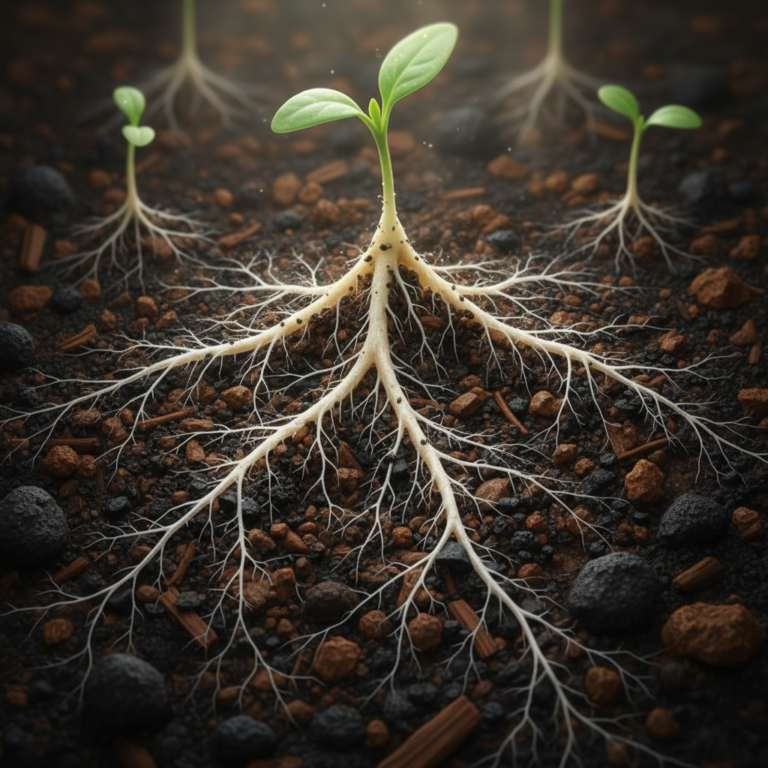
Soil is not inert. It’s a living, dynamic medium buzzing with low-level electrical activity. Microbial communities generate tiny bioelectric signals. Plant roots both respond to and emit electrical charges. Water molecules carry ions that create miniature currents through the soil matrix.
Copper wire, when buried in this environment, acts like a passive antenna or a gentle conductor. It doesn’t generate electricity on its own. Instead, it facilitates the movement of existing charges — potentially enhancing ion exchange, which is exactly how plants absorb nutrients.
Some electroculture researchers point to the Earth’s geomagnetic field as an additional energy source. Vertical copper elements — like stakes or spirals — are said to draw this energy downward into the root zone. Horizontal grid patterns, on the other hand, may help distribute it more evenly across a bed.
If you want to understand more about your soil’s natural properties before you experiment, check out Soil Sense Without the Lab: Read Your Dirt, Fix It Fast. Knowing what you’re starting with makes every technique more effective.
Choosing the Right Wire: Gauge and Purity Matter
Not all copper wire is created equal. This is where the details get important.
Wire Gauge
Old-timers reportedly favored 14 to 18 gauge bare copper wire. This range offers enough surface area to interact meaningfully with the soil without being so thick that it’s difficult to work with. Thicker wire (lower gauge number) holds its shape better in the ground. Thinner wire is easier to bend into patterns but may corrode faster over time.
For most home garden beds, 16 gauge is a solid starting point. It’s flexible, affordable, and widely available at hardware stores.
Bare, Not Coated
This one is non-negotiable. The wire must be bare, uncoated copper. Insulated wire — the kind used in home electrical work — blocks all conductivity. You want pure copper in direct contact with the soil. Avoid anything with PVC, rubber, or plastic insulation.
Avoid Copper Alloys
Brass or bronze wire contains zinc or tin mixed in. These alloys change the electrical properties and may introduce unwanted elements into your soil. Go for the real thing: pure copper, bare, and clean.
Burial Depth and Placement Techniques
Here’s where the old-timers had their strongest opinions — and their methods varied by crop and climate.
Standard Burial Depth
The most commonly referenced depth for copper wire soil energizing is 4 to 6 inches below the soil surface. This places the wire in the upper root zone, where young feeder roots are most active. Going deeper than 8 inches is generally considered less effective for annual vegetables.
For perennials and deep-rooted crops like tomatoes or squash, some growers go as deep as 10 to 12 inches on their main grid lines.
Grid Patterns
The traditional approach uses a simple grid or lattice pattern. Lay parallel lines of wire about 12 to 18 inches apart, then cross them with perpendicular lines at the same spacing. This creates a loose net under the bed that covers the root zone evenly.
Some practitioners also add a spiral coil in the center of the bed. The coil acts as a focal point — an amplifying center for whatever energetic effect the grid is producing. Coils should be wound clockwise (when viewed from above) in the Northern Hemisphere.
Vertical Stakes
In addition to buried grids, vertical copper stakes or rods — 12 to 18 inches tall, pushed into the corners of the bed — are said to help draw atmospheric energy downward. These are a staple of traditional electroculture practice and work well alongside buried horizontal wire.
How to Set Up Your First Copper Wire Garden Bed
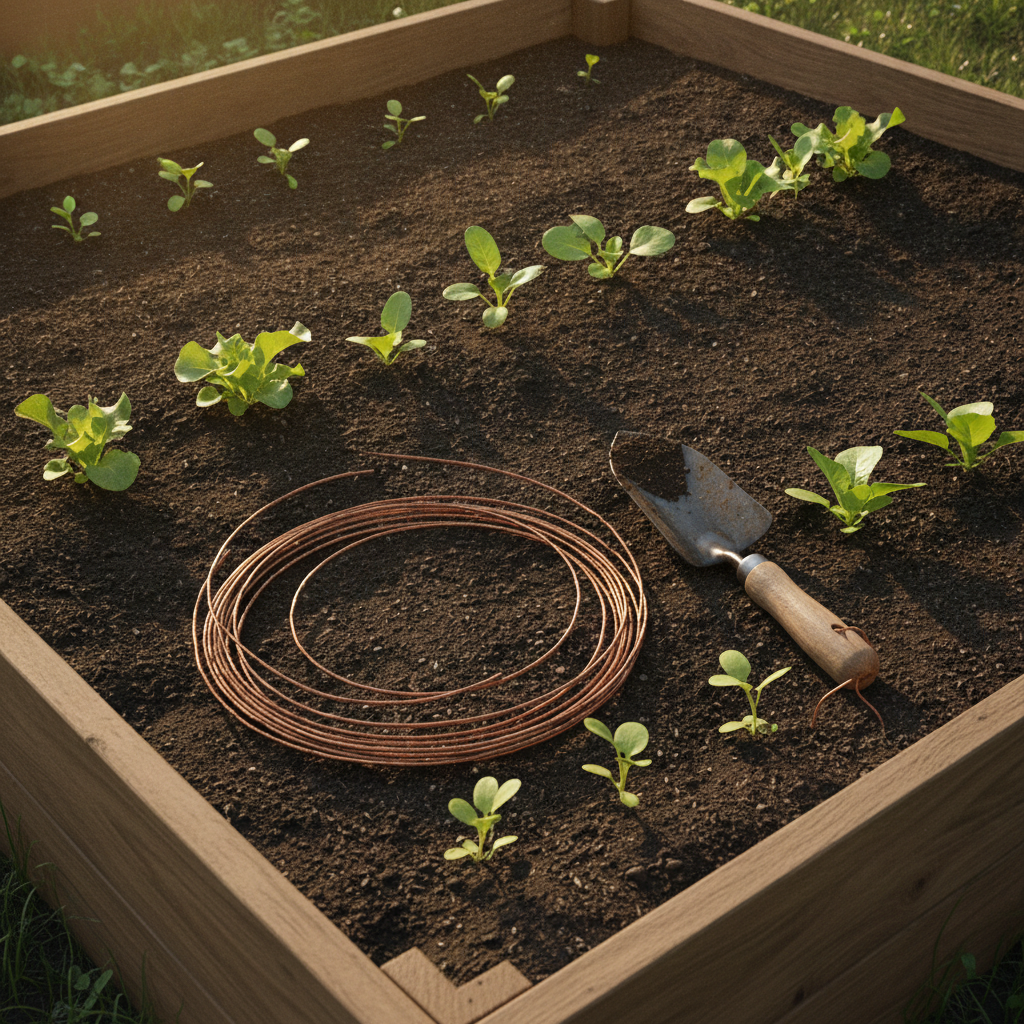
Ready to try it? Here’s a simple step-by-step setup for a standard 4×8 foot raised bed.
- Prepare your bed first. Amend your soil, check your drainage, and make sure you have good organic matter content. Copper wire works best in living, biologically active soil — not compacted dead ground.
- Cut your wire lengths. For a 4×8 bed with 12-inch spacing, you’ll need approximately 6 lengths at 8 feet and 4 lengths at 4 feet for a basic grid.
- Dig shallow trenches at your target depth (5 inches works well for most vegetables).
- Lay the wire in the trenches and cross the perpendicular lines over the parallel ones. Where they cross, twist them together once or twice to ensure good contact.
- Backfill and plant as normal. The wire will do its quiet work below while you plant above.
- Add vertical stakes at each corner if desired. Push them 4 to 6 inches into the soil at an angle pointing slightly inward.
For pairing this technique with thoughtful plant selection, the Plant Selection Spectrum: A Tiered Crop Guide can help you match the right crops to this energized environment.
Which Plants Respond Best?
Anecdotal reports — and there are many — suggest that leafy greens, root vegetables, and fruiting crops all respond positively to copper wire soil energizing. Some of the strongest observed responses include:
- Tomatoes — faster root establishment, more vigorous branching
- Carrots and beets — improved germination rates and root mass
- Lettuce and spinach — deeper color and more robust growth
- Beans and peas — stronger nitrogen fixation in nodule development
Herbs also seem to benefit. Many growers report more aromatic, potent herbs in copper-wire beds — which would make sense if the technique truly enhances enzyme production.
If you want to pair this technique with high-quality seed stock — which makes any growing method more effective — stocking up on heirloom and organic seeds from a trusted source ensures you’re working with genetics bred for natural growing conditions.
Combining Copper Wire with Other Old-Time Techniques
Copper wire doesn’t work in isolation — and your grandparents knew that. The old ways layered multiple practices together. Compost for biology. Rock dust for minerals. Companion planting for balance. And copper wire as the invisible electrical foundation beneath it all.
If you’re building out a more complete natural garden system, the Garden Experiments: 3 Safe, Small-Scale Trials resource is a great way to test copper wire alongside other techniques in controlled comparisons.
You can also think of copper wire beds as a foundation layer for more complex growing systems. A small food forest guild, for example, could benefit enormously from copper energizing at the drip-line radius of key trees.
Practical Tips and Common Mistakes
A few things to keep in mind before you start digging:
- Don’t use coated wire. This is the single most common mistake beginners make. Always verify the wire is bare copper before burying it.
- Refresh every 3 to 5 years. Copper does oxidize over time in soil. The patina (verdigris) that forms is still somewhat conductive, but fresh wire performs better.
- Document your results. Keep a garden journal so you can compare copper-wired beds with control beds over multiple seasons. Patterns become clear over time.
- Don’t overdo the copper. While copper is essential, excess copper can become toxic to soil microbes at high concentrations. A wire grid at the depths described here releases copper very slowly and is considered safe for soil biology.
- Combine with good soil health practices. Copper wire isn’t a substitute for living soil. It’s an enhancement to an already healthy growing environment.
Is This Just Folklore — Or Does It Actually Work?
Honest answer: the research is thin, but the tradition is deep. Electroculture as a broader field has been studied intermittently since the 1700s. Early researchers like Abbe Bertholon documented plant growth improvements from electrical stimulation. Modern bioelectrics confirms that plants are sensitive to electromagnetic fields.
The specific technique of burying copper wire in grid patterns hasn’t been subjected to rigorous double-blind trials. But neither has much of traditional farming wisdom — and a lot of that wisdom has proven remarkably sound when science finally caught up.
For the skeptical home gardener, the bar is low and the cost is minimal. A roll of 16 gauge bare copper wire costs a few dollars. The downside risk is essentially zero. The potential upside — more vigorous roots, better nutrient uptake, stronger harvests — is worth a season’s experiment.
If you’re the kind of grower who loves tracking and comparing, the Garden Journaling for Mastery template kit will help you document results in a way you can actually learn from over time.
Start Small, Observe Carefully, Then Scale Up
Copper wire soil energizing rewards the patient, observant gardener. Start with one bed. Plant the same crops you’d grow anyway. Watch what happens to root development when you transplant. Notice the leaf color at mid-season. Track your yields.
Then compare. That’s all your grandfather did. He observed, he adapted, and he passed on what worked.
The chemical revolution of the 20th century told us we needed something in a bag or a bottle to grow well. But the soil was always electric. The roots were always listening. Sometimes the most powerful things we can do in the garden are the quietest ones — buried six inches deep, invisible, and humming with possibility.
Dig a little deeper. Your grandpa would be proud.