Perennial Polyculture: Stack Functions in Small Spaces
Growing more food in less space doesn’t require complicated systems or expensive equipment. Perennial polyculture offers a brilliant solution for small-space gardeners who want to maximize their harvest while building soil health and supporting beneficial insects. By thoughtfully layering perennial plants that serve multiple functions, you can create a productive mini-ecosystem in just a few square feet.
The magic happens when you stack plants vertically and choose species that complement each other’s needs. Moreover, this approach mimics nature’s own design principles, where diverse plant communities thrive together in mutually beneficial relationships.
Understanding Perennial Polyculture Basics
Unlike traditional gardening that focuses on single crops in rows, perennial polyculture combines multiple perennial plants in the same space. Each plant serves at least one primary function – food production, soil improvement, pest control, or pollinator support.
This approach builds on permaculture’s principle of stacking functions. When you select plants wisely, each species contributes something valuable to the system. For instance, nitrogen-fixing plants feed their neighbors while producing edible crops.
The key advantage lies in efficiency. Instead of dedicating separate areas for vegetables, herbs, and ornamentals, you integrate them into a cohesive system. This integration saves space while creating resilient plant communities that support each other naturally.
Essential Plant Layers for Small Space Success
Successfully implementing perennial polyculture requires understanding the vertical layers available in your space. Even a small garden bed can accommodate multiple plant stories when you think three-dimensionally.
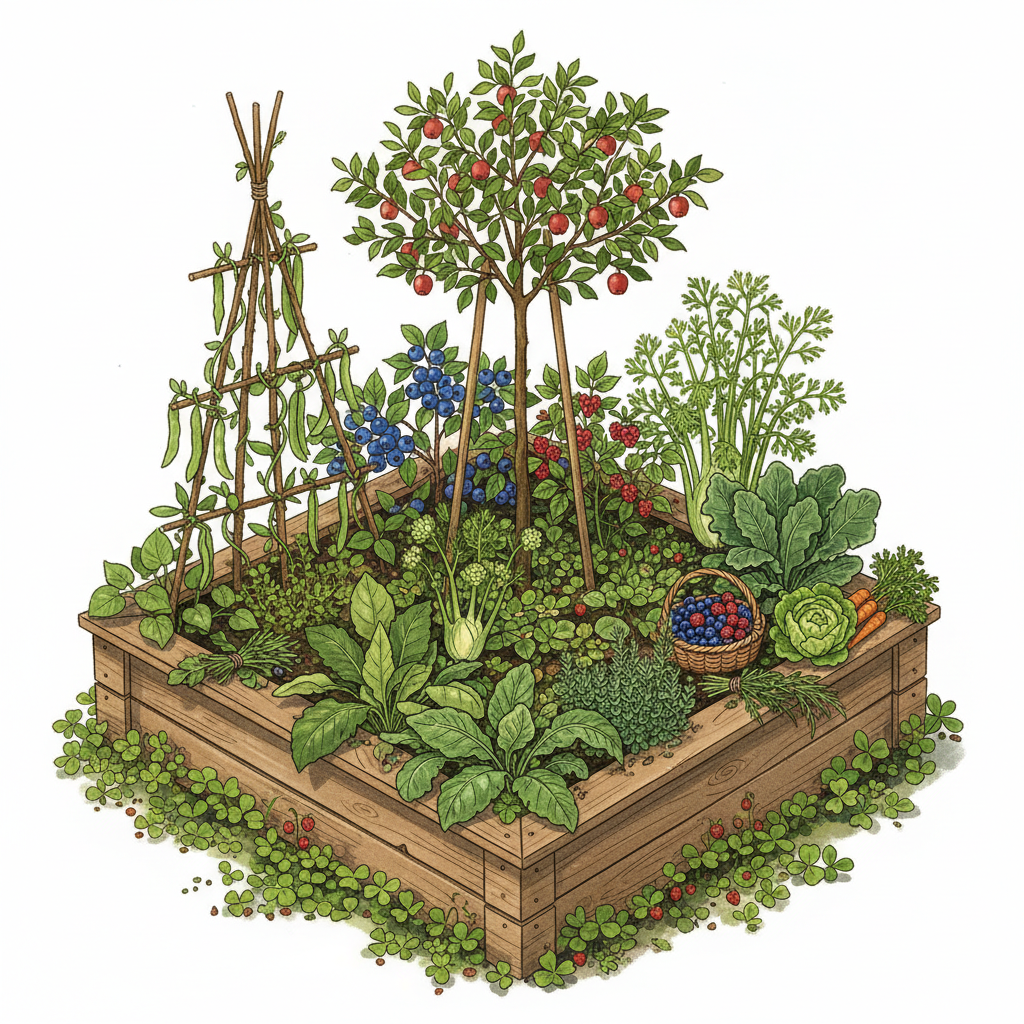
The canopy layer might include dwarf fruit trees or tall shrubs like elderberry. Mid-story plants could be berry bushes or larger perennial vegetables like asparagus. The herbaceous layer hosts most culinary and medicinal herbs.
Don’t forget the ground cover layer, which prevents weeds while providing additional harvest opportunities. Finally, the root layer includes plants that work underground to improve soil structure and nutrient availability. Understanding these concepts will help you develop expertise covered in Layered Learning: A Gardener’s Progressive System That Grows with You.
Proven Plant Combinations That Work
Certain plant partnerships have proven especially effective in small-space perennial polyculture systems. These combinations provide food, medicine, and soil improvement while occupying minimal ground space.
The “Three Sisters Plus” combination works beautifully in compact areas. Plant climbing beans around a dwarf apple tree, with comfrey at the base and chives as ground cover. The beans fix nitrogen for the tree, comfrey mines deep soil nutrients, and chives repel pests.
Another successful pairing combines berry bushes with complementary herbs. Blueberry bushes thrive with thyme, oregano, and wintergreen planted beneath. These herbs prefer similar acidic soil conditions while providing culinary and medicinal harvests.
For shadier spots, try combining ramps (wild leeks) with ginseng and woodland strawberries beneath a serviceberry shrub. This combination creates a mini forest ecosystem that produces food and medicine while requiring minimal maintenance.
Maximizing Vertical Growing Potential
Thinking vertically transforms how much you can grow in limited space. Wall-mounted planters, trellises, and tiered growing systems multiply your growing area without expanding your footprint.
Install sturdy trellises for climbing perennial vegetables like groundnuts or perennial sweet peas. These vines produce food while creating living walls that add privacy to your space. Similarly, wall-mounted herb spirals can accommodate dozens of different medicinal and culinary plants.
Consequently, container stacking works well for herbs and smaller perennial vegetables. Stack different sized pots to create terraced growing areas. This technique allows you to group plants with similar water and light requirements while maximizing growing space.
Before planning your vertical system, ensure you understand your site’s unique conditions by reading Mapping Your Garden Microclimates: Turn Sun, Wind, and Shade into Higher Yields.
Soil Building Through Strategic Plant Selection
Smart plant selection in perennial polyculture systems actively improves soil health over time. This improvement happens naturally when you include plants with different root depths, nutrient requirements, and soil-building capabilities.
Nitrogen-fixing plants form the foundation of soil improvement. Incorporate perennial legumes like groundnuts, American groundnut, or perennial sweet peas. These plants capture atmospheric nitrogen and share it with neighboring plants through their root systems.
Dynamic accumulators mine nutrients from deep in the soil and make them available to surface-rooting plants. Comfrey excels at this job, bringing potassium and other minerals from deep soil layers to the surface through its decomposing leaves.
Furthermore, plants with extensive root systems improve soil structure. Perennial grasses and fibrous-rooted herbs create channels for water and air movement while holding soil in place during heavy rains.
Managing Your Polyculture System
Successful perennial polyculture requires different management strategies than traditional gardens. Initially, young systems need more attention as plants establish and find their roles in the community.
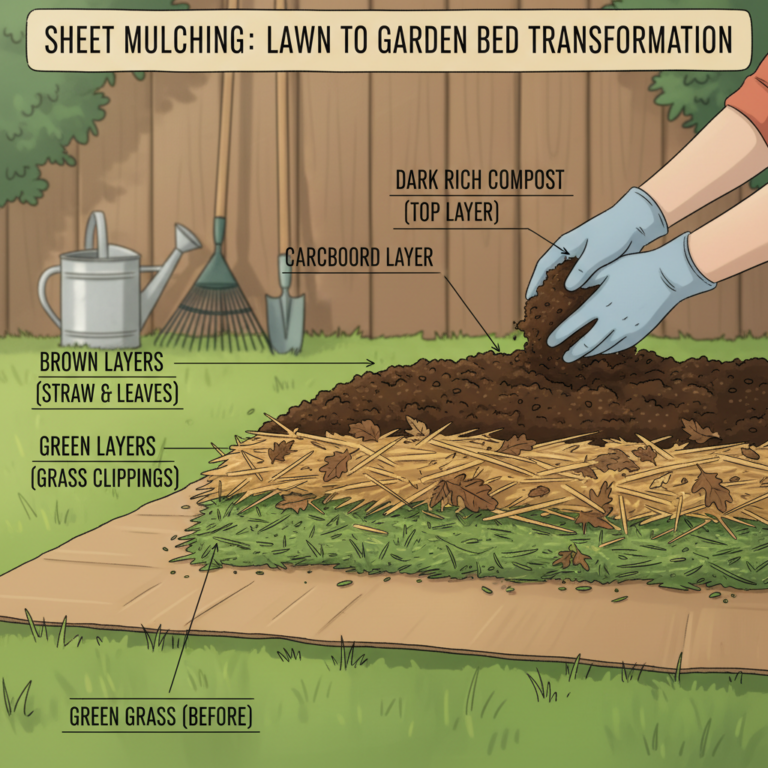
Mulching becomes crucial for system success. Organic mulches suppress weeds, retain moisture, and slowly decompose to feed soil organisms. Use materials like wood chips, straw, or shredded leaves around established plants.
Pruning and selective harvesting help maintain balance between different plants. Remove excess growth from vigorous species before they overwhelm slower-growing companions. Regular observation helps you spot problems early and make adjustments.
Additionally, keep detailed records of what works in your system. Track plant performance, harvest quantities, and seasonal changes to improve your polyculture over time. Consider using Garden Journaling for Mastery: Ready-to-Use Templates and Prompts to Track Your Progress to document your experiences.
Troubleshooting Common Challenges
Even well-planned polyculture systems face occasional challenges. Understanding common problems and their solutions helps you maintain productive growing spaces long-term.
Competition between plants ranks as the most frequent issue. When one species overwhelms others, selective pruning or partial removal restores balance. Monitor growth patterns and intervene before dominance becomes problematic.
Pest and disease management in diverse systems differs from single-crop approaches. The plant diversity typically reduces pest pressure, but occasional problems still arise. Encourage beneficial insects with flowering plants and maintain good air circulation through proper spacing.
Nutrient deficiencies sometimes appear in densely planted systems. Regular additions of compost and organic matter usually resolve these issues. Soil testing every few years helps track nutrient levels and guide amendment decisions.
Getting Started With Your First System
Starting your first perennial polyculture system doesn’t require extensive experience or expensive materials. Begin with a small area and simple plant combinations to build confidence and skills.
Choose a sunny spot roughly 4×4 feet for your initial system. This size allows experimentation without overwhelming maintenance requirements. Start with reliable, locally adapted plants that have proven track records in your climate zone.
Plan your plant placement on paper before purchasing anything. Consider mature sizes, growth habits, and timing of harvests. This planning prevents overcrowding and ensures each plant has appropriate space to thrive.
Finally, remember that perennial polyculture systems develop over several growing seasons. Patience pays off as plants establish relationships and begin supporting each other naturally. Your small investment in time and planning creates productive harvests for years to come.
Ready to expand your growing skills? Explore The Perennial Playbook: Build a Low-Input Garden That Keeps Flourishing With You for more advanced techniques and seasonal strategies.