Green Manure Crops: The Plow-Under Secret
Before the first bag of synthetic nitrogen ever hit a farm store shelf, farmers already knew how to grow rich, productive soil. Their secret? Green manure crops — specific plants grown not to harvest, but to chop down and bury. This one old-fashioned rotation trick fed the land for generations, and it can do the same for your garden today. If you’ve ever wondered why your soil feels tired or your harvests seem smaller than they should, this forgotten technique might be exactly what you’ve been missing.
What Are Green Manure Crops, Exactly?
A green manure crop is any fast-growing plant you grow specifically to cut down and dig into the soil while it’s still green and full of nutrients. Unlike compost, which is made outside the bed, green manure feeds the soil right where it grows. The plant’s stems, leaves, and roots all break down in place, releasing nitrogen, organic matter, and beneficial microbial food directly into your growing zone.
This is fundamentally different from leaving crop residue behind. With green manure, you’re timing the burial deliberately — catching the plant at peak nutrient density before seeds set. That timing detail is everything, and we’ll come back to it shortly.
The practice is ancient. Roman farmers used lupines. Chinese rice paddy growers have used Azolla fern for over a thousand years. European peasant farmers rotated clover and rye with grain crops long before anyone had a chemistry degree. This wasn’t guesswork. It was generations of careful observation — the kind of soil sense that’s worth relearning. If you want to sharpen your instincts about what your soil is telling you, our guide on reading your dirt without a lab is a great companion to this article.
The Best Green Manure Crops for Home Gardens
Not every plant makes a good green manure. The best choices fall into two broad categories: nitrogen fixers and organic matter builders. Ideally, you want a mix of both.
Nitrogen-Fixing Legumes
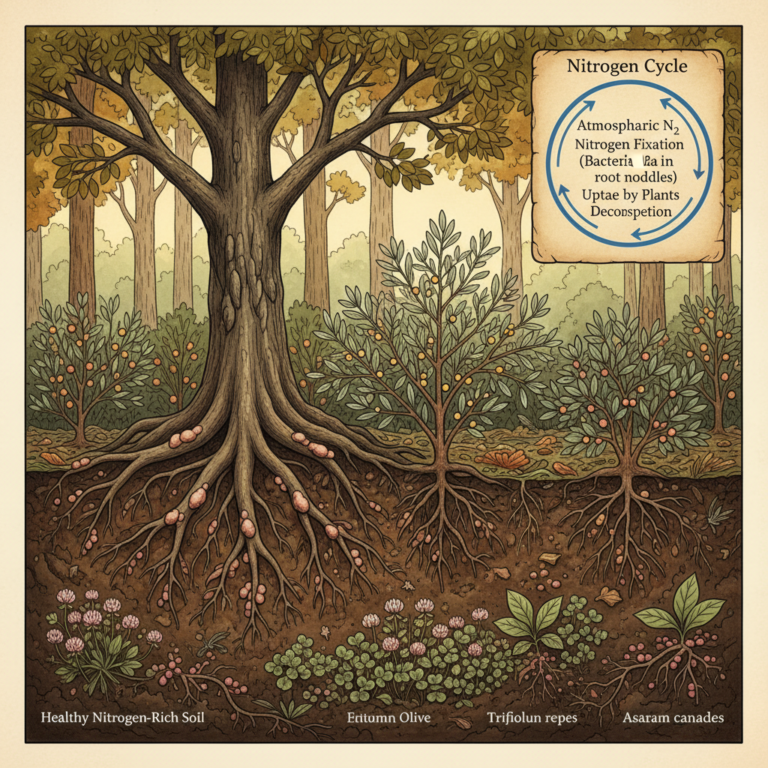
These plants form a partnership with soil bacteria called rhizobia, which pull nitrogen from the air and store it in root nodules. When you turn the plant under, all that fixed nitrogen is released into the soil. These are your heaviest feeders and biggest givers.
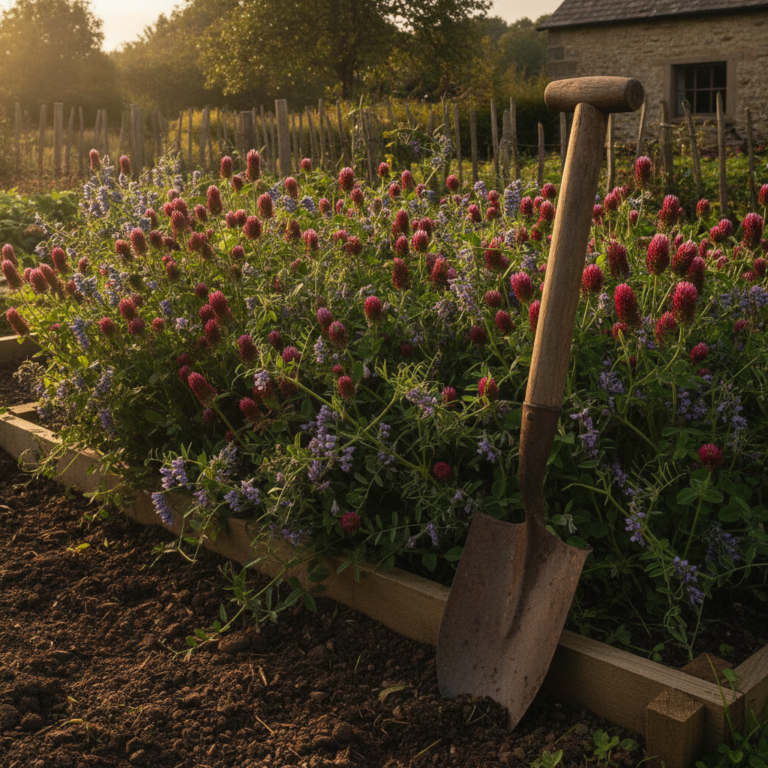
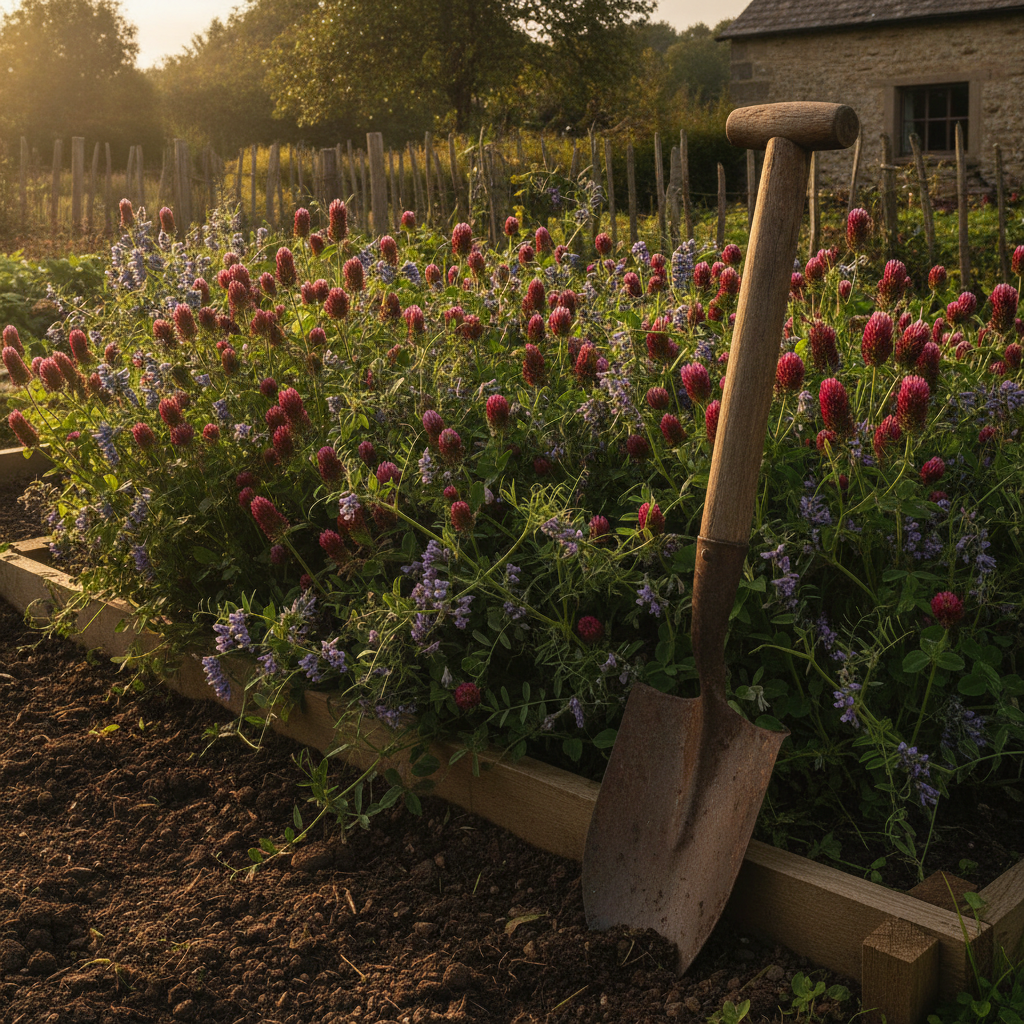
- Crimson clover — Fast-growing, bee-friendly, and highly productive. One of the most popular choices for home gardeners. Fixes up to 150 lbs of nitrogen per acre.
- Hairy vetch — Cold-hardy and aggressive. Excellent for fall planting in cooler climates. Pairs beautifully with winter rye.
- Field peas — Edible and useful. You can harvest a few pods before turning the rest under. Germinates fast in cool soil.
- Fava beans — Incredibly nitrogen-rich and great for heavy clay soils. Their deep roots also help break up compaction.
- Lupines — Stunning flowers and serious nitrogen fixers. Also acidify soil slightly, which is useful in high-pH beds.
Organic Matter Builders
These plants don’t fix nitrogen, but they bulk up your soil’s carbon content, improve structure, and feed the fungal networks that make nutrients available to plant roots.
- Buckwheat — Grows in six weeks flat and smothers weeds effectively. Excellent for opening up compacted ground. Also unlocks phosphorus from the soil.
- Phacelia — One of the fastest-growing green manures available. Incredibly popular in Europe but underused in North America. Pollinators love it.
- Winter rye — The classic cold-season cover crop. Grows through frost and adds enormous biomass. Pairs perfectly with hairy vetch.
- Mustard — Adds organic matter quickly and acts as a natural soil fumigant, suppressing some soil-borne diseases and pests.
For most home gardeners, the best strategy is to combine a legume with a grass or broadleaf plant. Try crimson clover with phacelia in spring, or hairy vetch with winter rye in fall. Together, they give you nitrogen plus bulk — a complete soil meal.
Timing the Cut-and-Dig for Maximum Nitrogen Release
This is where most people make mistakes. Cut too early, and the plants haven’t fixed enough nitrogen yet. Cut too late, and seeds will spread, the stems get woody, and the material breaks down slowly — sometimes causing a nitrogen drawdown as microbes consume nitrogen to digest the tough carbon. Timing is the whole game.
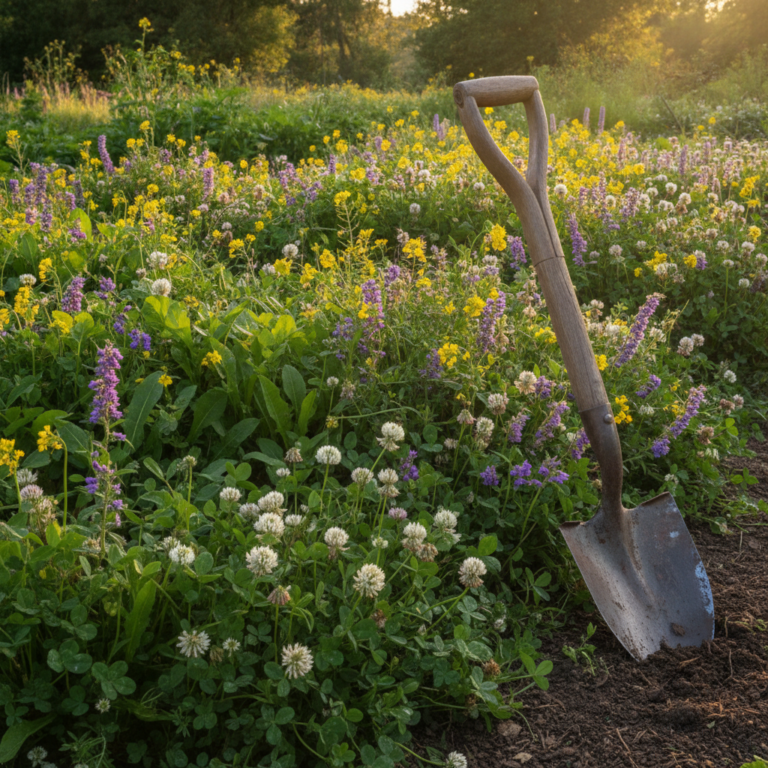
The golden rule: cut and bury just as the first flowers open. At this stage, the plant has done its biological work but hasn’t redirected energy into seed production. Nitrogen levels in the tissues peak at or just before flowering. This is the window you’re aiming for.
After cutting, chop the material finely with a spade or garden fork. Incorporate it into the top 6–8 inches of soil. Then wait. Most green manure crops need 2–4 weeks to break down before you plant into the bed. Warmer soil speeds decomposition significantly. In summer, two weeks is often enough. In cool spring soil, allow three to four weeks.
Don’t rush this waiting period. Freshly buried green matter can temporarily tie up nitrogen as it decomposes — exactly what you don’t want right after planting. Patience here pays off with much better transplant results. If you want to plan this around your full planting calendar, our 30-day microclimate-aware planting plan can help you slot green manure windows into your season without losing a single growing week.
Why Green Manure Crops Beat Store-Bought Soil Conditioners
Here’s what no bag of granular fertilizer can do: feed the entire soil food web simultaneously. When you bury a green manure crop, you’re not just adding nitrogen. You’re adding:
- Living root exudates that feed mycorrhizal fungi
- Fibrous material that improves drainage and moisture retention at the same time
- Weed suppression while the crop is growing
- Habitat for beneficial insects during flowering
- Deep root channels that aerate the subsoil as roots decay
A bag of synthetic nitrogen delivers one number. A green manure crop delivers an ecosystem upgrade. And the cost? A few dollars worth of seed, a little time, and a willingness to let a bed sit empty — or rather, actively working — for a few weeks between crops.
This is exactly the kind of layered, low-input thinking that old-time farmers understood instinctively. If you’re building this kind of holistic approach to your garden year-round, you’ll also enjoy our piece on building a low-input garden that keeps flourishing.
A Practical Green Manure Planting Calendar
Below is a simple seasonal framework you can adapt to your climate. Use it as a starting point, then adjust based on your frost dates and existing crop rotation.
Early Spring (4–6 Weeks Before Last Frost)
Sow field peas or fava beans in beds you won’t plant until early summer. These tolerate cold soil and will be ready to turn under by late spring. Cut when flowers begin to open, wait three weeks, then plant your summer crops.
Late Spring to Early Summer
Sow buckwheat or phacelia in any bed that’s finishing up spring brassicas or root crops. Both grow incredibly fast in warm soil. Buckwheat will be ready to cut in as little as five to six weeks. Turn under before seed heads form.
Midsummer (July–August)
Use crimson clover or a clover-phacelia mix in beds that won’t be planted until fall. This is a great mid-season soil reset. Sow after pulling garlic or early potatoes.
Late Summer to Early Fall (6–8 Weeks Before First Frost)
Sow hairy vetch plus winter rye as a cold-season cover. This combination overwinters beautifully in most climates, protects bare soil through winter, and delivers a massive nutrient dump when turned under in spring. It’s arguably the most powerful green manure combination available to home gardeners.
Winter (Cold Climates)
Even in cold climates, winter rye alone can overwinter and provide meaningful soil coverage. It won’t fix nitrogen, but it prevents erosion, feeds soil fungi, and gives you a head start on organic matter for spring.
If you’re just beginning to experiment with more intentional soil-building techniques, our three safe garden experiments for beginners includes a simple green manure trial you can run in just one bed this season — low risk, high reward.
Getting Started This Season
You don’t need to overhaul your entire garden to try green manure crops. Start with one empty bed. Sow buckwheat if it’s warm, field peas if it’s cool. Watch the plants grow. Cut them at first flower. Dig them in. Wait. Then plant.
That one cycle will teach you more about soil biology than any book or bag of fertilizer ever could. You’ll see the difference in your transplants, in your earthworm counts, and in how your soil smells — alive, rich, and dark. That’s the smell of a garden that’s feeding itself.
This is what your grandparents’ generation knew, and it still works just as well today. The soil hasn’t changed. Only the shortcuts have — and most of those shortcuts cost more than they deliver.
Start simple. Start this season. Let the land teach you the rest.