Green Manure Crops: The Plow-Under Secret
Long before a bag of synthetic nitrogen ever sat on a store shelf, farmers already knew how to feed hungry soil. They grew green manure crops — fast-growing plants sown specifically to be chopped down and buried. No bags. No pellets. Just living organic matter turned back into the earth. It sounds almost too simple, and that is exactly why it got forgotten. Today, we are bringing it back — with a practical guide on which plants to use, when to cut them, and a planting calendar you can start this season.
What Are Green Manure Crops and Why Did Farmers Swear By Them?
A green manure crop is any plant grown not for harvest, but for soil improvement. You let it grow, then cut and dig it in just before it sets seed. As it breaks down underground, it releases nutrients — especially nitrogen — directly into your soil’s root zone.
This is not composting. You are not hauling material to a pile and waiting. Instead, you are letting decomposition happen in place, where your next crop will grow. The roots loosen compacted layers. The leaves add organic matter. The whole system feeds the soil web from the inside out.
Before chemical fertilizers arrived in the mid-20th century, this rotation was standard farming practice. Grain farmers grew legumes between cereal crops. Market gardeners tucked mustard into empty winter beds. Smallholders let buckwheat cover bare summer ground between plantings. It worked brilliantly, and then agriculture moved on — but your backyard garden does not have to.
If you are still figuring out what your soil actually needs, start with Soil Sense Without the Lab: Read Your Dirt, Fix It Fast. Understanding your soil’s baseline makes choosing the right green manure much easier.
The Best Green Manure Crops for Home Gardens
Not every plant makes a good green manure. You want fast growth, deep or fibrous roots, easy decomposition, and ideally some nitrogen-fixing ability. Here are the top performers.
Crimson Clover
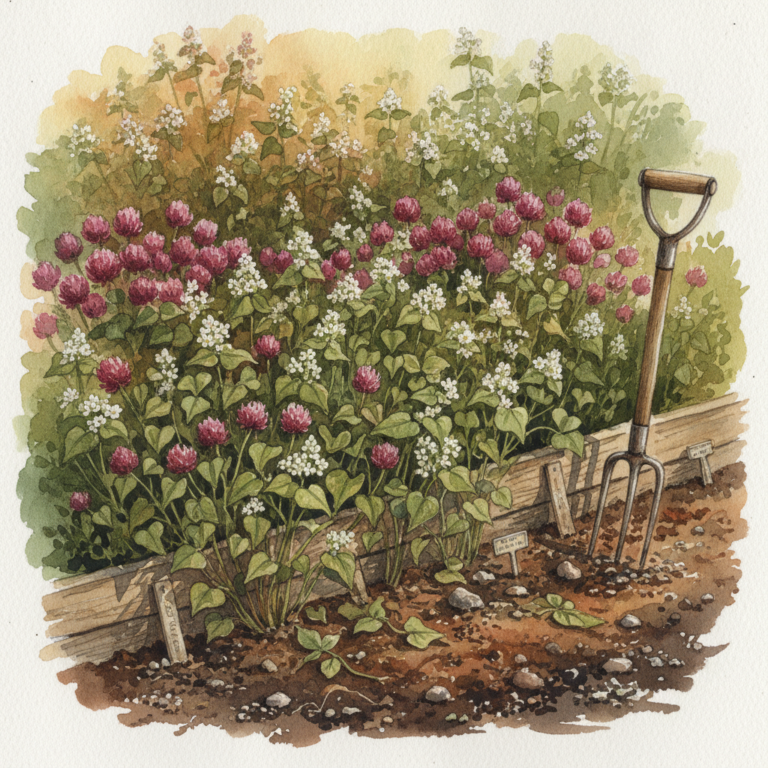
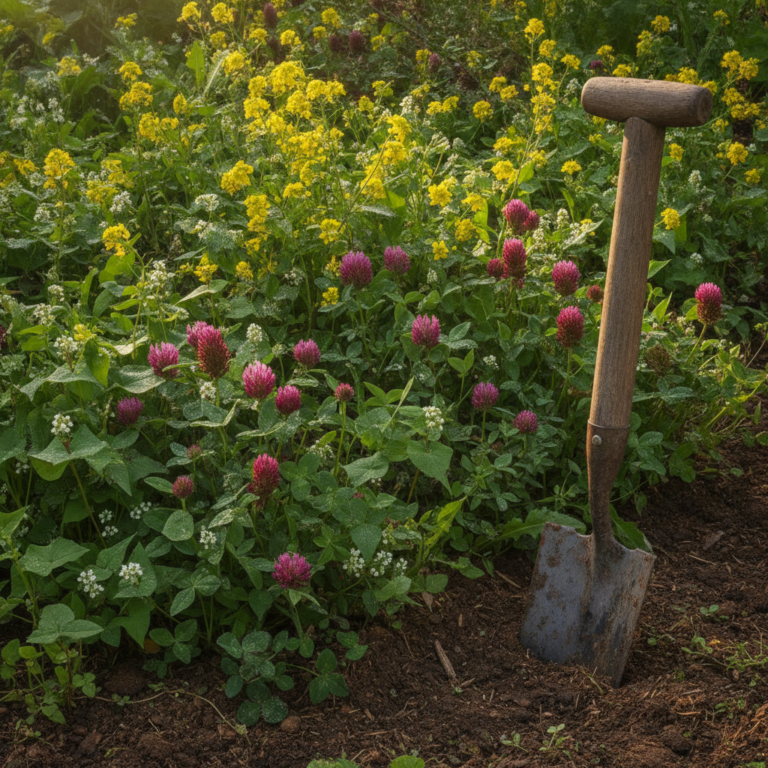
This is the gold standard for nitrogen fixation. Crimson clover works with soil bacteria to pull nitrogen from the air and deposit it in nodules on its roots. When you dig it in, those nodules release available nitrogen into the soil within weeks. It is also beautiful — a bonus for any garden space. Sow in early spring or late summer for best results.
Fava Beans (Field Beans)
Fava beans are cold-tolerant nitrogen machines. They overwinter in mild climates and can be dug in by late spring. A well-grown fava crop can fix 100–200 lbs of nitrogen per acre. Even on a small scale, the effect is remarkable. Chop them at the base before the pods fill out for maximum green material.
Buckwheat
Buckwheat grows explosively fast in warm weather — ready to cut in just 6–8 weeks. It does not fix nitrogen, but it mines phosphorus from deep in the soil and brings it to the surface as it decomposes. It also suppresses weeds so effectively that it outcompetes almost anything. Perfect for empty summer beds between spring and fall crops.
Mustard
Mustard is a secret weapon for problem soil. Its roots release compounds that suppress soilborne diseases and certain nematodes — a process called biofumigation. Dig it in while the leaves are still young and green for the strongest effect. It also grows quickly and handles light frost.
Phacelia
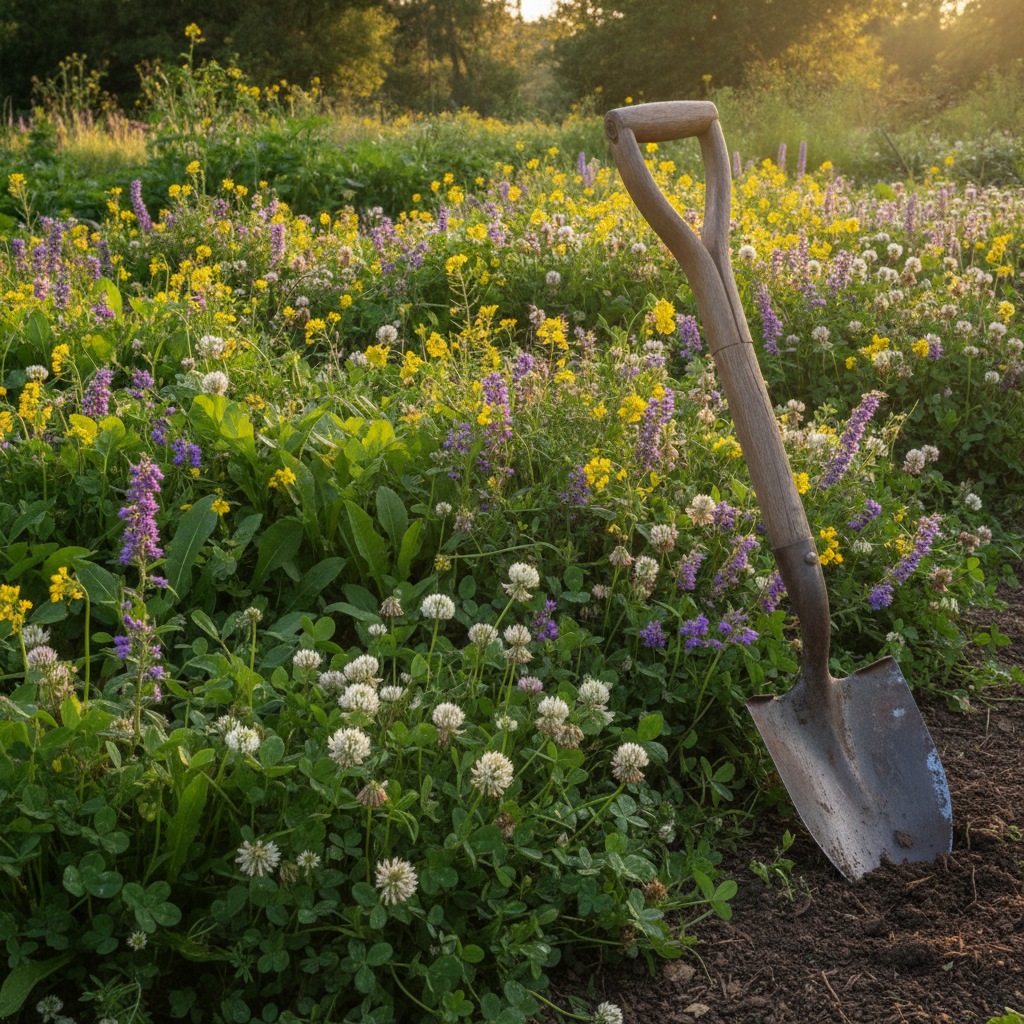
Phacelia is less well known but incredibly useful. It grows fast, decomposes rapidly, and does not belong to any common crop family — so it fits neatly into any rotation without disease carryover risks. It also attracts pollinators like no other cover crop. A genuine all-rounder.
Winter Rye
For autumn and winter ground cover, winter rye is unbeatable. Its root system is dense and deep, breaking up compaction and adding enormous amounts of organic matter. It does not fix nitrogen, but its sheer biomass contribution is substantial. Dig it in six weeks before planting to allow enough time for decomposition.
How to Time the Cut-and-Dig for Maximum Nitrogen Release
Timing is everything with green manure crops. Cut too early and you lose biomass. Cut too late and woody stems take months to break down. Get it right and your soil is ready to feed the next crop within two to four weeks.
The ideal window is just as the plant begins to flower — but before it sets seed. At this stage, the plant tissue is still soft and high in nitrogen. Tough stems and seed heads slow decomposition significantly.
Here is the simple method:
- Cut stems at soil level with shears or a sharp spade. Do not pull roots out — leave them to rot in place.
- Chop the leafy material into smaller pieces with a spade or hoe. Smaller pieces decompose faster.
- Dig the material in to a depth of 15–20 cm (6–8 inches). Mix it through the top layer rather than burying it in one clump.
- Water if dry. Decomposition needs moisture. A dry burial does little.
- Wait 2–4 weeks before planting. Decomposing material temporarily ties up nitrogen as microbes process it. Patience here pays off.
One useful trick from old-time gardeners: add a thin layer of finished compost on top after digging in. This inoculates the soil with decomposer microbes and speeds breakdown considerably.
Why Green Manures Outperform Most Bagged Soil Conditioners
Store-bought soil amendments have their place. But green manure crops do something bagged products simply cannot: they feed the whole soil ecosystem, not just the plant.
When living roots grow through your soil, they secrete sugars that feed bacteria and fungi. Those microbes build aggregate structure — the crumbly, open texture that roots love. No bag of granules does that. When the crop decomposes in place, earthworms move in. Fungi spread through the debris. The soil food web expands naturally, and each subsequent crop grows in progressively better conditions.
Bagged nitrogen fertilizers give a single fast hit. Green manures give a slow, sustained release tied to biological activity — which means nutrients are available when your plants actually need them, not all at once.
They also cost almost nothing. A packet of clover seed or fava beans covers a large bed for a few dollars and returns far more value than the equivalent weight of pelletized fertilizer.
This connects beautifully with The Perennial Playbook: Build a Low-Input Garden That Keeps Flourishing With You — a mindset that uses systems, not supplies, to build long-term abundance.
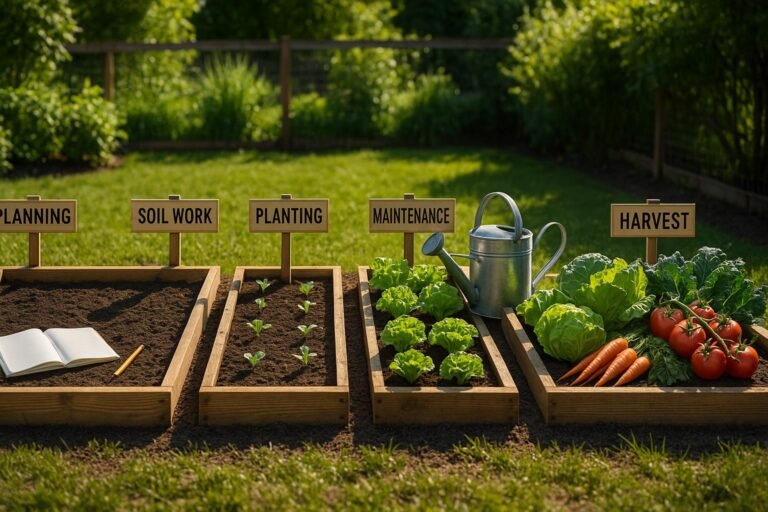
Your Practical Green Manure Planting Calendar
Here is a simple seasonal guide you can adapt to most temperate climates. Adjust by 2–4 weeks depending on your zone.
Early Spring (March–April)
- Sow phacelia or crimson clover on empty beds as soon as the soil is workable.
- Dig in 6–8 weeks later, in late April or May, before planting summer crops.
Late Spring to Early Summer (May–June)
- Sow buckwheat on any gap beds between spring and summer rotations.
- Cut and dig after 6–8 weeks, when flowers just begin to open.
Midsummer (July–August)
- Use mustard on beds cleared after early crops (peas, salads, spring brassicas).
- Fast growing in heat — ready to dig in within 5–6 weeks.
Late Summer to Autumn (August–October)
- Sow fava beans or winter rye after harvesting summer crops.
- Let them overwinter. Dig in the following spring, 4–6 weeks before planting.
Winter (November–February)
- In mild climates, established fava beans or winter rye continue growing slowly.
- Use this time to plan your spring rotation. Our Climate-Proof Your Crops: A 30-Day Microclimate-Aware Planting Plan is an excellent companion for this planning stage.
Fitting Green Manures Into a Small Garden
You do not need a field. Even a 2 x 3 metre raised bed can benefit enormously from a green manure rotation. The key is thinking in sections and sequences — not the whole garden at once.
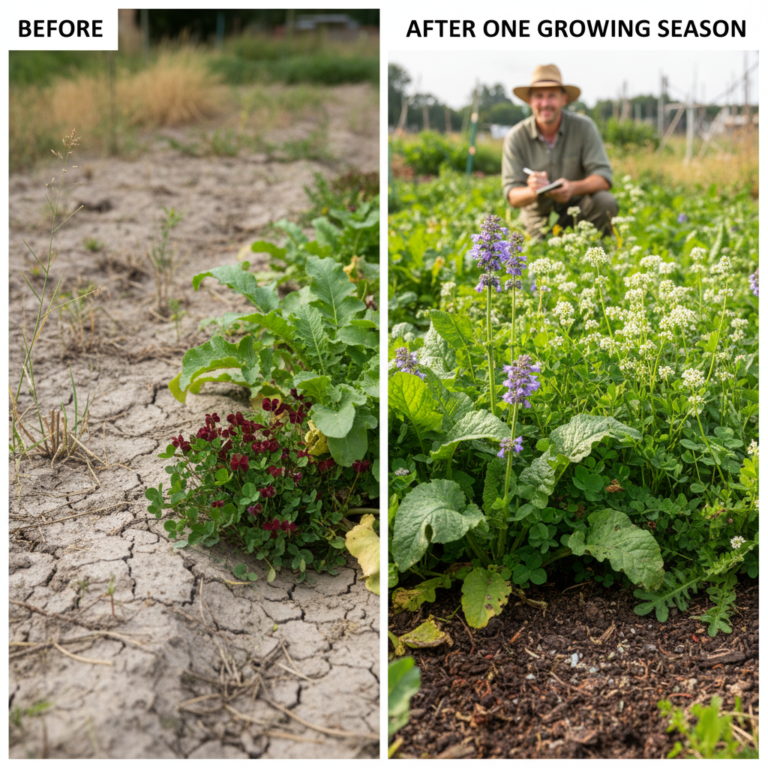
Try dividing your beds into thirds. While two thirds grow food crops, one third rests under a green manure. Rotate through the year. Over a single season, every bed gets a fertility reset without any bare soil, any synthetic input, or any significant cost.
If you want to build this kind of thinking into your overall garden system, The Skill-Driven Garden Roadmap: How to Pick Plants, Tools, and Tasks That Grow With You walks you through layering exactly these kinds of soil-building strategies into your growing plan.
A Final Word on Rediscovered Wisdom
There is something quietly satisfying about using a technique that predates every garden centre, every synthetic fertilizer, and every trending soil product. Green manure crops are not new. They are proven — across centuries and cultures — to build soil that grows better food, year after year.
Your grandparents’ generation did not have bags of slow-release granules. They had seed, soil, and time. And their gardens were often extraordinary.
This season, try one bed. Sow a patch of crimson clover or buckwheat, let it grow, cut it down, dig it in, and wait. Then plant into that soil and watch what happens. The results tend to make converts very quickly.
The plow-under secret has been waiting in the soil all along. Now you know how to use it.