Green Manure Crops: The Plow-Under Secret
Before synthetic nitrogen flooded farm supply shelves, gardeners and farmers already had a powerful soil-building secret: green manure crops. They grew specific plants not to harvest, but to chop down and bury — feeding the soil with living organic matter at its most potent. This plow-under method is one of the oldest, most effective soil-building tricks ever used. And somehow, most modern gardeners have never heard of it. Today, we are bringing it back.
What Are Green Manure Crops, Exactly?
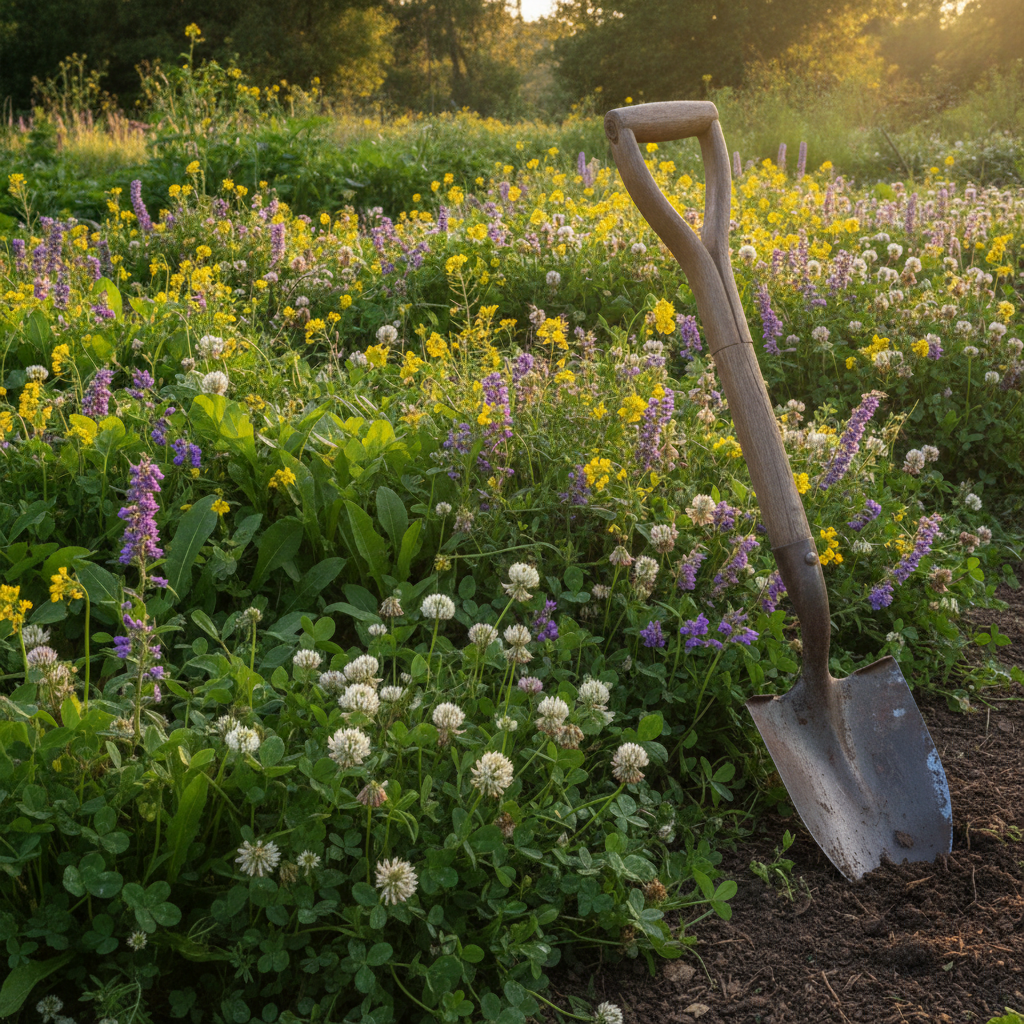
A green manure crop is any plant grown specifically to be turned back into the soil before it sets seed. The goal is not food. The goal is fertility.
When you dig these plants under while they are still lush and green, the decomposing tissue releases nutrients directly into the root zone. Nitrogen, phosphorus, carbon, trace minerals — all of it becomes available to whatever you plant next. Think of it as brewing a slow-release fertilizer right in your garden bed.
This practice predates written history. Roman farmers used lupins. Chinese agriculturalists used water hyacinth. Before any bag of 10-10-10 existed, the soil was fed this way. And honestly? It worked beautifully.
If you have been trying to decode what your soil actually needs, you might also enjoy Soil Sense Without the Lab: Read Your Dirt, Fix It Fast — a great companion to this topic.
Why Green Manure Crops Outperform Most Store-Bought Soil Conditioners
Here is the honest truth about bagged amendments: most of them deliver nutrients in isolated, concentrated forms. They can help. But they cannot replicate what a living root system does to soil structure.
Green manure crops do several things at once:
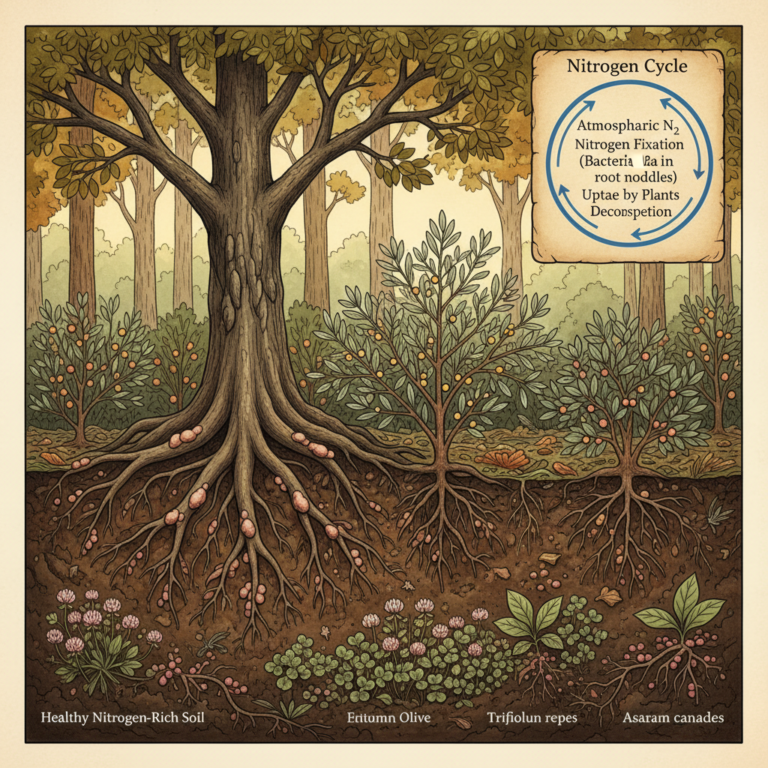
- Fix atmospheric nitrogen — legumes pull nitrogen from the air and store it in root nodules, releasing it when they decompose.
- Break up compaction — deep-rooted varieties like tillage radish crack hardpan layers that a garden fork cannot reach.
- Feed soil biology — fresh organic matter feeds bacteria, fungi, earthworms, and the entire underground food web.
- Suppress weeds — a thick stand of buckwheat or clover shades out weed seeds during the growing window.
- Prevent erosion — bare soil between seasons loses nutrients and structure. Green manures hold everything in place.
No bag of granular fertilizer does all five. That is the real advantage.
The Best Green Manure Plants for Home Gardens
Not every cover crop makes an ideal green manure. You want plants that are fast-growing, nitrogen-rich, and easy to incorporate. Here are the top performers for home gardeners.
Crimson Clover
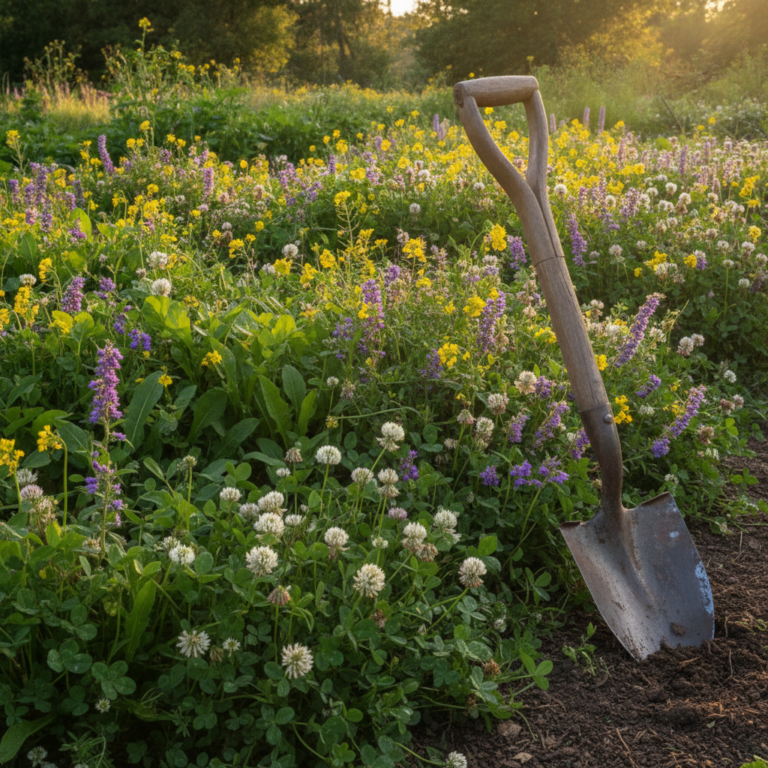
One of the most reliable nitrogen fixers available. Crimson clover grows quickly, produces beautiful red blooms that attract pollinators, and adds significant nitrogen when dug under. It works in both spring and autumn rotations. Chop and bury it just as the first flowers open — that is peak nitrogen content.
Field Beans (Fava Beans)
Cold-hardy and exceptionally nitrogen-rich, fava beans are ideal for autumn planting and spring dig-in. They overwinter in most temperate climates and can be turned under as early as March. Their deep roots also improve soil structure significantly.
Buckwheat
A warm-season powerhouse. Buckwheat grows so fast it smothers weeds before they establish. It mines phosphorus from subsoil layers and brings it up where plant roots can access it. Buckwheat is perfect for filling summer gaps between main crops. Dig it under after four to six weeks, before flowers set seed.
Mustard
Mustard works as a natural biofumigant — its glucosinolate compounds suppress soil-borne pathogens and nematodes when the tissue breaks down. Use it in beds with a history of disease problems. Dig under before flowering for best results.
Phacelia
Fast-growing, bee-friendly, and extremely easy to incorporate because its tissue breaks down quickly. Phacelia adds good organic matter and is ready to dig under in as little as six to eight weeks from sowing. It is one of the easiest green manures for beginners to start with.
Winter Rye
Primarily a carbon builder rather than a nitrogen fixer. Winter rye adds bulk organic matter and protects soil through cold months. It pairs well with hairy vetch — a combination used in no-till systems for decades.
Timing the Cut: When and How to Dig Green Manures Under
Timing is everything with green manure crops. Cut too early and you lose biomass. Cut too late and woody stems take months to break down.
The ideal window is just before or at early flower. At this stage, plants are at maximum nitrogen content and the tissue is still soft enough to decompose rapidly. Here is the simple process:
- Chop the plants at soil level using a sharp hoe, scythe, or garden shears. Leave the roots in place when possible — they decompose underground and create channels for air and water.
- Let the cut material wilt for one to two days. Wilted tissue incorporates more easily and starts breaking down faster.
- Dig or fork the material into the top six to eight inches of soil. Work it in evenly so large clumps do not create anaerobic pockets.
- Wait two to four weeks before planting your next crop. Fresh green matter can temporarily tie up nitrogen as microbes work to break it down. Patience here pays off significantly.
If you want a reliable framework for sequencing these tasks across your whole growing year, Climate-Proof Your Crops: A 30-Day, Microclimate–Aware Planting Plan gives you a seasonal structure that works alongside green manure rotations.
A Practical Green Manure Planting Calendar
Here is a simple seasonal guide you can adapt to your climate and bed schedule. Use this as your starting framework and adjust based on your last and first frost dates.
Late Winter to Early Spring (February–March)
Sow field beans or winter rye into empty beds. These will grow through the cool weeks and be ready to dig under by mid to late April — just in time for summer crops.
Spring (April–May)
Sow crimson clover in beds that will host heavy-feeding crops later in summer, like brassicas or squash. Allow six to eight weeks of growth before digging under. Wait two to three weeks, then plant your main crops.
Early Summer (June)
Buckwheat is your best friend now. Sow it in any gap between spring harvests and summer plantings. It will be ready to turn under in four to six weeks, leaving plenty of time for late summer crops like beans or carrots.
Late Summer to Early Autumn (August–September)
Phacelia and mustard sown now will grow through the warm tail of the season. Dig them under in October or leave mustard standing until early November for its biofumigant effect. Follow immediately with a winter cover of field beans or rye.
Autumn to Winter (October–November)
Winter rye or hairy vetch sown now protects bare soil through the cold season. They will be ready for a spring dig-in, completing the cycle beautifully.
The key insight is this: you should rarely have a bare bed. An empty bed is a missed opportunity to build fertility for free.
Getting Started: Your First Green Manure Experiment
If this feels like a lot to manage all at once, start small. Pick one empty bed. Sow phacelia or buckwheat this season. Observe how quickly it grows, how the soil looks afterward, and how your next crop performs in that spot compared to others.
Small trials like this are genuinely one of the best ways to build gardening confidence. Garden Experiments: 3 Safe, Small-Scale Trials That Grow Your Gardening Confidence shows you exactly how to structure low-risk tests like this one so you always learn something useful.
Once you see the difference in your soil’s texture, smell, and productivity after using green manure crops, you will never want to leave a bed bare again. This is not a trend or a complicated system. It is simply what farmers knew before the chemical era told them to forget it.
Your grandparents were right. The plow-under secret was worth keeping all along.
Final Thoughts on Green Manure Crops
Building fertile soil does not require expensive inputs or complicated chemistry. It requires understanding what living plants do when they decompose — and using that process intentionally.
Green manure crops return organic matter, nitrogen, and biological life to your soil at a cost close to zero. A small packet of clover seed. A handful of buckwheat. A few weeks of patience. In return, your beds become richer, softer, and more productive every single season.
If you are ready to go deeper into building a truly self-sufficient growing system, explore The Perennial Playbook: Build a Low-Input Garden That Keeps Flourishing With You for strategies that pair perfectly with green manure rotations.
Start with one bed. Sow something green. Bury it at the right time. Watch what happens next. That is the whole secret — and it has been waiting in the soil all along.