Green Manure Crops: The Plow-Under Secret
Long before synthetic nitrogen existed, farmers were already solving the soil fertility puzzle — and they solved it with green manure crops. They grew specific plants not to harvest, but to chop down and bury. The decomposing roots, stems, and leaves fed the earth from within. No bag. No label. No chemical smell. Just living organic matter returned to the place it came from. If you’ve ever wondered why your grandparents’ garden soil was dark, crumbly, and almost alive-feeling, this old rotation trick is a big part of the reason.
What Are Green Manure Crops, Exactly?
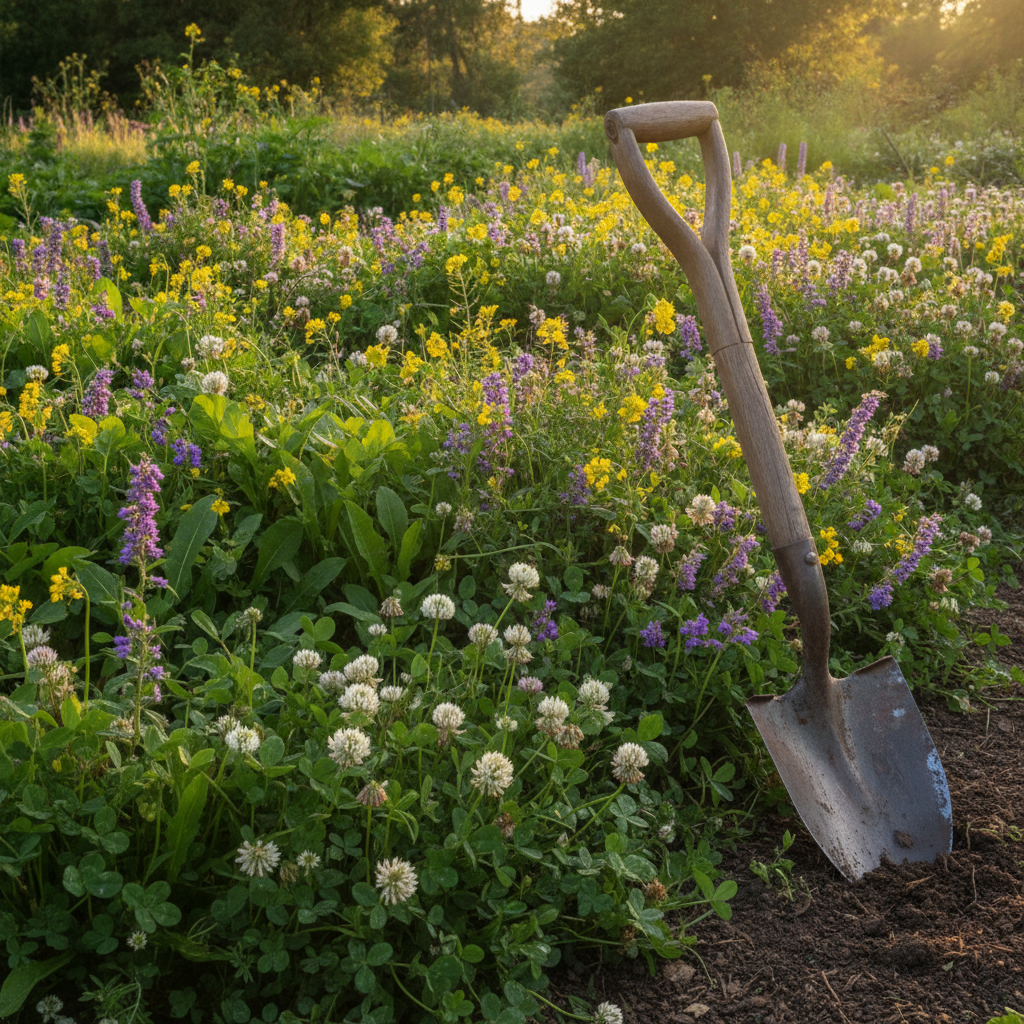
A green manure crop is any plant grown specifically to be dug or turned into the soil while it’s still green and actively growing. Unlike compost, which is made off-site and carried in, green manure works on the spot. The plant captures nutrients — especially nitrogen — from the air and soil surface. Then, when you cut and bury it, those nutrients release slowly as microbes break down the organic matter.
This is not the same as letting weeds go to seed and hoping for the best. Green manure is intentional. You choose the plant, time the burial, and let soil biology do the rest. It’s a system as old as agriculture itself — and it outperforms most bagged soil conditioners in both cost and long-term effect.
If you’re still learning to read what your soil needs before you plant, the post Soil Sense Without the Lab: Read Your Dirt, Fix It Fast is a great place to start before adding any amendment, including green manures.
Why Green Manure Crops Beat Store-Bought Amendments
The appeal of a bag of fertilizer is convenience. Open, pour, water. But that convenience comes at a cost beyond the price tag. Synthetic nitrogen leaches fast. It can acidify soil over time. It feeds plants but not the microbial web beneath them.
Green manure, on the other hand, feeds the whole system. As buried plant material breaks down, it:
- Releases nitrogen, phosphorus, and trace minerals slowly
- Builds organic matter and improves soil structure
- Feeds earthworms and beneficial fungi
- Suppresses weeds when growing as a dense cover
- Prevents erosion and compaction in bare beds
Think of it as a deposit into your soil bank account rather than a short-term loan. Every season you use green manure, the interest compounds. After two or three cycles, your soil barely needs outside inputs at all.
The Best Plants to Use as Green Manures
Not every plant makes a good green manure. The most effective ones fall into two groups: nitrogen-fixers and biomass builders. Often the best strategy is to use both together.
Nitrogen-Fixing Legumes
These are your workhorses. Legumes host bacteria (rhizobia) in their roots that pull nitrogen directly from the air and fix it in the soil. When buried, that nitrogen becomes available to your next crop.
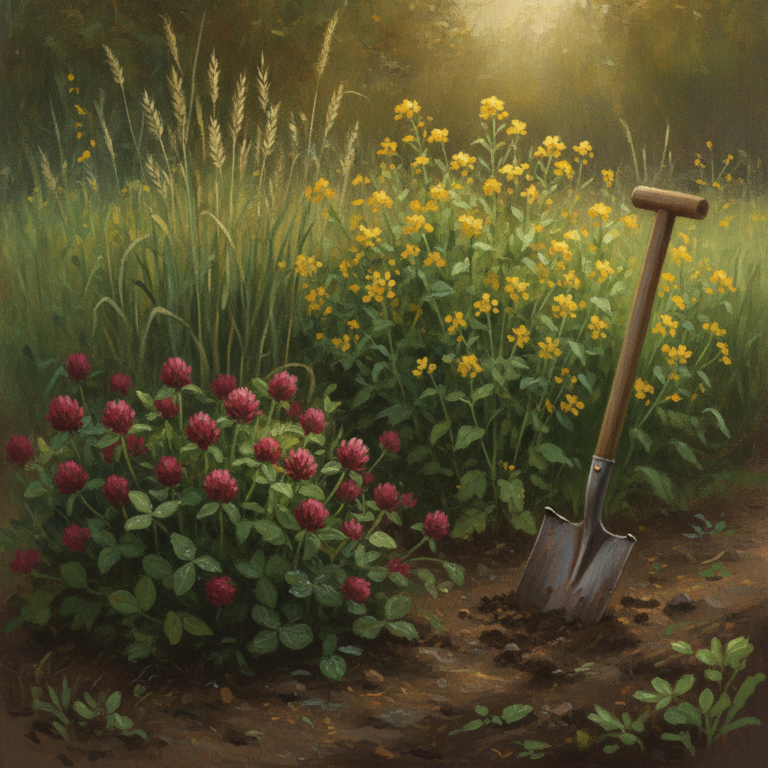
- Crimson clover — Fast-growing, beautiful, and a favorite for spring and fall rotations
- Hairy vetch — Winter-hardy and exceptionally high in nitrogen; excellent before corn or tomatoes
- Austrian winter peas — Cold-tolerant; plant in fall for a spring plow-under
- Fava beans — Fixes large amounts of nitrogen; does well in cool, wet climates
- Cowpeas — Thrives in hot summers; great between spring and fall crops
Biomass Builders (Non-Legumes)
These plants don’t fix nitrogen, but they build incredible organic matter. Pair them with legumes for a balanced green manure blend.
- Buckwheat — Fast summer crop; smothers weeds and breaks up compaction
- Phacelia — Beloved by bees and turns into soft, fast-decomposing matter
- Mustard — Releases biofumigant compounds when buried; suppresses soil pathogens
- Oats or winter rye — Dense root systems loosen clay soils and prevent erosion
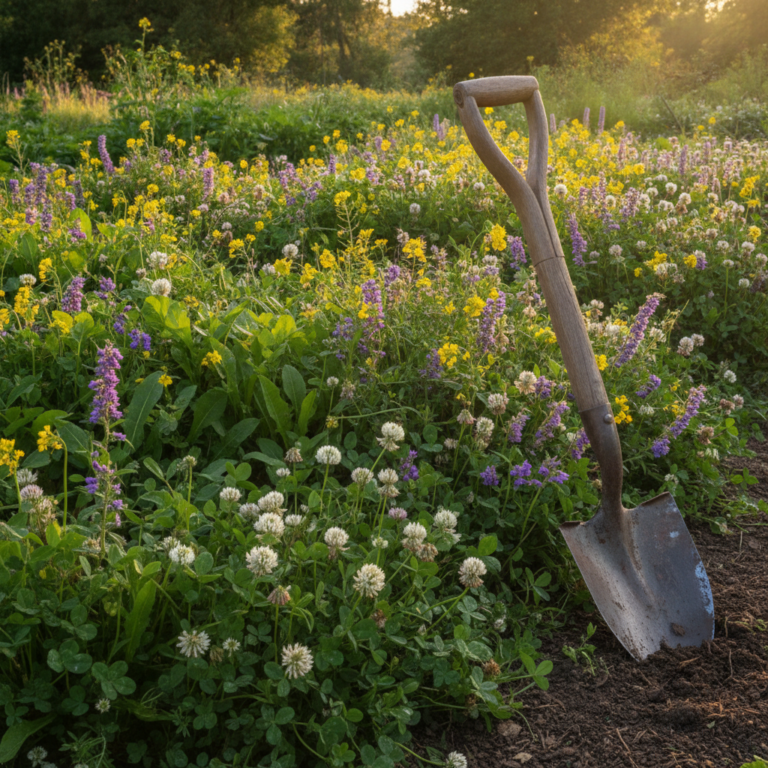
Mixing a legume like crimson clover with a grass like winter rye gives you both nitrogen and structure. That combination is hard to beat at any price.
Timing the Cut: When to Plow Under for Maximum Nitrogen
Here’s the detail most gardeners miss — and it makes all the difference. The timing of when you cut and bury your green manure crop determines how much nitrogen your next crop actually receives.
The golden rule: cut and bury just before or at early flower. At this stage, the plant is holding maximum nitrogen and the tissues are still soft enough to break down quickly. Wait until seed set, and you’ll get tougher stems, less available nitrogen, and a possible weed problem from scattered seeds.
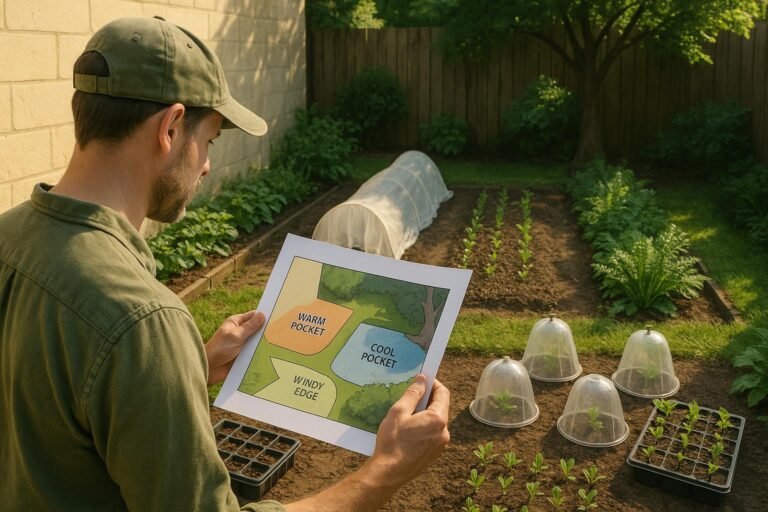
After cutting, give the buried material two to four weeks to begin decomposing before you plant into it. In warm soil (above 60°F), breakdown is faster. In cool spring soil, allow closer to four weeks. If you’re working with a microclimate that warms up early or stays cool longer, the guide at Climate-Proof Your Crops: A 30-Day, Microclimate–Aware Planting Plan will help you plan those windows accurately.
How to Cut and Bury: The Simple Method
You don’t need specialized equipment. A sharp spade and some patience will do it.
- Cut the plants down at soil level with shears or a scythe
- Chop the green material roughly — smaller pieces break down faster
- Dig the top 6–8 inches of soil and lay the material in layers
- Cover with soil and water lightly if dry
- Wait two to four weeks, then plant
In a no-dig garden, you can lay cut green manure on the surface and cover with a thick layer of compost or mulch instead. The results are slightly slower, but the outcome is still excellent.
A Practical Green Manure Planting Calendar
This calendar works for most temperate climates in the Northern Hemisphere. Adjust for your hardiness zone and local frost dates.
Spring (March–May)
Sow phacelia, crimson clover, or oats as soon as the soil is workable. These fast growers will be ready to plow under in 6–8 weeks — just before you transplant summer crops. This is an ideal rotation before tomatoes, squash, or peppers.
Early Summer (June)
After your spring plow-under has rested and you’ve harvested early cool-season crops, sow buckwheat or cowpeas in empty beds. Buckwheat is ready to turn in just 5–6 weeks. Use this window in any gap between plantings rather than leaving soil bare.
Late Summer (August–September)
Sow hairy vetch, Austrian winter peas, or winter rye in beds that are wrapping up their summer season. These overwinter, actively fixing nitrogen through fall, then provide a ready-made green manure to dig in come spring. This is the most powerful rotation in the calendar.
Fall (October–November)
If you missed the August window, winter rye is still a solid choice. It germinates in cold soil and provides excellent erosion control and weed suppression through winter. Plow it under in early spring.
If you want to track how these rotations perform year over year — which is where the real learning happens — the Field Notes to Flourishing: Templates and Prompts to Track Growth, Mistakes, and Milestones resource gives you a practical framework for recording exactly that.
Common Mistakes to Avoid
Green manure is forgiving, but a few missteps can reduce its effectiveness.
- Burying too late: Waiting until plants are woody or seeding slows decomposition and can introduce weed seeds
- Planting immediately after burial: Decomposing organic matter temporarily ties up soil nitrogen — always wait the full two to four weeks
- Using only one crop type: Legumes alone give nitrogen but little structure; biomass crops alone give structure but little nitrogen. Mix them.
- Skipping dry spells: Decomposition stalls in dry soil. Water lightly after burial if rain isn’t expected
Fitting Green Manure Into a Small Garden
You don’t need a half-acre to benefit from this practice. Even a single raised bed can run a green manure rotation in the gap between spring and fall plantings. The key is timing. When one crop comes out, sow buckwheat or phacelia immediately — don’t leave bare soil sitting idle.
If you’re gardening in tight quarters and want to layer multiple strategies together, the ideas in Microforest in Small Spaces: A Step-by-Step Plan for Edible, Biodiverse Gardens show how vertical space and companion planting can work alongside green manure rotations beautifully.
You can also run green manures in paths between permanent beds. Clover in walkways fixes nitrogen every year without ever occupying your planting space. It’s one of the simplest upgrades a small-space gardener can make.
Start This Season — Even If It’s Just One Bed
Green manure crops are one of those rediscovered techniques that feel almost too simple to be true. Grow a plant. Cut it down. Bury it. Wait. Watch your soil transform over seasons. Yet that simplicity is exactly why it worked for millennia before synthetic inputs arrived.
You don’t need to overhaul your garden to start. Pick one empty bed this month. Scatter buckwheat or crimson clover seed. Let it grow for six weeks, cut it at first flower, and dig it in. Then wait. Then plant. Pay attention to how the soil feels, how the next crop performs, and whether you need to reach for any amendments at all.
The answer, after a season or two of green manures, is usually no. That’s the plow-under secret your grandparents knew — and now, so do you.