Green Manure Crops: The Plow-Under Secret
Long before a bag of synthetic nitrogen ever sat on a store shelf, farmers already knew how to feed their soil. They grew green manure crops — specific plants cultivated purely to be chopped down and buried alive. No hauling compost. No expensive amendments. Just living organic matter turned back into the earth, exactly where it was needed. If you’ve ever wondered why your grandparents’ gardens seemed to produce without much fuss, this forgotten rotation trick is a big part of the answer.
What Are Green Manure Crops and Why Do They Matter?
Green manure crops are plants grown specifically to improve soil fertility — not to harvest and eat. You grow them, then dig or till them back in while they’re still green and full of nutrients. The decomposing plant material feeds soil microbes, adds organic matter, and in many cases fixes atmospheric nitrogen directly into the root zone.
Think of it as growing your own fertilizer factory underground. The results are measurable. Studies consistently show that properly timed green manures can add between 50 and 200 pounds of nitrogen per acre to the soil. For a home gardener, that translates to noticeably richer beds — without spending a cent on bagged products.
Furthermore, green manures break up compacted soil with their root systems, suppress weeds during the growing period, and attract beneficial insects. They’re doing multiple jobs at once, quietly, season after season.
Before you go any further, it’s worth checking how your current soil behaves. If you haven’t read your dirt recently, this guide on soil sense without the lab will help you understand what you’re working with before you plant anything new.
The Best Green Manure Crops for Home Gardens
Not all cover crops double as effective green manures. The best ones are fast-growing, nitrogen-rich, and easy to incorporate. Here’s what actually works:
Legumes: The Nitrogen Fixers
Legumes are the stars of the green manure world. Their roots host Rhizobium bacteria, which pull nitrogen from the air and fix it into the soil. When you bury these plants, that nitrogen becomes available to your next crop within weeks.
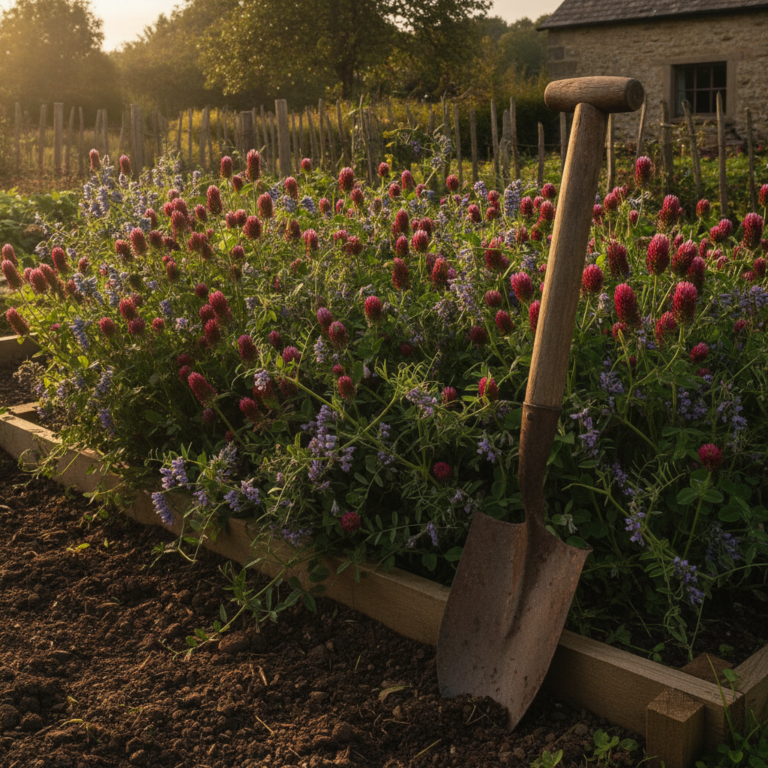
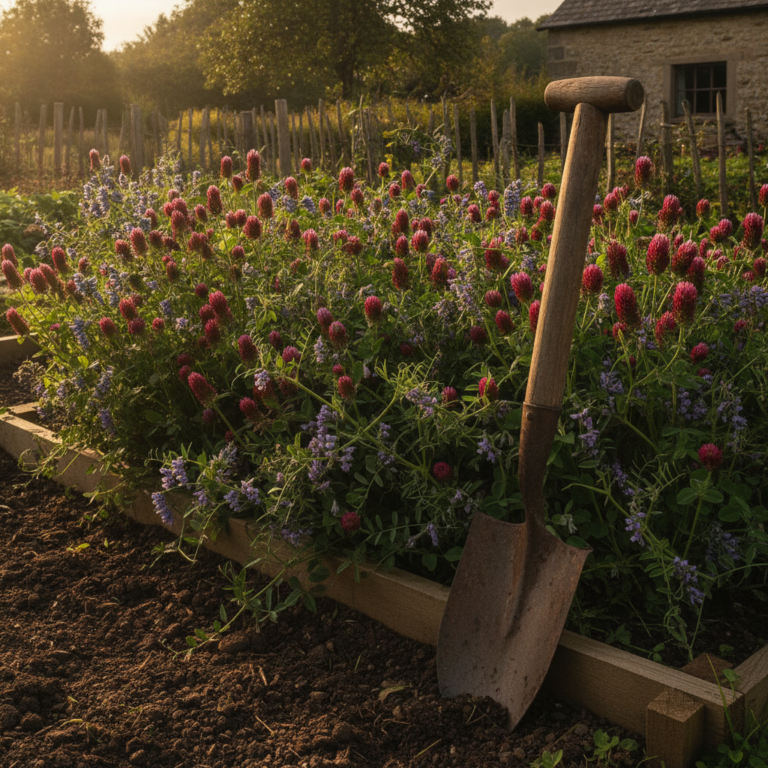
- Crimson Clover — Fast-growing, beloved by pollinators, and incredibly easy to establish. Ideal for spring or fall planting.
- Fava Beans (Field Beans) — Hardy and cold-tolerant. Plant them in autumn and dig them in before they flower in spring.
- Hairy Vetch — One of the highest nitrogen-fixing legumes available. Excellent winter hardiness in most climates.
- Austrian Winter Peas — A reliable workhorse for fall planting. Easy to source and quick to establish before frost.
Brassicas and Grasses: The Structure Builders
While they don’t fix nitrogen, brassicas and grasses add tremendous amounts of organic matter. They also suppress pest cycles and can reduce soil-borne disease pressure through a process called biofumigation.
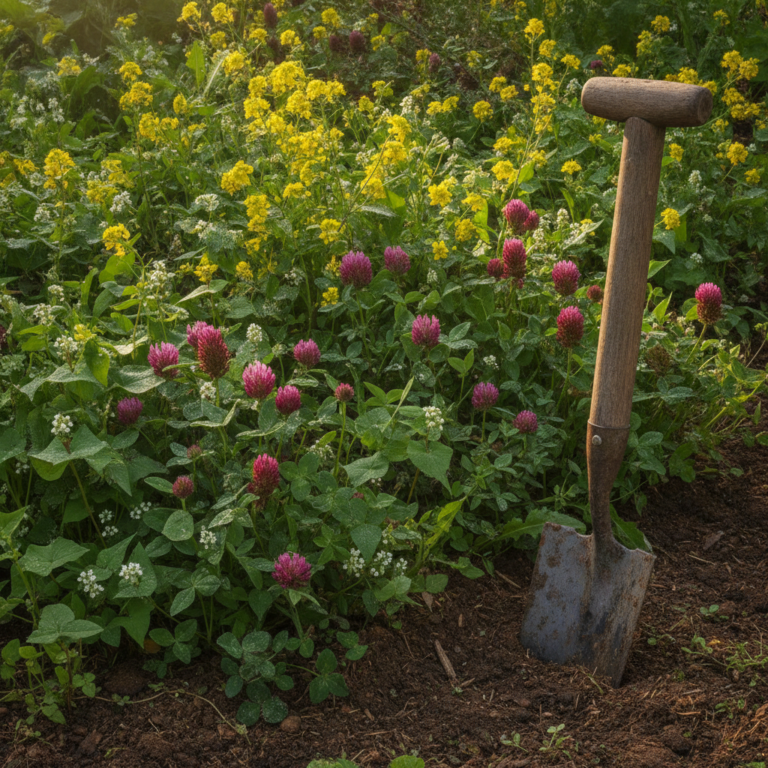
- Mustard — Releases natural compounds as it breaks down that suppress nematodes and fungal pathogens.
- Phacelia — Technically not a brassica, but a fast-decomposing powerhouse. Loved by bees, breaks down rapidly after cutting.
- Buckwheat — A warm-season option that grows in six weeks and decomposes quickly. Great for smothering weeds between main crops.
- Oats or Winter Rye — Cold-hardy grasses that add bulk organic matter and improve soil structure beautifully.
Timing the Cut-and-Bury for Maximum Nitrogen Release
Here’s where most gardeners get it slightly wrong. Timing is everything with green manure crops. Bury them too late, and the stems become woody and slow to decompose. Bury them too early, and you lose much of the nitrogen potential.
The golden rule: cut and incorporate green manures at the early flowering stage, just as the first buds open. At this point, the plants are packed with nitrogen and soft enough to break down quickly. The carbon-to-nitrogen ratio is ideal — not too woody, not too watery.
After turning the crop in, wait at least two to three weeks before planting your main crop. This allows decomposition to begin and prevents the raw green matter from temporarily locking up soil nitrogen as microbes go to work. In warm weather, three weeks is usually sufficient. In cool spring soil, allow four weeks to be safe.
If you’re short on time, you don’t always have to dig green manures in. You can also cut them at the base and leave the material as a thick mulch on the surface. This works especially well for no-dig gardeners and raised bed systems.
A Practical Green Manure Planting Calendar
The beauty of green manures is that there’s always something you can be growing, no matter the season. Use this simple calendar as your starting point and adjust based on your local climate.
If you’re mapping out your full garden year, the climate-proof planting plan is an excellent companion resource for fitting green manures into your existing layout.
Spring (March–May)
Sow crimson clover, phacelia, or buckwheat into bare beds as soon as the soil can be worked. These grow fast and can be dug in within six to eight weeks, just before you’re ready to plant summer crops.
Summer Gap Planting (June–July)
After harvesting early crops like garlic, spring lettuce, or peas, don’t leave beds bare. Sow buckwheat or phacelia immediately. These warm-season green manures grow quickly and can be turned in four to six weeks later.
Late Summer to Autumn (August–October)
This is prime time for green manures. Sow hairy vetch, crimson clover, winter rye, or fava beans in any beds that won’t be planted again until spring. Let them grow through autumn. Some will overwinter; others will be killed by frost, creating a natural mulch layer.
Winter Hardy Overwintering (October–February)
In mild climates, Austrian winter peas and hairy vetch will actively grow through winter. In colder zones, winter rye and fava beans go dormant but resume growth in early spring. Dig them all in six weeks before your main planting date.
Why Green Manures Outperform Most Store-Bought Soil Conditioners
Bagged fertilizers give your plants a quick hit of nutrients, but they do little for the long-term biology of your soil. Green manure crops, by contrast, feed the entire soil food web. They add organic matter that improves water retention, encourages earthworm activity, and supports the fungal networks that help plant roots absorb nutrients more efficiently.
Additionally, green manures are essentially free once you have seeds. A small packet of crimson clover or hairy vetch covers a surprising amount of ground and costs far less than a single bag of nitrogen fertilizer — while delivering results that last multiple seasons.
They also work in synergy with other natural soil-building methods. If you’re curious about pairing green manures with other forgotten techniques, the post on mapping your garden microclimates can help you identify which beds will benefit most from soil-building rotations.
For gardeners who are just building their foundational skills, the 4-week beginner garden plan is a great place to start before adding green manures to the rotation. Understanding the basics first makes all of this much easier to implement.
Getting Started This Season
You don’t need to overhaul your entire garden to start benefiting from green manures. Pick one empty bed — or one spot that tends to sit bare between crops — and sow it this week. Start with crimson clover or buckwheat if you’re new to this. Both are forgiving, fast, and rewarding.
Watch what happens to your soil over a season or two. You’ll notice darker color, better texture, and plants that seem to grow with less effort. That’s not magic. That’s biology working the way it did long before synthetic inputs entered the picture.
Your grandparents knew something important: the soil can feed itself, if you give it the right tools. Green manure crops are one of the oldest and most reliable of those tools — and they’re ready to work in your garden right now.