Green Manure Crops: The Plow-Under Secret
Long before a bag of synthetic fertilizer ever sat on a hardware store shelf, farmers already knew how to grow nitrogen. They simply grew it in the ground — then turned it right back in. Green manure crops are the plow-under secret that built some of the most fertile soils in history, and most modern gardeners have never even heard of them. If you’re tired of buying soil amendments every single season, this old-time technique might be exactly what your garden has been missing.
What Are Green Manure Crops, Exactly?
A green manure crop is any plant grown specifically to be cut down and dug into the soil before it fully matures. You’re not growing it to eat. You’re growing it to feed the earth beneath your feet.
The concept is beautifully simple. Living plants capture energy from the sun, pull nitrogen from the air, and build organic matter in their stems, roots, and leaves. When you chop them down and bury them at the right moment, all of that captured energy releases back into the soil as microbes break down the fresh material. The result is a slow, steady flush of nutrients — particularly nitrogen — without a single synthetic input.
This is not a new idea. It is a very, very old one. Roman farmers used lupins as green manures. Chinese farmers buried rice straw and legumes for centuries. Your great-grandparents likely called it “turning in the clover.” The knowledge was passed down quietly — until industrial agriculture decided a bag was more convenient than a seed.
Fortunately, the seed still works just as well as it always did.
The Best Green Manure Crops for Home Gardeners
Not every cover crop makes an equally good green manure. The best choices balance fast growth, nitrogen fixation, and easy decomposition. Here are the ones that consistently deliver results in home gardens.
Crimson Clover
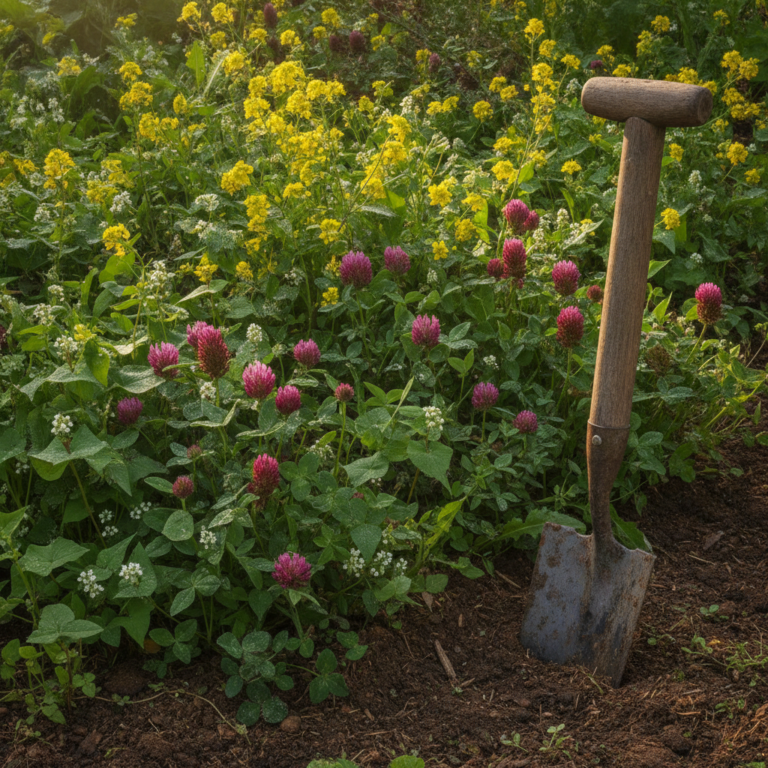
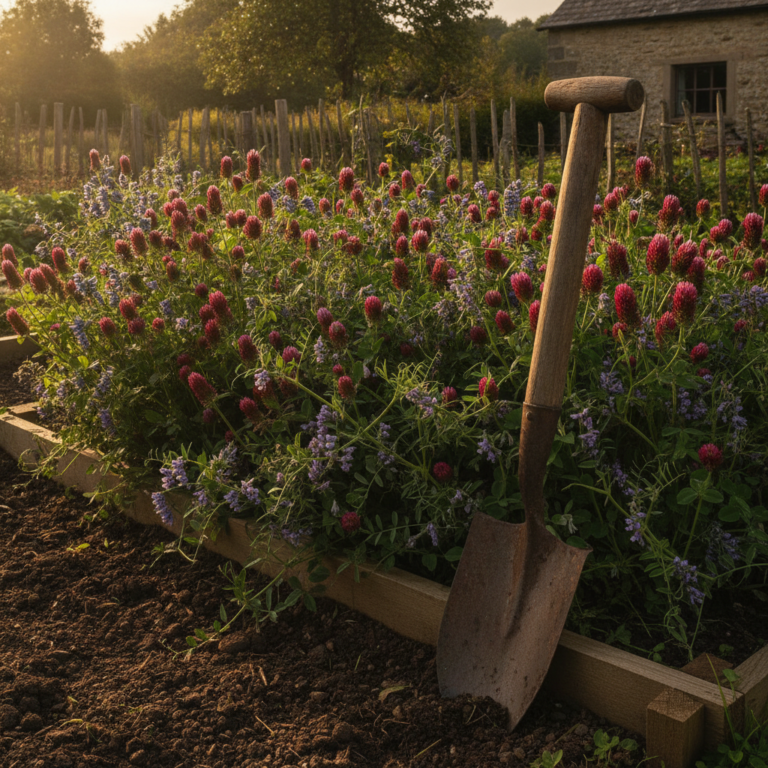
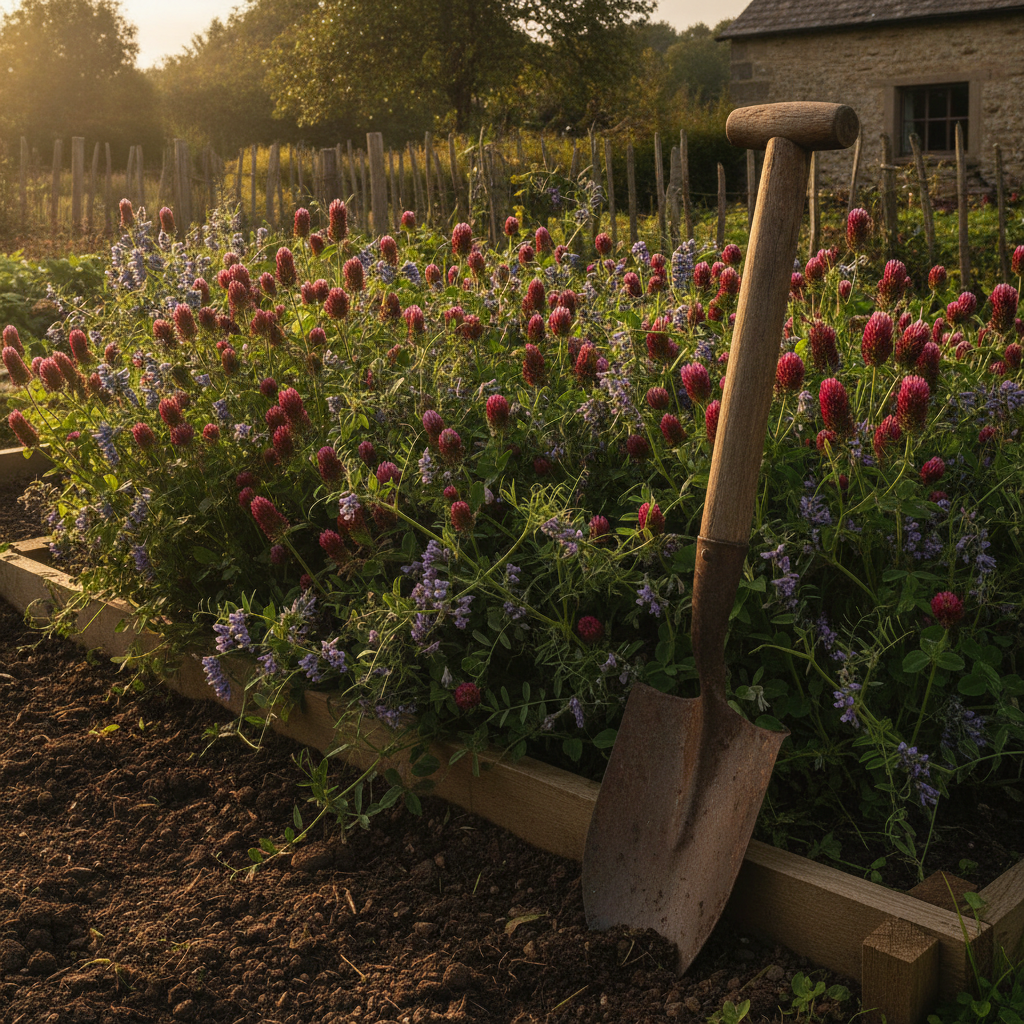
Crimson clover is arguably the most reliable green manure for home gardeners. It grows quickly, fixes impressive amounts of nitrogen through its root nodules, and produces gorgeous red blooms that attract pollinators before you turn it under. It works well in both spring and fall plantings. One pound of seed covers roughly 1,000 square feet.
Field Peas (Austrian Winter Peas)
These cold-hardy legumes are excellent for fall and early spring sowings. They establish fast, smother weeds effectively, and fix nitrogen at high rates. They also have soft stems that decompose quickly after incorporation — which means nutrients become available to your next crop sooner than with tougher plants.
Buckwheat
Buckwheat is the warm-season workhorse of green manures. It grows so fast it’s ready to turn under in just 30 to 40 days. It doesn’t fix nitrogen the way legumes do, but it excels at scavenging phosphorus from deep in the soil and releasing it in plant-available forms once it decomposes. It’s also a powerful weed suppressor and draws beneficial insects by the hundreds.
Hairy Vetch
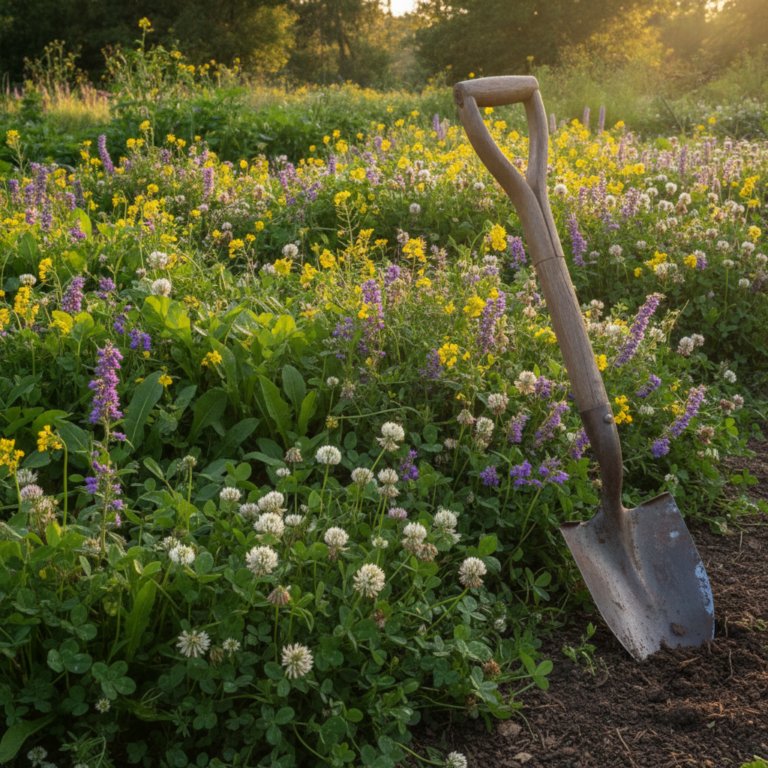
Hairy vetch is one of the highest nitrogen-fixing green manure crops available to home gardeners. Studies suggest it can contribute 80 to 200 pounds of nitrogen per acre when incorporated at peak growth. It’s a vining plant, so it tangles a bit — but a good sharp spade handles it easily. Plant it in fall to overwinter and turn in early spring.
Mustard
Mustard brings a special bonus to the green manure toolkit. As it decomposes, it releases compounds called glucosinolates that act as natural soil fumigants, suppressing soilborne diseases and certain root pests. It’s not a nitrogen fixer, but its biofumigation effect makes it invaluable in rotation — especially in beds that have struggled with fungal disease.
Winter Rye
Winter rye is the toughest cover crop you can plant. It tolerates poor soils, freezing temperatures, and neglect. Its dense root system adds extraordinary amounts of organic matter. The trade-off is that it has a high carbon-to-nitrogen ratio, so it decomposes more slowly. Allow three to four weeks between incorporation and planting your next crop.
How to Time the Cut for Maximum Nitrogen Release
Timing is everything with green manure crops. This is where most beginners get it wrong — and where the old farmers had it exactly right.
The key principle: turn your green manure under just as it begins to flower, but before seeds set. At this stage, the plant’s tissues are at their most nitrogen-rich and still soft enough to decompose quickly. Wait too long and the plant becomes woody, tying up nitrogen in slow-decomposing carbon rather than releasing it fast.
Here’s a simple timing framework to follow:
- Chop the plants at soil level or just below using a sharp hoe or scythe.
- Let them wilt on the surface for two to three days. This starts the breakdown process and makes turning easier.
- Dig or till the wilted material into the top six to eight inches of soil.
- Wait two to four weeks before planting your main crop. This allows decomposition to progress and prevents nitrogen lock-up.
If you’re gardening in a small space and don’t want to wait, try the “chop and drop” method instead — cut the plants and leave them as a thick mulch on the surface. It works more slowly, but it still feeds the soil without disrupting your planting schedule. You can read more about assessing your soil’s readiness in Soil Sense Without the Lab: Read Your Dirt, Fix It Fast — a great companion resource before you begin.
A Practical Green Manure Planting Calendar
Here’s how to weave green manure crops into a real home garden rotation across a full growing year.
Early Spring (March–April)
Sow field peas or crimson clover as soon as the soil can be worked. These cold-tolerant crops establish fast and will be ready to turn under by late April or early May — right before you want to plant warm-season vegetables.
Early Summer Gap (May–June)
After harvesting spring greens or cool-season crops, sow buckwheat immediately. It germinates in three to five days and will be ready to incorporate in just over a month. This prevents weeds from colonizing bare ground during the warm gap between seasons.
Late Summer (July–August)
Sow another round of buckwheat or a mustard mix in any beds that have finished producing. The mustard’s biofumigation effect is especially valuable at this time of year, cleaning the soil ahead of fall planting.
Fall (September–October)
This is the most important green manure window of the year. Sow hairy vetch, winter rye, or a vetch-rye blend across any beds that won’t be producing through winter. These crops will overwinter, building root mass and fixing nitrogen through the cold months. Turn them under in early spring for a massive nutrient boost.
If you’re just starting out and want to work this into a bigger skill-building plan, the Smart Starts: A 4-Week Skill-Build Plan for Complete Garden Beginners is a fantastic place to ground yourself before diving into rotational techniques.
Why Green Manures Outperform Most Store-Bought Amendments
Bagged fertilizers deliver a single nutrient hit. Green manure crops deliver something fundamentally different: a complete biological event.
When fresh green material breaks down in the soil, it doesn’t just release nitrogen. It feeds billions of soil microbes, builds long-term organic matter, improves water retention, loosens compacted ground, and creates the kind of living soil structure that no bag of granules can replicate. The improvement compounds over time. Each rotation leaves the soil better than the last.
There’s also a cost argument worth making. A pound of crimson clover seed covers 1,000 square feet and costs a fraction of the nitrogen fertilizer you’d need to achieve a comparable effect — and it does so without risking fertilizer burn, salt buildup, or the slow degradation of soil biology that synthetic inputs can cause over years of use.
This is precisely the kind of layered, systems-level thinking that separates experienced gardeners from beginners. If you want to develop that kind of judgment across every area of your garden — not just soil fertility — Layered Learning: A Gardener’s Progressive System That Grows with You offers an excellent framework for building those skills intentionally.
Getting Started This Season
You don’t need a full farm rotation to benefit from green manures. Start with a single raised bed or a small section of your garden. Sow buckwheat after your current crop finishes. Observe how the soil looks, smells, and feels after you turn it under. Compare that bed to your others over the following weeks.
That single experiment will likely convince you more than any article ever could. The results speak clearly in the language of dark, crumbly, living soil — the kind your grandparents knew how to build, and the kind your vegetables will respond to with everything they’ve got.
The plow-under secret was never really a secret. It was just waiting for someone to dig it back up.