Green Manure Crops: The Plow-Under Secret
Green Manure Crops: The Plow-Under Secret Old Farmers Never Forgot
Before synthetic nitrogen came in a bag, farmers fed their fields the old-fashioned way — they grew it. Green manure crops were the backbone of soil fertility for thousands of years. Farmers planted fast-growing, nutrient-rich plants, let them reach peak growth, then chopped and buried them. The soil did the rest. Today, most home gardeners have never even heard of this technique. That’s a shame, because it still works beautifully — and it costs almost nothing.
If you’ve been frustrated by tired, compacted soil that doesn’t respond to store-bought amendments, this post is for you. You’re about to rediscover one of agriculture’s most powerful forgotten tricks.
What Are Green Manure Crops, Exactly?
Green manure crops are plants grown specifically to be cut down and dug back into the soil while still green. Unlike compost, which you make off-site and carry in, green manures feed the soil right where they grow. They add organic matter, break up compaction, suppress weeds, and — with the right plant choices — fix atmospheric nitrogen directly into your soil.
This isn’t the same as letting weeds go to seed and hoping for the best. Green manuring is intentional. You choose specific plants, time their growth carefully, and cut them at the exact right moment. That timing is everything, as you’ll see shortly.
Think of it as growing your own fertilizer. And unlike a bag of 10-10-10, your homegrown fertilizer also feeds soil biology, improves drainage, and builds long-term structure. If you’re still trying to figure out what your soil actually needs first, start with Soil Sense Without the Lab: Read Your Dirt, Fix It Fast — it’ll help you identify what you’re working with before you plant.
The Best Plants to Use as Green Manure Crops
Not every plant makes a great green manure. The best choices are fast-growing, easy to dig under, and — ideally — nitrogen-fixing legumes. Here’s a breakdown of the top performers:
Legumes: The Nitrogen Fixers
Legumes work with soil bacteria called rhizobia to pull nitrogen from the air and store it in root nodules. When you dig them under, that nitrogen releases slowly into the soil. This is the closest thing to free fertilizer you’ll ever find.
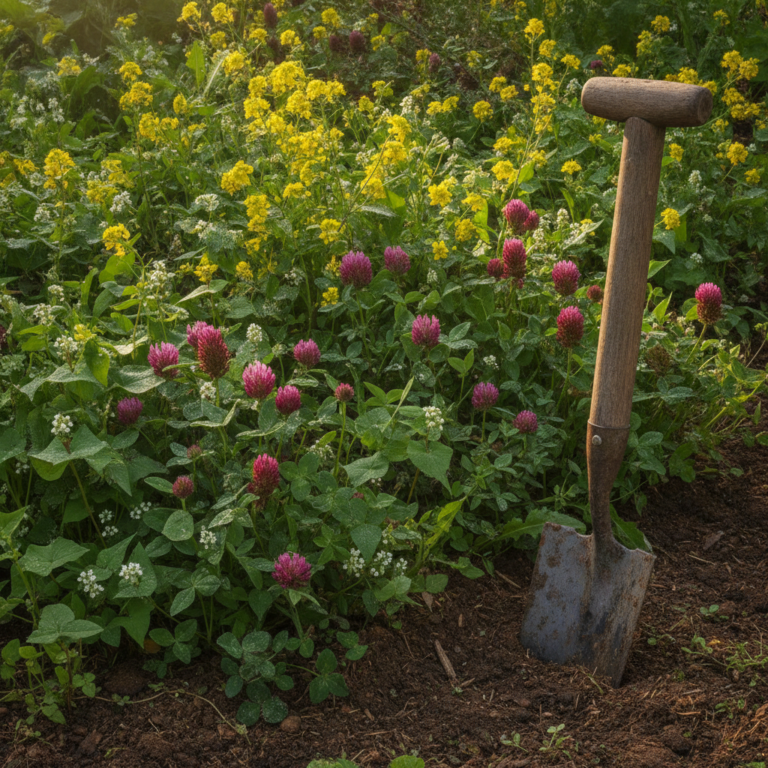
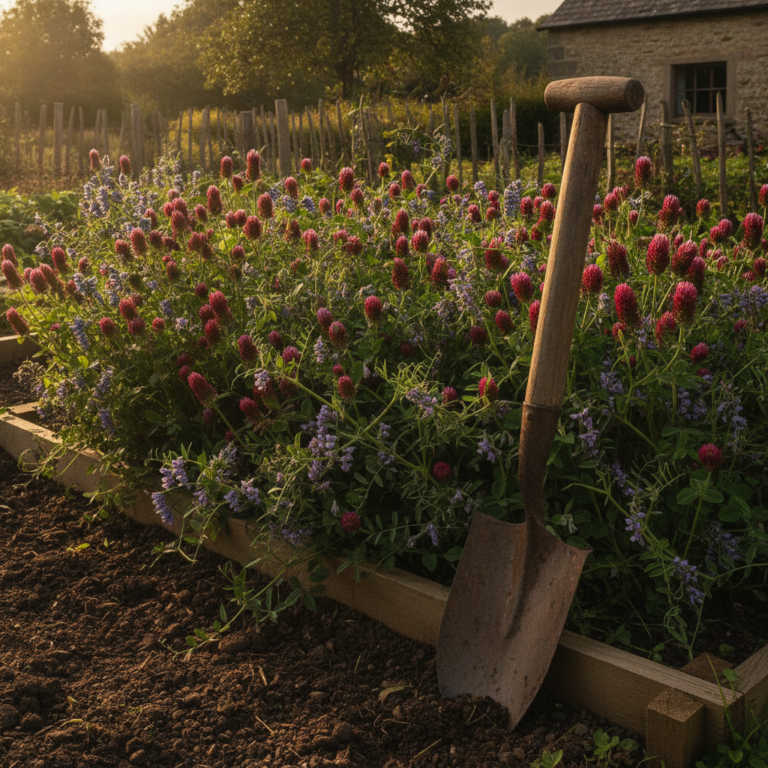
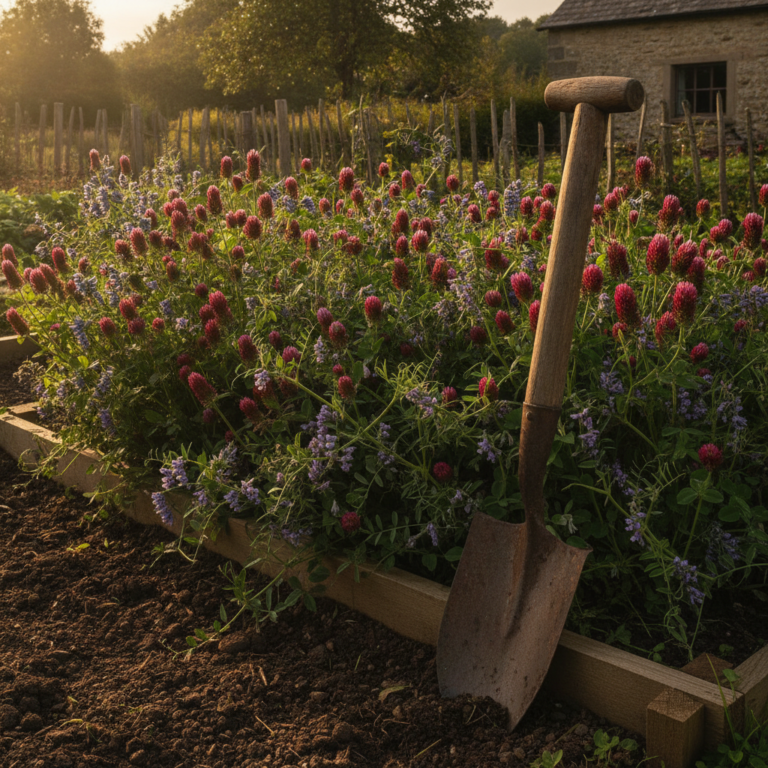
- Crimson clover — Fast-growing, beautiful, and a heavy nitrogen fixer. Great for spring and fall. Bees love it too.
- Field peas — Excellent cool-season green manure. Grow fast, fix significant nitrogen, and are easy to cut and turn.
- Fava beans — A cool-weather powerhouse. They fix nitrogen and add bulk organic matter quickly.
- Hairy vetch — One of the most cold-hardy nitrogen fixers available. Perfect for overwintering and spring incorporation.
- Cowpeas — A warm-season legume that thrives in hot summers when cool-season crops struggle.
Non-Legumes: Organic Matter Builders
Non-legumes don’t fix nitrogen, but they add enormous amounts of organic matter and help break up heavy soils. They’re especially valuable when combined with legumes.
- Buckwheat — Grows incredibly fast in summer. It smothers weeds, attracts pollinators, and breaks down quickly after digging under.
- Oats and rye — Cool-season cereals that grow deep, fibrous roots. Excellent for improving soil structure and suppressing weeds.
- Phacelia — An underappreciated gem. It grows rapidly, makes beautiful flowers, and breaks down fast in soil.
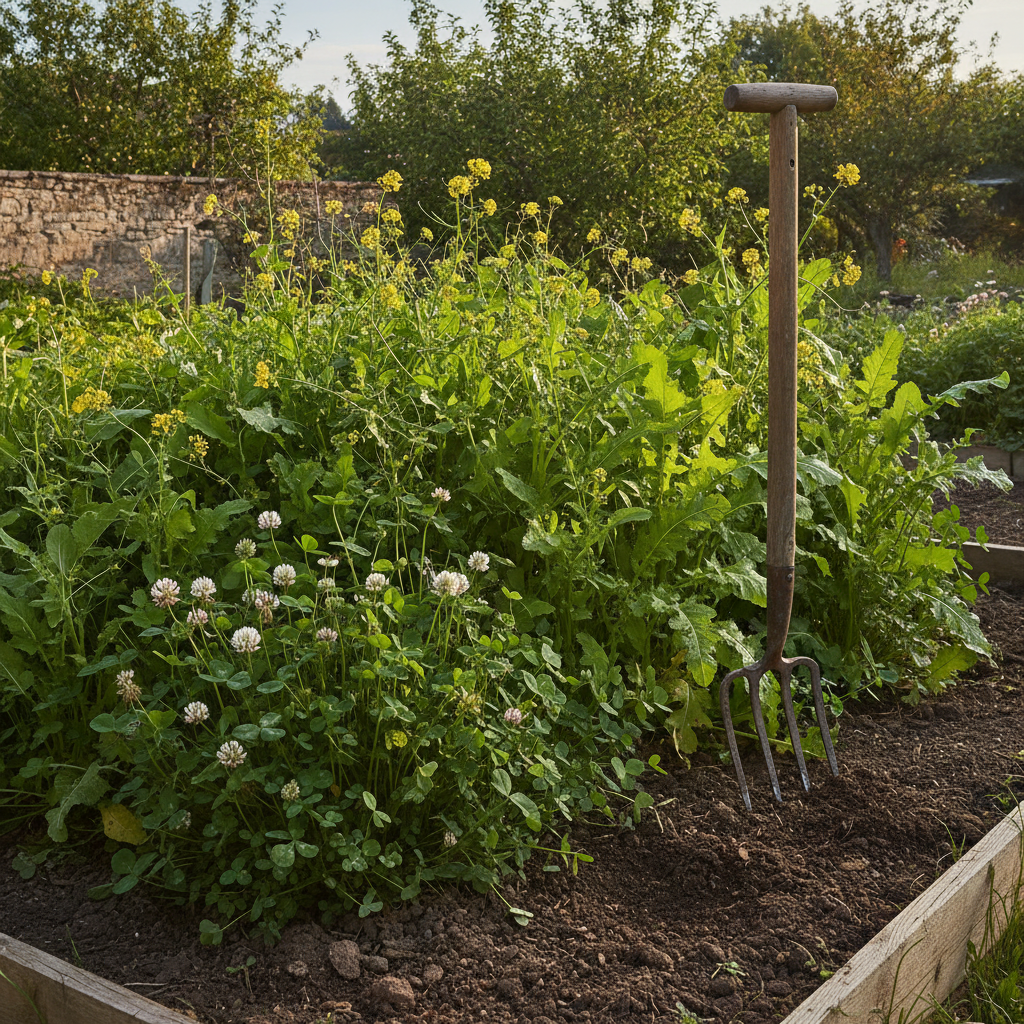
- Mustard — Acts as a mild biofumigant, suppressing soil pathogens while adding organic matter.
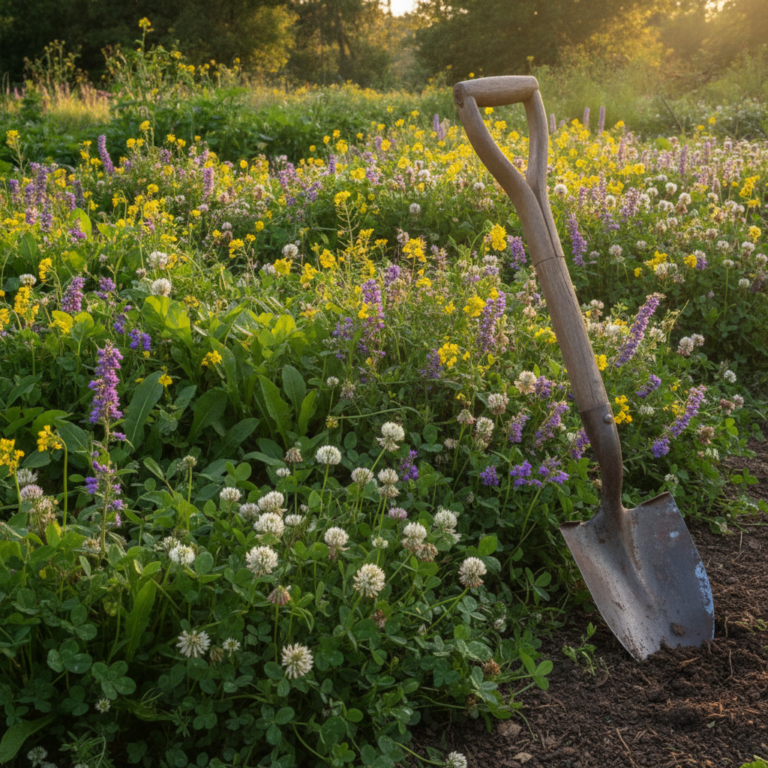
For most home gardeners, the best approach is a mix — pair a legume like clover with a grain like oats. You get nitrogen fixation plus bulk organic matter in one planting.
The Cut-and-Bury Timing: Why It Matters So Much
Here’s where most beginners go wrong. They either wait too long — letting the green manure go to seed and become woody — or they dig too early, before the plant has built up enough biomass to matter. The sweet spot is just before or at early flowering.
Why early flowering? At that stage, the plant has reached peak biomass and nutrient concentration. The stems are still soft and succulent. They’ll break down fast once buried. After flowering, cell walls toughen up with lignin, and decomposition slows dramatically. You want soft, green, and juicy — not woody and brown.
Here’s your step-by-step process:
- Watch for the first flower buds to appear — this is your signal.
- Cut the crop down with shears, a scythe, or even a string trimmer.
- Let it wilt for one to three days on the surface. This slows the initial decomposition surge that can temporarily lock up nitrogen.
- Chop and dig it in to the top six to eight inches of soil. A sharp spade or garden fork works well. If you want to protect your tools through multiple seasons of this work, Tools That Grow with You has excellent guidance on care and maintenance.
- Wait two to four weeks before planting. The decomposing material needs time to stabilize before it can nourish your crops without competing for nitrogen.
That waiting period is crucial. Patience here pays off in dramatically better transplant success.
A Practical Green Manure Planting Calendar
One of the most common questions is: when do I fit this into my regular garden rotation? The answer depends on your climate and growing season, but here’s a general framework that works for most temperate gardens.
Early Spring (Zones 5–8: March–April)
Sow field peas, oats, or crimson clover as soon as the soil can be worked. These cool-lovers germinate fast and put on bulk before summer crops need the space. Cut and dig under in late April or early May, then wait two weeks before transplanting tomatoes, peppers, or squash.
Early Summer (June–July)
After cool-season crops finish, sow buckwheat or cowpeas to fill the gap. Buckwheat matures in just six to eight weeks. You can turn it under and still get a fall crop in the same bed. This is one of the most efficient green manure rotations available to home gardeners.
Late Summer to Fall (August–September)
Sow hairy vetch, winter rye, or fava beans after summer crops come out. Let these overwinter if your climate allows. In spring, you’ll have a lush, nitrogen-rich mat ready to dig under — feeding your soil just in time for the main growing season. If you want to plan this across your entire growing space, the Climate-Proof Your Crops: A 30-Day, Microclimate–Aware Planting Plan offers a useful framework for coordinating rotations with your specific conditions.
Winter (Zones 7+: October–February)
Mild-climate gardeners can keep the green manure cycle going all winter. Fava beans and crimson clover will keep growing slowly through mild winters, giving you a ready-to-incorporate crop by late February or March.
Why Green Manure Outperforms Bagged Soil Conditioners
Bagged compost and fertilizers are convenient. But they have real limits. Most bagged products deliver nutrients in a single flush. Green manures release nutrients slowly, in sync with microbial activity, feeding plants the way nature intended — gradually and continuously.
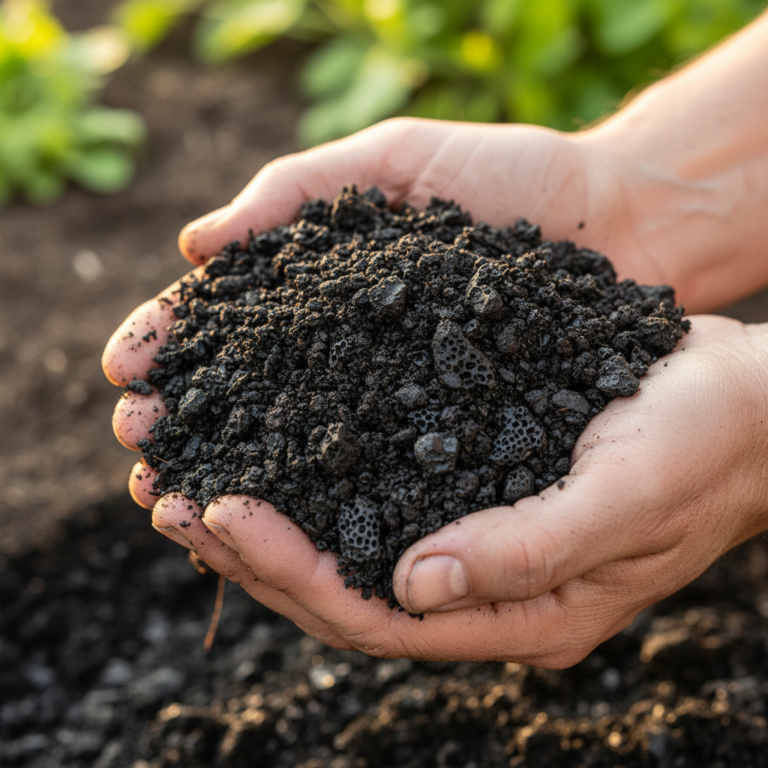
There’s also the soil biology factor. Living roots feed soil microbes through root exudates. When you incorporate a green manure crop, you’re not just adding organic matter — you’re feeding an entire underground ecosystem. Fungi, bacteria, earthworms, and nematodes all benefit. That biological activity is what truly transforms dead dirt into living soil.
Furthermore, green manure crops do something no bag can replicate: they actively break up compaction with their roots while they’re growing. By the time you dig them in, the soil structure is already improved. If you’re building a system that works with nature across seasons, the Perennial Playbook: Build a Low-Input Garden That Keeps Flourishing With You is worth reading alongside this approach.
Getting Started This Season
Green manure crops don’t require special equipment or big investment. A packet of clover seed costs just a few dollars. A handful of field peas is even cheaper. What they do require is a shift in thinking — from treating your soil as a container to fill, to treating it as a living system to feed.
Start small. Pick one empty bed or one gap in your rotation. Sow buckwheat or crimson clover, watch it grow, and dig it in at first flower. Then wait and watch what happens to your soil over the following season. The difference in texture, fertility, and plant vigor is something you need to see to believe.
Your grandparents didn’t have synthetic nitrogen. They had knowledge. Now you do too.
Ready to take your soil-building practices even further? Explore Skill-Scaled Garden Challenges: A 6-Week Plan to Upgrade Your Garden, One Project at a Time for a structured way to layer these techniques into your existing garden routine.