Green Manure Crops: The Plow-Under Secret
Long before a bag of synthetic nitrogen existed, farmers already knew how to feed hungry soil. They grew green manure crops — specific plants raised not for harvest, but to be chopped down and buried alive. The decaying roots and stems fed billions of soil microbes, released nitrogen slowly, and built the kind of dark, crumbly earth that modern gardeners pay good money to recreate. This post brings that old secret back to your backyard, with a practical calendar you can start using this season.
What Are Green Manure Crops, Exactly?
Green manure is any plant grown specifically to be incorporated back into the soil while still green and leafy. The plant matter decomposes underground, releasing nutrients, feeding microbes, and improving soil structure — all at the same time.
This is not the same as composting. With compost, you break material down in a pile, then add it to the soil. With green manure, the breakdown happens in place, right where your next crop will grow. It is faster, cheaper, and surprisingly powerful.
The practice goes back thousands of years. Chinese farmers used hemp and grasses. Roman farmers buried lupins. By the 1700s, European peasants had worked out rotation systems that rival anything soil scientists recommend today.
The reason it worked then — and still works now — comes down to one simple truth: living organic matter, cut at the right time and buried at the right depth, outperforms most store-bought soil conditioners.
The Best Green Manure Crops for Home Gardens
Not every plant makes a good green manure. You want fast growth, deep or fibrous roots, and ideally the ability to fix nitrogen from the air. Here are the top performers.
Legumes: Your Nitrogen Fixers
Legumes are the gold standard. Their roots form partnerships with Rhizobium bacteria, pulling nitrogen from the atmosphere and locking it into the soil. When you dig them under, that stored nitrogen becomes plant food for your next crop.
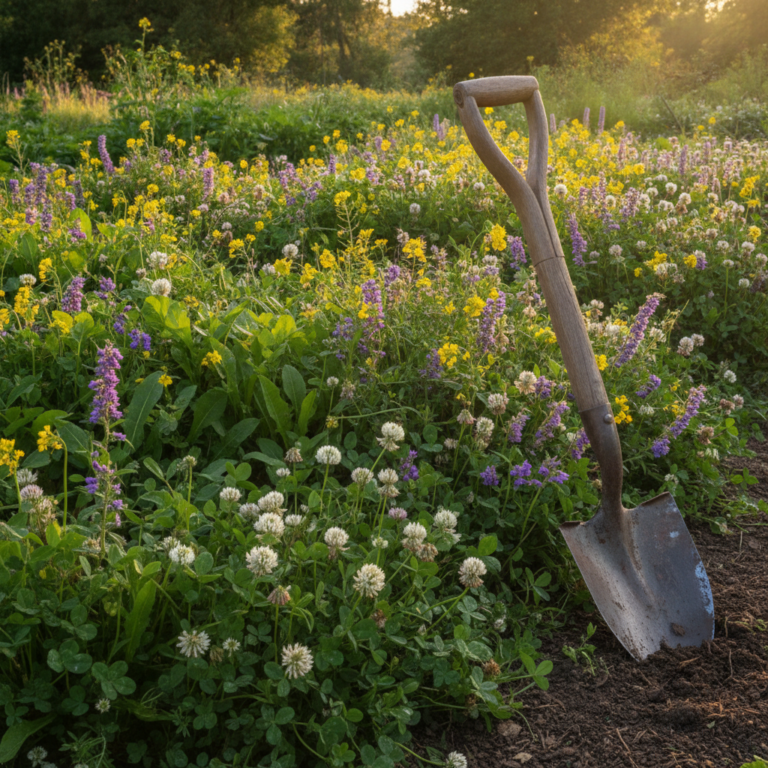
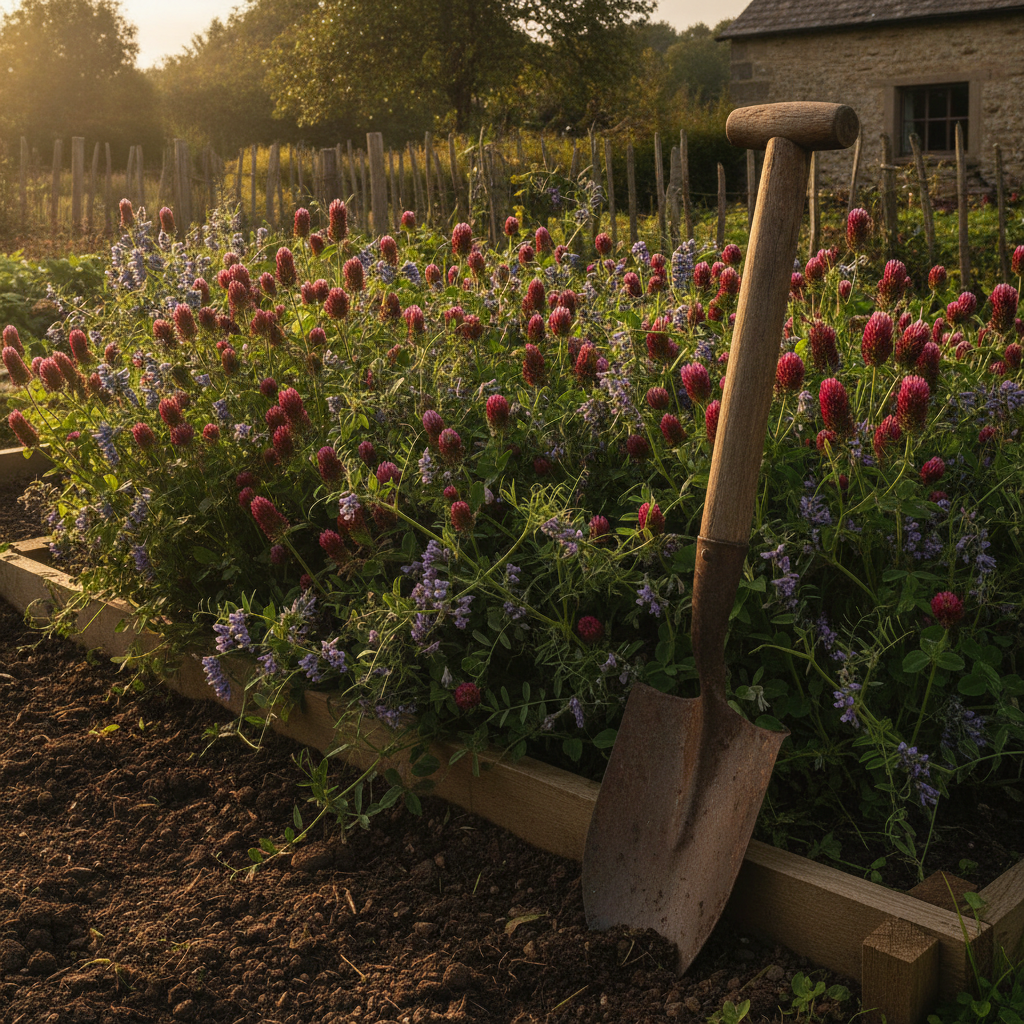
- Crimson clover — Fast-growing, beloved by pollinators, fixes up to 200 lbs of nitrogen per acre. Ideal for spring or fall planting.
- Field peas — Reliable in cool weather, easy to turn in, and excellent at breaking up compacted soil with their roots.
- Fava beans — A cold-hardy powerhouse. Plant in autumn in mild climates; they overwinter and fix nitrogen all winter long.
- Hairy vetch — A vigorous sprawler that pairs well with winter rye. Fixes nitrogen heavily and suppresses weeds better than most.
Non-Legumes: Structure and Organic Matter Builders
These plants do not fix nitrogen, but they contribute massive amounts of organic matter and break up hardpan with deep tap or fibrous roots.
- Buckwheat — The summer workhorse. Ready to turn in just 30–40 days after planting. Smothers weeds and scavenges phosphorus from deep in the soil.
- Winter rye — Exceptional root mass. One plant can grow over 300 miles of fine roots. Adds incredible organic matter and suppresses weed seeds chemically.
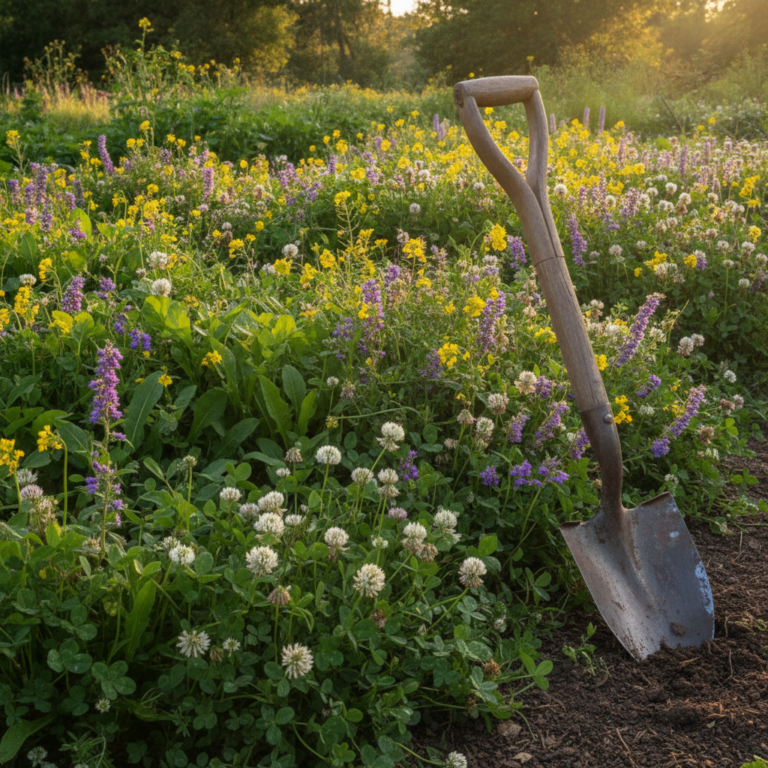
- Phacelia — A largely forgotten gem. Grows fast, produces gorgeous purple flowers, and breaks down quickly after being dug in.
- Mustard — A natural biofumigant. Its decomposing roots release compounds that suppress soil-borne diseases and nematodes.
Timing the Cut: Why This Step Is Everything
Here is where most beginners miss the mark. The when of cutting matters as much as the what you plant.
The goal is to bury the plant just as it begins to flower — before seed sets, but after the plant has built up maximum nitrogen and sugars. At this stage, the tissue is soft, moist, and full of nutrients. It breaks down fast and releases everything it has stored.
Cut too early, and you have wasted growing time. Cut too late — after seeds form — and you may accidentally plant a weedy crop next season. Timing the flower bud stage is the sweet spot every time.
After cutting, chop the material as finely as you can with a spade or garden fork. Then dig it into the top 6–8 inches of soil. Do not bury it deeper than that. Soil bacteria need oxygen to work, and most of them live in that upper zone.
Then wait. Give the buried green manure at least two to three weeks before planting your next crop. During that window, microbes are working hard, carbon and nitrogen are cycling, and soil temperature is rising. Rushing this step can actually harm seedlings because decomposing material temporarily ties up nitrogen before releasing it.
If you are tracking your soil’s progress and want to understand what is happening underground, Soil Sense Without the Lab: Read Your Dirt, Fix It Fast gives you the tools to read those signals without a laboratory.
A Practical Green Manure Planting Calendar
This calendar works for most temperate climate zones. Adjust planting windows by two to four weeks depending on your location.
Spring (March – May)
Sow crimson clover, field peas, or phacelia as soon as the soil is workable. These cool-season crops establish quickly. Cut and dig at flower bud stage, roughly six to eight weeks after sowing. Wait three weeks, then plant your summer vegetables.
Summer (June – August)
Buckwheat is your best friend during the heat. It grows in poor soil and poor heat. Sow it in any gap between crops or in beds waiting for fall planting. Cut it at first flower — usually around day 35 — and dig in immediately. It breaks down within two weeks in warm soil.
Fall (September – October)
This is the most powerful window for green manures. Sow hairy vetch, winter rye, or fava beans after your summer crops come out. These plants grow slowly through autumn, fixing nitrogen all winter, then explode with growth in early spring. Cut and dig in March or April, right before your season begins.
Winter (November – February)
In cold climates, winter rye and hairy vetch soldier on under frost. In mild climates, fava beans keep growing. Let them be. They are doing their best work while your garden rests.
If you want to plan this around your entire growing year, Climate-Proof Your Crops: A 30-Day, Microclimate-Aware Planting Plan helps you layer green manure windows into a complete seasonal strategy.
Why Green Manure Crops Beat Most Store-Bought Conditioners
A bag of granular fertilizer delivers a narrow range of nutrients in a form that moves quickly through the soil and often leaches out before plants can use it. A properly timed green manure does something far more complex.
It feeds the soil food web — the bacteria, fungi, nematodes, and earthworms that make nutrients bioavailable in the first place. It adds carbon, which builds soil structure. It improves drainage in clay and water retention in sand. And it does this slowly, in sync with the natural nitrogen cycle, which means plants absorb it when they actually need it.
The difference shows up clearly in the second and third year of consistent green manure use. Soil darkens. Earthworm populations climb. Fewer inputs are needed to grow the same amount of food.
This is the kind of slow, compounding soil improvement that your grandparents understood intuitively. They called it “resting the land.” We now know it as regenerative soil management.
For gardeners just starting to build this knowledge, Smart Starts: A 4-Week Skill-Build Plan for Complete Garden Beginners is a great place to practice the fundamentals that make techniques like this one click.
A Few Common Mistakes to Avoid
Even a simple technique has pitfalls. Here are the ones most worth knowing before you start.
- Letting it go to seed. Always cut before seeds form. Mustard and buckwheat especially will become next season’s weed problem if you wait too long.
- Skipping the wait period. Freshly buried green material can temporarily make nitrogen unavailable to plants. Always wait two to three weeks before transplanting.
- Digging too deep. Keep the material in the top 6–8 inches. Burying it deeper slows decomposition dramatically.
- Using the same family as your next crop. Do not follow mustard green manure with brassica vegetables. Rotate plant families to avoid disease buildup.
Start Small, But Start This Season
You do not need to overhaul your entire garden to try green manure crops. Start with one bed. Sow buckwheat this summer in a gap between plantings. Cut it at first flower. Dig it in. Wait three weeks. Then plant.
Notice what the soil feels like when you come back to it. Notice how easily your transplants establish. By next spring, you will be planning your whole season around these buried crops — the way farmers did for centuries before the fertilizer bag came along.
The soil knows what to do with living organic matter. Your job is simply to give it the opportunity.