Green Manure Crops: The Plow-Under Secret
Long before a bag of synthetic nitrogen fertilizer ever sat on a store shelf, farmers already knew how to feed hungry soil. They grew green manure crops — specific plants sown purely to be chopped down and buried at just the right moment. No factory. No chemical residue. Just living, breathing organic matter plowed back into the earth to rebuild fertility from the ground up. If you’ve been struggling with depleted beds or rising input costs, this old rotation trick might be the most practical thing you learn all season.
What Are Green Manure Crops, Really?
A green manure crop is any plant grown with the sole purpose of improving the soil beneath it — not for harvest, but for burial. Think of it as growing your own fertilizer factory right in the bed.
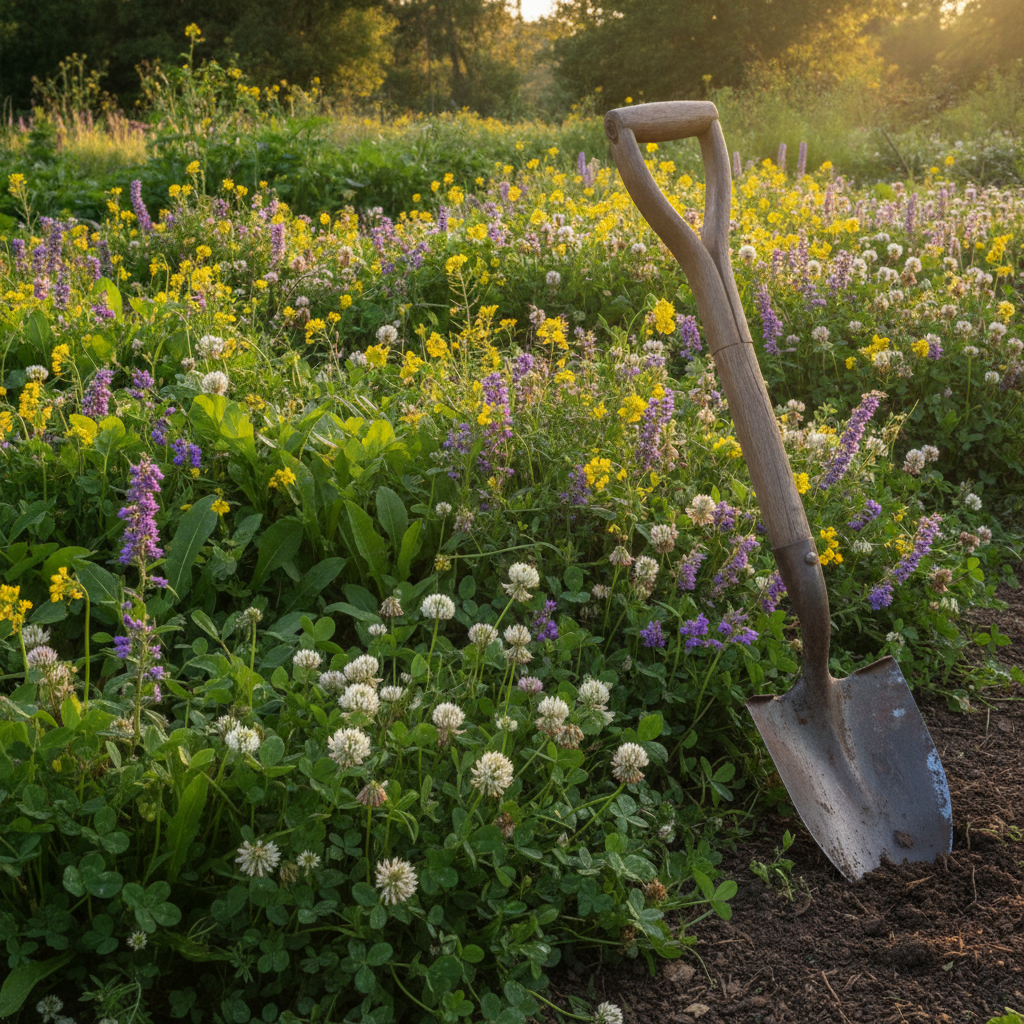
The plants do several jobs at once. Legumes fix atmospheric nitrogen into root nodules. Deep-rooted species break up compacted subsoil. Fast-growing leafy varieties smother weeds and protect bare earth from rain erosion. Then, when you chop and dig them in, their decomposing bodies feed soil bacteria, boost organic matter levels, and slowly release nutrients directly where your food crops need them.
This is fundamentally different from adding a store-bought amendment on top of the soil. Green manures feed the soil food web, not just the plant. That distinction matters enormously for long-term garden health.
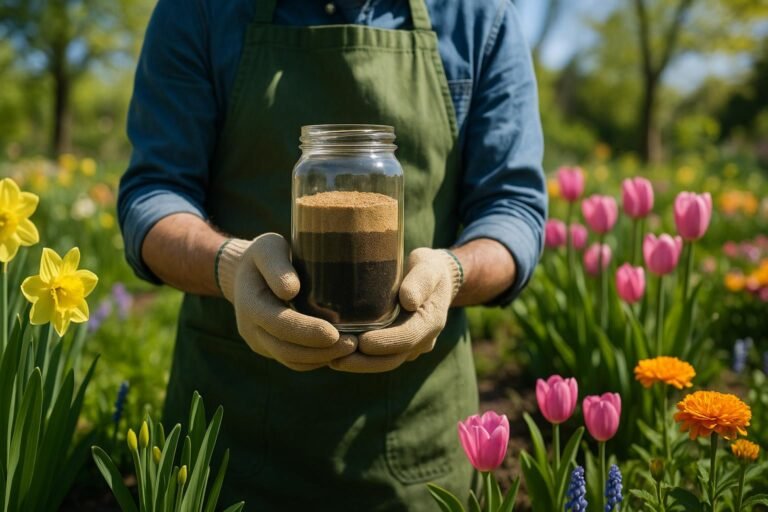
Before you choose your crops, it helps to know what your soil is already telling you. If you haven’t done a basic soil read yet, check out Soil Sense Without the Lab: Read Your Dirt, Fix It Fast — it’ll help you match the right green manure to your specific problem.
The Best Green Manure Crops for Home Gardeners
Not all cover crops make great green manures. You want plants that establish quickly, build biomass fast, and release their nutrients readily when turned in. Here are the top performers, grouped by season.
Summer Green Manures
Buckwheat is a summer superstar. It germinates in days, smothers weeds aggressively, and reaches flowering size in just six weeks. It also scavenges phosphorus from subsoil layers and brings it up to the surface. Turn it in before seeds set or you’ll be managing a weed.
Cowpeas (black-eyed peas) are warm-season nitrogen fixers that thrive in heat. A good stand can fix 100–200 lbs of nitrogen per acre — scaled down, that’s still significant fertility for a backyard plot. They’re drought-tolerant once established and incredibly forgiving for beginners.
Sunn hemp grows remarkably fast in hot weather and produces enormous biomass. It’s one of the highest nitrogen-fixing summer annuals available to home gardeners. Chop it at knee height for maximum nutrient release.
Cool-Season Green Manures
Hairy vetch is arguably the most powerful cool-season nitrogen fixer you can grow. It overwinters in most climates and releases nitrogen quickly when incorporated in spring. Pair it with winter rye for a combination that covers soil all winter and feeds it come April.
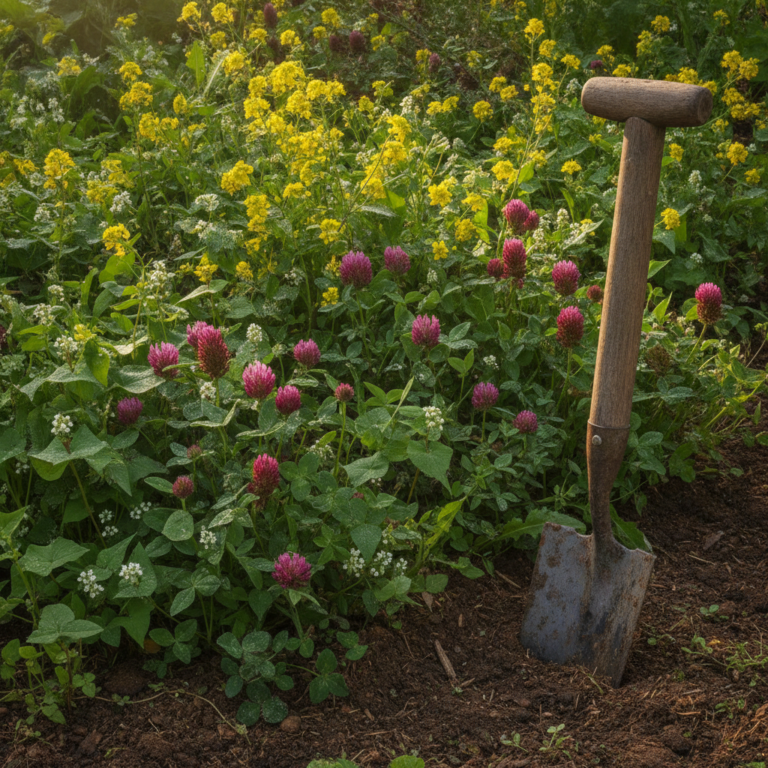
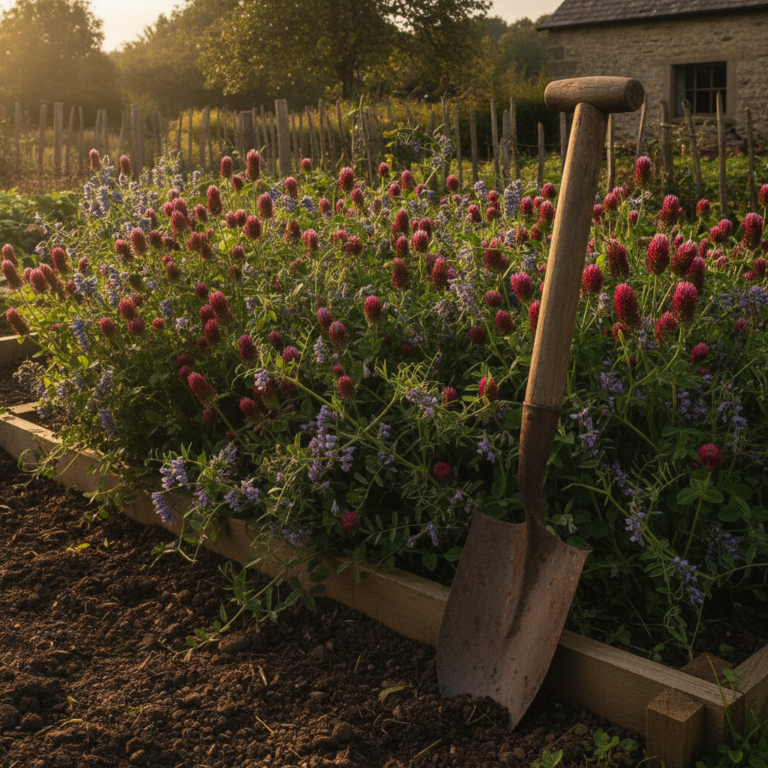
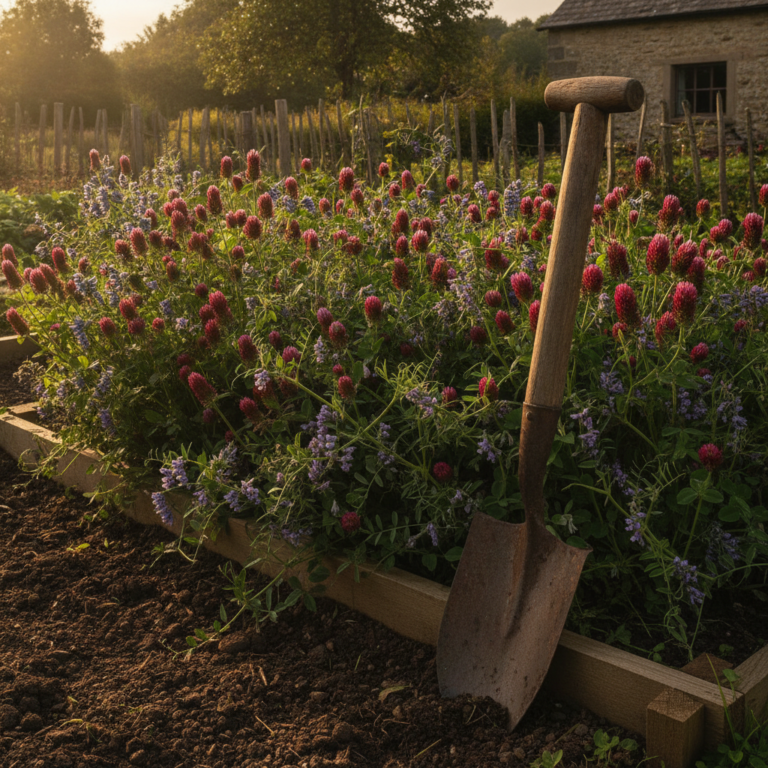
Crimson clover is beautiful, bee-friendly, and a reliable nitrogen fixer. It’s fast to establish in autumn and easy to turn under before spring planting. If you’re new to green manures, start here — it’s hard to get wrong.
Field peas (Austrian winter peas) are cold-hardy, fast-growing, and produce significant nitrogen. Sow them in early autumn and turn them under four to six weeks before your first spring planting date.
Mustard doesn’t fix nitrogen, but it releases glucosinolates as it breaks down — natural compounds that suppress soilborne diseases and root-knot nematodes. It’s a soil cleanser more than a fertilizer, but extraordinarily useful in rotation.
Timing the Cut-and-Bury for Maximum Nitrogen Release
Here’s where most gardeners leave nitrogen on the table. Timing is everything with green manure crops, and the window is shorter than you’d expect.
The golden rule: turn green manures in at early flower bud stage, before they flower fully. At this point, the plant tissue is still tender and nitrogen-rich. Carbon levels are relatively low, so the carbon-to-nitrogen ratio (C:N ratio) is favorable — meaning the soil will break down the material quickly and release nitrogen in a plant-available form within two to four weeks.
Wait too long and the stems become woody and carbon-heavy. That shifts the C:N ratio against you. Soil bacteria will tie up available nitrogen to digest the tough material, briefly starving your next crop — the exact opposite of what you wanted.
After turning in your green manure, wait at least two to three weeks before transplanting or direct sowing. This gives decomposition time to begin and prevents the fresh organic acids from harming seedling roots.
Planning your timing around your local climate matters here. If you’re mapping out a full season rotation, the Climate-Proof Your Crops: A 30-Day, Microclimate–Aware Planting Plan is a smart companion resource for getting your windows right.
How to Incorporate Green Manures (Without a Tractor)
You don’t need heavy equipment. A sharp spade or a stirrup hoe does the job beautifully in a home garden. Here’s the process step by step.
Step 1: Chop the plants at soil level using a hoe or sickle. Let them wilt for a day in dry weather — this reduces volume and makes turning easier.
Step 2: Use a spade to slice the material into the top six to eight inches of soil. Work in sections. You don’t need to bury everything perfectly — irregular mixing is fine.
Step 3: Water well if the soil is dry. Decomposition needs moisture. A dry incorporation barely works.
Step 4: Cover with a thin layer of compost or straw if you have it. This insulates the soil surface and speeds microbial activity.
Step 5: Wait. Two to four weeks is your standard window. In cool spring conditions, allow closer to four weeks. In summer heat, two weeks may be sufficient.
Having quality tools makes this process dramatically easier and less tiring. A well-maintained spade with a sharp edge is the difference between an hour of satisfying work and an afternoon of frustration. If you want to invest in gear that lasts, Tools That Grow with You: Durable Gear and Smart Maintenance for Every Skill Level covers exactly what to look for.
A Practical Green Manure Planting Calendar
Use this as a starting framework. Adjust by two to four weeks depending on your climate zone.
Spring (March–May)
- Early March: Sow field peas or crimson clover in empty beds as soon as soil is workable.
- Late April / Early May: Turn in the cool-season green manure at early bud stage.
- Mid-May: Plant warm-season food crops (tomatoes, peppers, squash) in the now-enriched beds.
Summer (June–August)
- After early harvest (June–July): Sow buckwheat or cowpeas immediately into cleared beds.
- Six to eight weeks later: Chop and incorporate before flowering goes to seed.
- Wait two weeks: Then direct sow late summer crops or autumn brassicas.
Autumn (September–October)
- Early September: Sow hairy vetch and winter rye together as a winter cover combination.
- Optional — sow mustard: In beds that had disease or nematode pressure this season.
- Spring (April): Turn in the overwintered vetch/rye mix at bud stage. Wait three weeks. Plant.
Why Green Manures Outperform Bagged Amendments
A bag of granular fertilizer delivers a precise nutrient hit — and then it’s gone. Green manure crops do something fundamentally different. They build soil structure as well as fertility. The root channels left behind improve drainage and aeration. The organic matter feeds earthworms and fungal networks for months. The slow nitrogen release matches plant uptake timing naturally.
You’re not just feeding this season’s crop. You’re building a soil that gets easier to work, more resilient, and more productive every single year. That compounding effect is something no bag of fertilizer can replicate.
This is also a technique that scales beautifully with experience. If you’re still finding your footing with seasonal planning, the Garden Storylines: A Month-by-Month Narrative Approach to Grower Growth can help you weave green manure rotations into a broader gardening rhythm that actually sticks.
Start Small, Build the Habit
You don’t need to overhaul your entire garden this season. Pick one empty bed after a harvest. Sow buckwheat or crimson clover. Turn it in at bud stage. Watch what happens to that bed the following season — the texture, the earthworm activity, the ease of planting.
Once you see the difference with your own eyes, you won’t want to go back to bare soil between crops ever again. Your grandparents didn’t have a choice but to work with nature. You do — and the fact that you’re choosing this path anyway says everything about the kind of gardener you’re becoming.
Green manure crops aren’t a complicated technique. They’re a simple, ancient agreement between a grower and their soil: feed me now, and I will feed you far longer than any product from a shelf ever could.