Green Manure Crops: The Plow-Under Secret
Long before a bag of synthetic nitrogen ever sat on a store shelf, farmers already knew exactly how to feed their soil. They grew green manure crops — specific plants cultivated purely to be chopped down and buried — returning living organic matter directly into the ground. It sounds almost too simple. But this plow-under secret kept fields fertile for generations, and it still works just as powerfully in your backyard today.
If you’ve been struggling with tired, compacted, or nutrient-depleted soil, green manure crops may be the most overlooked tool in your gardening toolkit. Let’s dig into what they are, which ones work best, and exactly how to time the cut-and-bury for maximum results.
What Are Green Manure Crops and Why Did Old-Time Farmers Swear by Them?
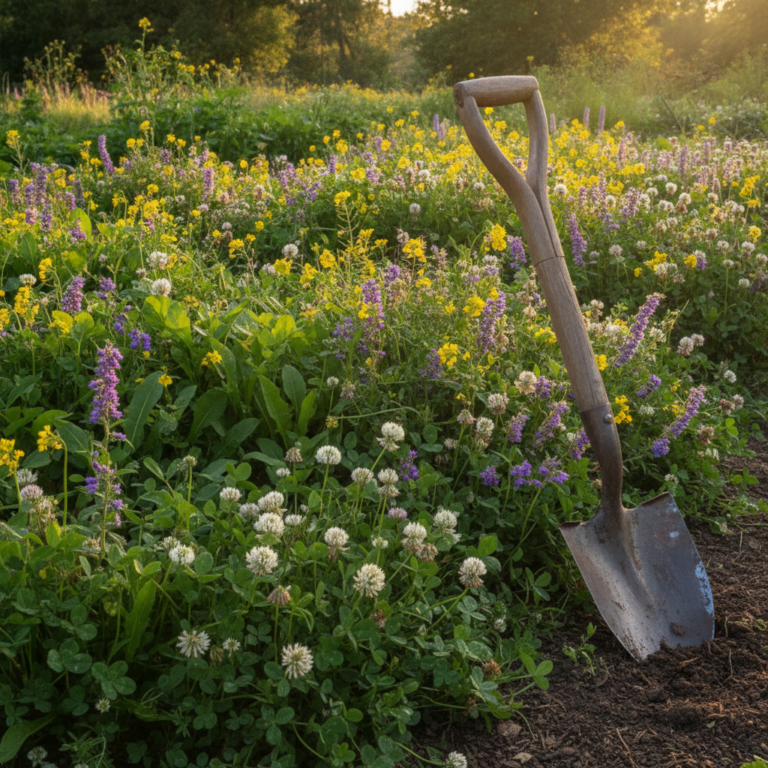
Green manure crops are plants grown not for harvest, but for soil improvement. You grow them, then turn them under while they’re still green and tender. As they decompose, they release nitrogen, organic matter, and trace minerals directly into the root zone of your next crop.
Think of it as feeding your soil a meal it can actually digest — rather than pouring a chemical concentrate on top and hoping for the best.
Before the 1940s, this was standard farming practice across every continent. Legumes like clover and vetch were rotated into fields specifically to fix atmospheric nitrogen and build soil structure. When synthetic fertilizers arrived, the practice was quietly abandoned. Most home gardeners have never heard of it.
That’s a shame. Because green manure crops don’t just add nitrogen. They suppress weeds, break up compaction, feed soil microbes, and reduce erosion — all while your bed sits “empty” between main crops. Before you start your next season, it helps to understand your existing soil. Check out Soil Sense Without the Lab: Read Your Dirt, Fix It Fast to know exactly what you’re working with.
The Best Green Manure Crops for Home Gardens
Not all cover crops qualify as true green manures. The best ones are fast-growing, nitrogen-rich, and easy to turn under without a tractor. Here are the top choices for home gardeners.
Legumes: The Nitrogen Fixers
Legumes work with soil bacteria (rhizobia) to pull nitrogen from the air and store it in root nodules. When you turn them under, that nitrogen becomes available to your next crop. This is one of the most powerful natural fertility tricks that exists.
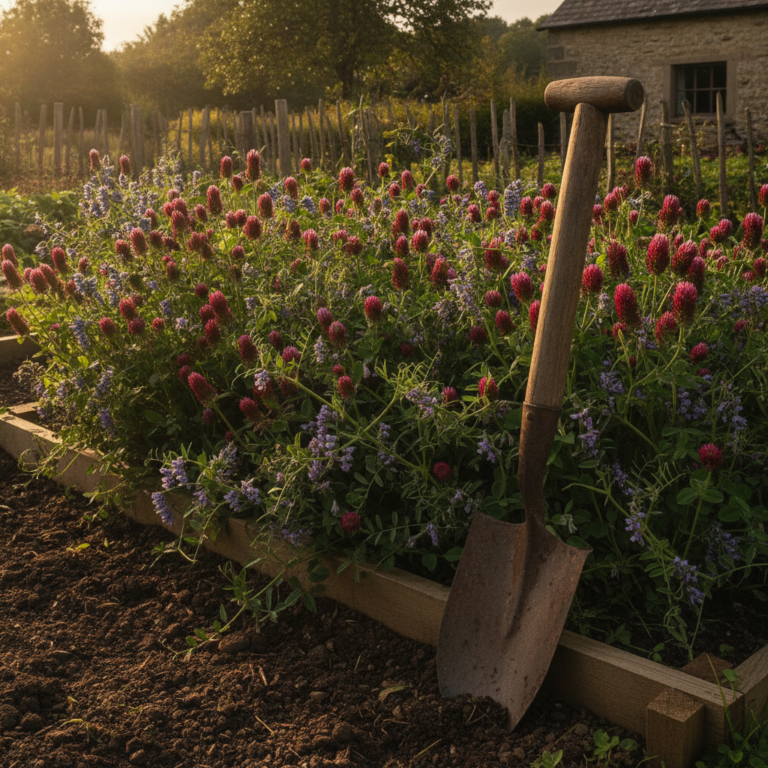
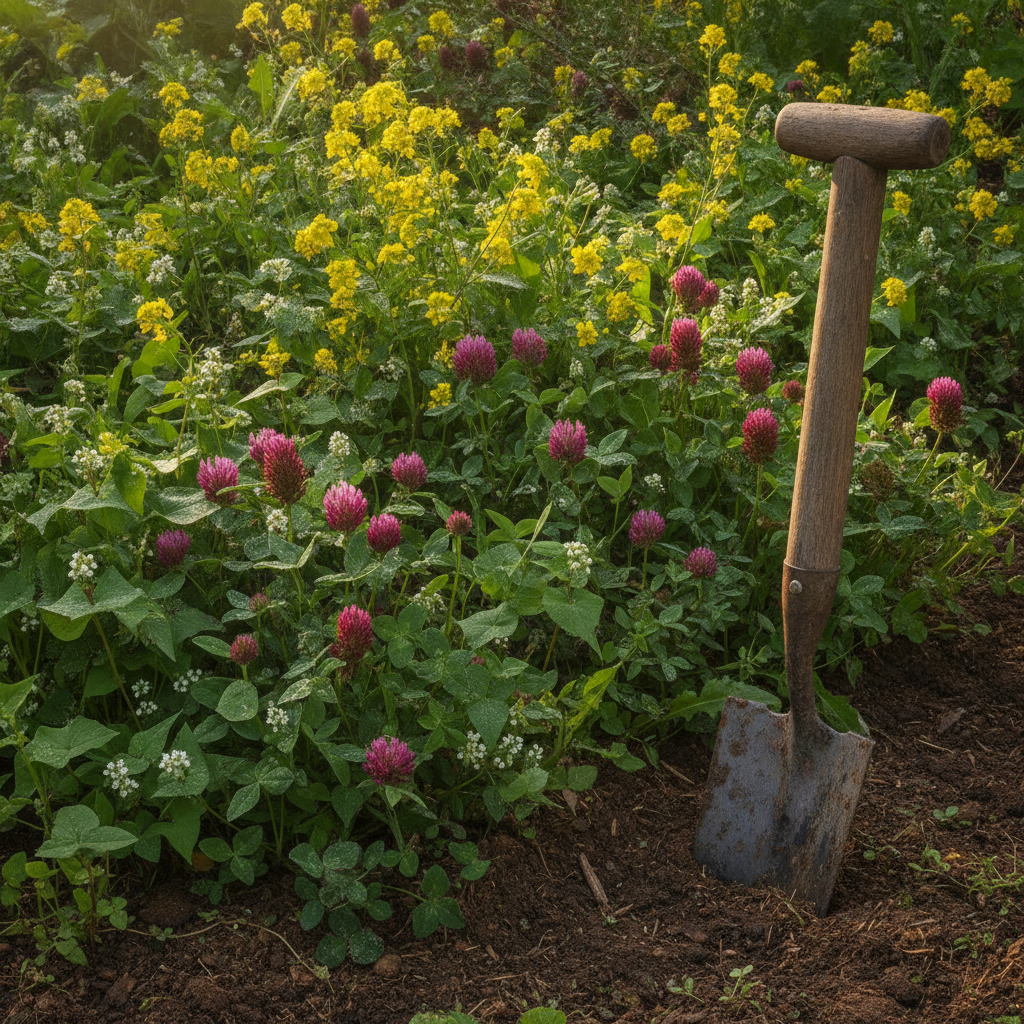
- Crimson Clover — Fast-growing, bee-friendly, fixes up to 200 lbs of nitrogen per acre. Ideal for spring or fall planting.
- Hairy Vetch — Cold-hardy and aggressive. Excellent for fall planting in cooler climates. Fixes nitrogen even in poor soils.
- Field Peas — Quick to establish and easy to turn under. Great for early spring planting before summer vegetables.
- Fenugreek — An old-world green manure that also improves soil texture. Especially useful in sandy or degraded soils.
Non-Legumes: The Organic Matter Builders
Not every green manure is a legume. These plants don’t fix nitrogen, but they build incredible organic matter and break up hard soil.
- Buckwheat — Grows incredibly fast in warm weather. Ready to turn under in just 4–6 weeks. Also mines phosphorus from deep in the soil.
- Phacelia — A stunning purple-flowered green manure that decomposes rapidly and is beloved by pollinators.
- Oats or Winter Rye — Excellent for fall planting. Their deep roots break compaction and their bulk adds serious organic matter.
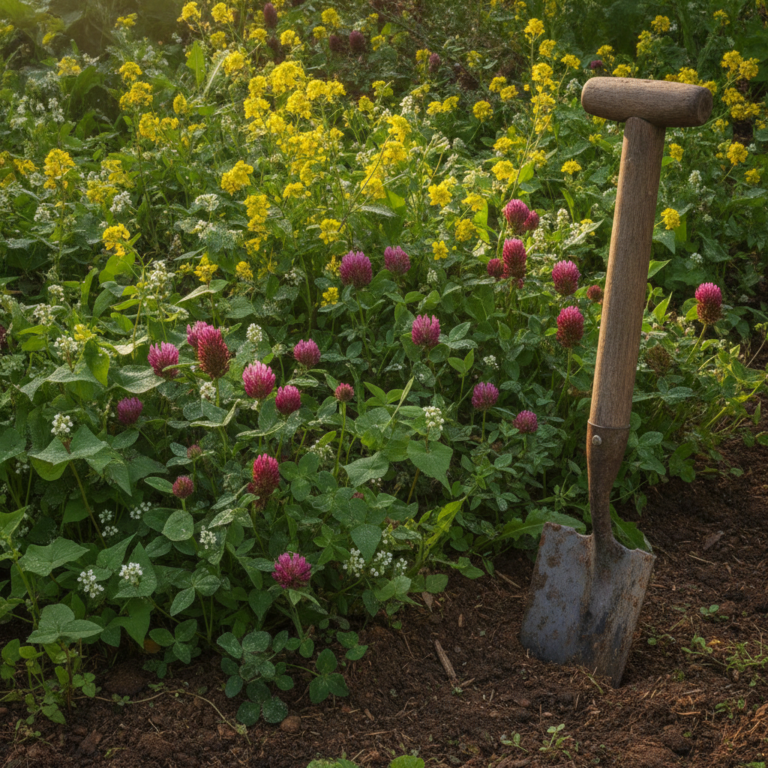
- Mustard — Acts as a natural biofumigant. Turning it under can suppress soilborne diseases and nematodes.
For best results, mix a legume with a non-legume. A classic combination is hairy vetch plus winter rye — the rye supports the vetch as it climbs, and together they fix nitrogen while building structure. This kind of thoughtful plant pairing also fits beautifully into a Plant Selection Spectrum approach where every bed serves multiple purposes at once.
The Critical Timing: When to Cut and Bury for Maximum Nitrogen
Here’s where most gardeners get it wrong. They either turn their green manure crops too early (before much biomass has developed) or too late (after the plants have gone to seed and woody stems become hard to decompose).
The sweet spot is just before or at the early flowering stage. At this point, the plants are at their maximum nitrogen content, and the tissue is still soft enough to break down quickly in the soil.
Here’s a simple rule to remember: flower buds showing, but not yet fully open = time to turn under.
After cutting or mowing, let the material wilt on the surface for a day or two. This softens the stems and makes turning easier. Then dig or till it into the top 6–8 inches of soil. The finer you chop it, the faster it decomposes.
Plan to wait 2–4 weeks after turning before planting your main crop. This gives the organic matter time to begin breaking down and avoids any temporary nitrogen drawdown that can occur as microbes get to work. Use that waiting period wisely — it’s a great time for the 30-Day Microclimate-Aware Planting Plan to map out exactly what goes where next.
A Practical Green Manure Planting Calendar
Timing is everything with green manures. Here’s a seasonal guide you can adapt to your own climate and garden beds.
Spring (March–May)
As soon as soil is workable, sow field peas, oats, or phacelia into empty beds. These quick growers will be ready to turn under in 6–8 weeks — right before you’re ready to plant summer crops like tomatoes and squash.
Early Summer (May–June)
Buckwheat is your best friend here. It establishes in warm soil, smothers weeds, and is ready to turn under in just 4–5 weeks. Use it in any gap bed between spring and fall plantings.
Late Summer (July–August)
After you’ve harvested early crops, sow crimson clover or fenugreek. They’ll grow through late summer, fix nitrogen, and can be turned under in September before fall planting — or left to overwinter and turned in spring.
Fall (September–October)
This is prime time for hairy vetch and winter rye. Sow them together for maximum benefit. They’ll establish before frost, hold the soil over winter, and you’ll turn them under in early spring for a powerful nitrogen boost before planting.
Tracking which beds get which green manures — and how your soil responds — will help you improve your rotation every year. A structured journal makes this easy. Garden Journaling for Mastery offers ready-to-use templates that are perfect for recording your green manure trials.
Why Green Manure Crops Outperform Store-Bought Soil Conditioners
A bag of granular fertilizer gives your soil a quick hit of nutrients. But it doesn’t feed the living ecosystem beneath the surface. It doesn’t add organic matter. It doesn’t build structure. And it certainly doesn’t come cheap season after season.
Green manure crops do all of that — for the cost of a small seed packet.
When you turn under a mature stand of hairy vetch and winter rye, you’re adding thousands of pounds of organic matter per acre equivalent to your bed. You’re releasing slow, steady nitrogen as it decomposes. You’re feeding the worms, fungi, and bacteria that make soil truly alive. No bagged product replicates that entire process.
Old-time farmers understood that healthy soil wasn’t a product you bought — it was a living system you managed. Green manure crops were their management tool of choice, and there’s a reason that wisdom survived centuries before chemicals made it inconvenient to remember.
Getting Started This Season
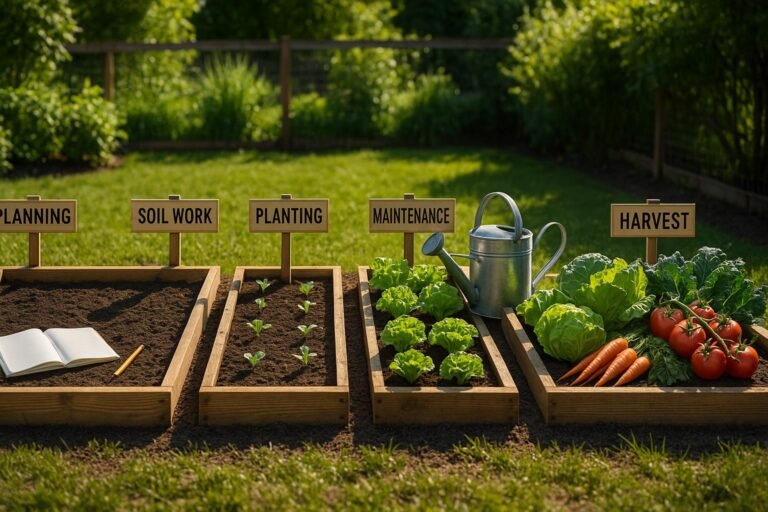
You don’t need to overhaul your entire garden to try this. Start small. Pick one empty bed — or one gap between crops — and sow a packet of crimson clover or buckwheat. Watch how it grows. Then turn it under, wait a few weeks, and plant into that bed. Compare the results to a bed you haven’t treated.
That single experiment may change how you manage soil forever.
If you’re newer to building good garden habits and want a structured path forward, the Garden Habit Hacks post has five small rituals that make techniques like this stick for the long term. Because the real power of green manure crops isn’t in doing it once — it’s in making it part of how you think about every season.
The soil your grandparents grew in didn’t come from a bag. It came from generations of returning organic matter to the earth, plant by plant, season by season. That knowledge never went away. It was just waiting for you to dig it up again.