Green Manure Crops: The Plow-Under Secret
Long before the first bag of synthetic nitrogen ever sat on a farm store shelf, farmers already knew how to feed hungry soil. They grew green manure crops — specific plants cultivated not for the dinner table, but purely to be chopped down and buried. This ancient plow-under technique quietly rebuilt fertility season after season, and it worked so well that many old-timers considered it the backbone of a healthy rotation. The good news? You can do exactly the same thing in your backyard garden today.
If you’ve been spending money on bagged amendments that never quite deliver the results on the label, this post is for you. We’re going back to the roots — literally.
What Are Green Manure Crops, Exactly?
A green manure crop is any fast-growing plant that you intentionally turn back into the soil while it’s still green and lush. The plant’s biomass decomposes underground, feeding soil microbes, releasing nitrogen, and improving soil structure — all at the same time.
This is fundamentally different from composting. With composting, you break down organic matter above ground and then add it to your beds. With green manures, you let the soil do the work right where the plant grew. The decomposition happens in place, undisturbed, feeding the entire food web that lives below your feet.
Farmers in ancient Rome grew lupins and field beans for this purpose. Asian rice farmers have used azolla and vetches for centuries. Your grandparents likely called them “cover crops” and turned them under every spring without thinking twice. What modern chemical agriculture forgot, your garden can remember.
If you’re new to reading your soil’s needs, check out Soil Sense Without the Lab: Read Your Dirt, Fix It Fast — it’s the perfect companion to this post.
The Best Green Manure Crops for Home Gardens
Not all plants make equally good green manures. The best ones grow fast, produce a lot of biomass, and many fix atmospheric nitrogen through root-nodule bacteria. Here are the top performers worth knowing.
Legumes: The Nitrogen Fixers
Legumes are the stars of the green manure world. Their roots host Rhizobium bacteria that pull nitrogen directly from the air and convert it into a plant-available form. When you bury them, that nitrogen stays in the soil for your next crop to use.
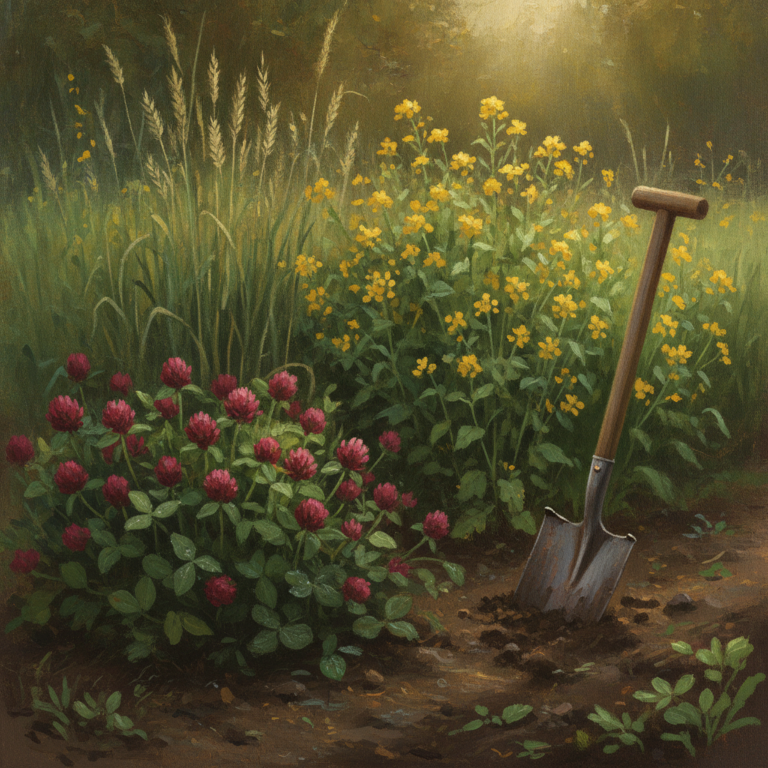
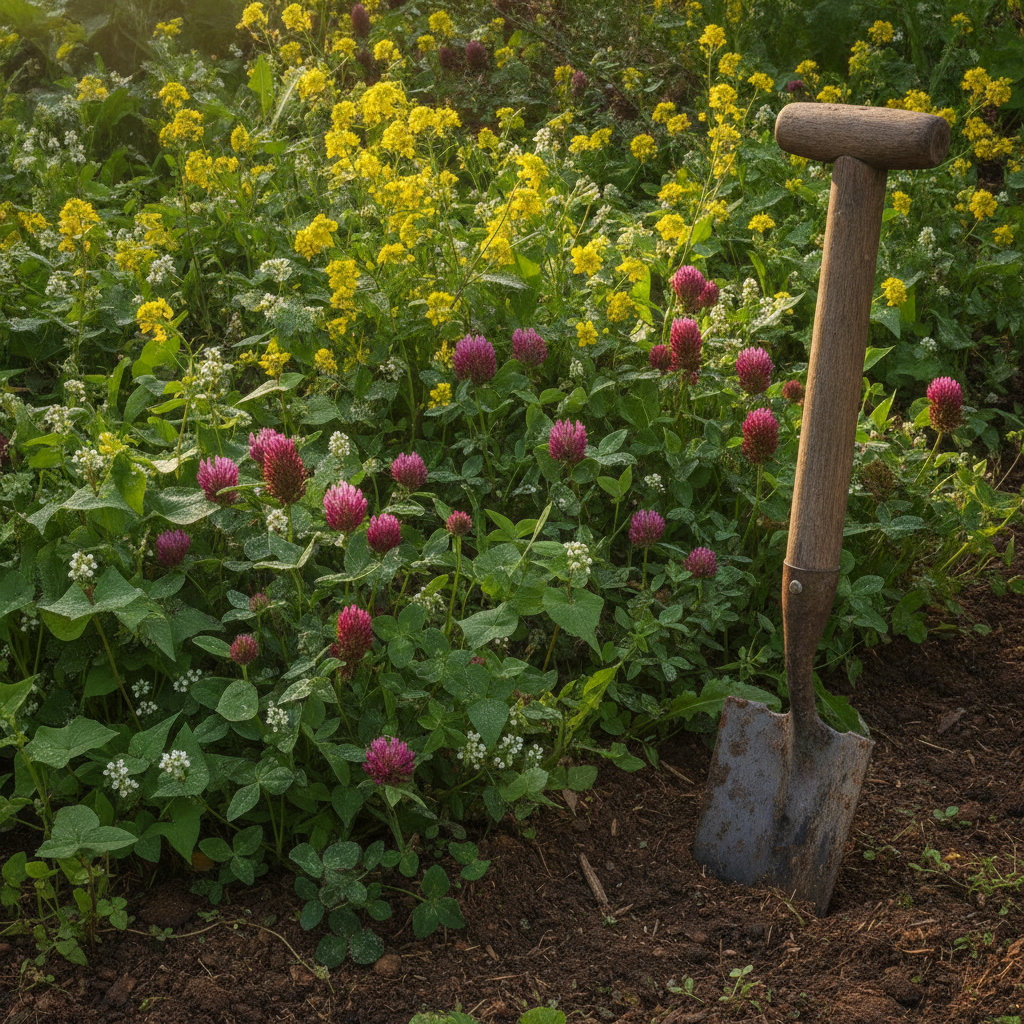
- Crimson clover — Fast-growing, cold-tolerant, and visually stunning. Perfect for late summer sowing before a fall dig-under.
- Field beans (fava beans) — Hardy and prolific. Excellent for autumn planting in mild climates.
- Hairy vetch — One of the best winter-hardy nitrogen fixers. Pairs beautifully with cereal rye.
- Lupins — Deep taproots that break up compacted subsoil. Great on heavy clay plots.
Non-Legumes: The Biomass Builders
Not every green manure is a legume, and that’s perfectly fine. These plants add bulk organic matter, suppress weeds, and improve soil texture.
- Buckwheat — Grows incredibly fast in warm weather. Flowers attract pollinators before you dig it under. It also unlocks phosphorus in the soil.
- Mustard — Acts as a mild biofumigant. Helps suppress soil-borne pests and pathogens. Excellent before brassica or root vegetable crops.
- Phacelia — Soft, ferny foliage that breaks down quickly. A beekeeper’s dream crop and a gentle soil conditioner.
- Cereal rye — Cold-hardy and persistent. Builds enormous amounts of organic matter over winter.
Pairing a legume with a non-legume — like hairy vetch and cereal rye — gives you both nitrogen fixation and heavy biomass in one sowing. Old farmers called this a “nurse crop” mix, and it’s still one of the smartest moves you can make.
Timing the Cut-and-Dig for Maximum Nitrogen Release
Here’s where most home gardeners leave nitrogen on the table — or rather, in the plant stem where it can’t do much good. Timing your dig-under correctly is the difference between a modest soil boost and a genuinely transformative fertility event.
The golden rule: chop and bury green manure crops just before or at the point of first flower. This is when the plant contains the highest concentration of nutrients and the least amount of woody, slow-to-decompose fiber. Once a plant sets seed, its nitrogen begins moving into the seed, not the leaf tissue. You lose the benefit.
Here’s what the timing looks like in practice:
- For spring-sown crops (buckwheat, phacelia, mustard): Sow in early spring, dig under 6–8 weeks later in late spring or early summer.
- For summer-sown crops (crimson clover, field beans): Sow in late summer after harvesting your main crops. Dig under in early autumn.
- For autumn/winter crops (hairy vetch, cereal rye, winter rye): Sow in early autumn. Let them overwinter, then dig under in late winter or early spring before planting begins.
After digging, wait at least two to four weeks before planting your next crop. This gives the green material time to begin decomposing and avoids the brief “nitrogen lock-up” that can occur as microbes consume the fresh material.
Planning this around your full growing season? The Climate-Proof Your Crops: A 30-Day, Microclimate-Aware Planting Plan can help you slot green manure rotations into your existing schedule without missing a beat.
Why Green Manure Crops Outperform Bagged Soil Conditioners
It’s a fair question — why bother growing a crop just to bury it, when you can buy a bag of pelleted fertilizer or granular soil improver?
Here’s the honest answer: bagged products deliver isolated nutrients. Green manures deliver an entire ecosystem upgrade.
When you bury living plant material, you feed fungi, bacteria, nematodes, earthworms, and hundreds of other organisms. They process that organic matter and create humus — the stable, long-lasting form of soil carbon that holds water, binds nutrients, and creates that soft, crumbly texture every gardener wants. No bag of fertilizer does that. Not even close.
Additionally, the roots of growing green manure crops physically improve your soil structure while they’re still alive. Taprooted species like lupins punch through hardpan. Fibrous roots like cereal rye weave organic matter throughout the top 12 inches of soil. When those roots die and decay, they leave behind channels that improve drainage and aeration.
Green manures also out-compete weeds during the growing period, meaning you arrive at your next planting season with a cleaner, more fertile bed.
If you’re building a garden system that reduces your inputs over time, this pairs beautifully with strategies covered in The Perennial Playbook: Build a Low-Input Garden That Keeps Flourishing With You.
A Practical Green Manure Planting Calendar
Use this seasonal guide to start working green manure crops into your existing rotation. You don’t need to overhaul your whole garden — start with just one bed this season.
Spring (March–May)
Sow phacelia or mustard as soon as the ground can be worked. These establish quickly and will be ready to dig under in 5–7 weeks. Ideal for beds waiting for summer transplants like tomatoes or squash.
Early Summer (June–July)
Buckwheat is your friend in warm weather. It germinates fast and reaches dig-under stage in just 35–40 days. Use it to fill any gap between spring and late summer crops.
Late Summer (August–September)
After clearing your summer harvest, sow crimson clover or a vetch-rye mix immediately. These will grow through autumn, and you can either dig them under in October or let them overwinter.
Autumn (October–November)
Sow hairy vetch and winter cereal rye together for a powerful winter cover. They establish before frost, go dormant, and resume growth in spring. Dig under in late winter or early spring.
Winter (December–February)
Plan your spring rotations. Sketch out which beds will get green manures first and which will go straight to food crops. This is also a great time to order seeds so you’re ready when the ground thaws.
Want a structured approach to building your gardening skills alongside practices like this? The Smart Starts: A 4-Week Skill-Build Plan for Complete Garden Beginners is a brilliant place to develop these habits from the ground up.
Getting Started This Season
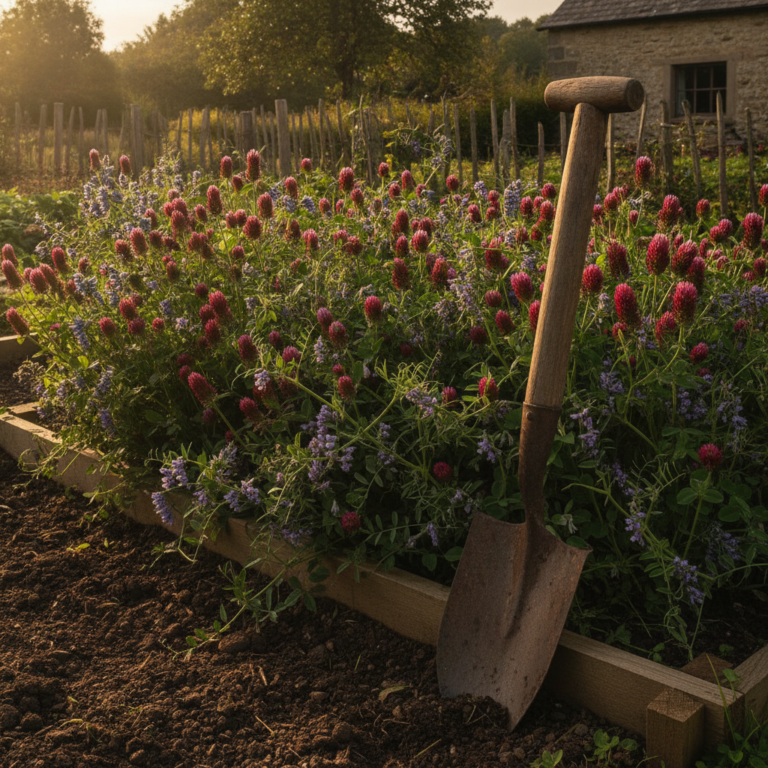
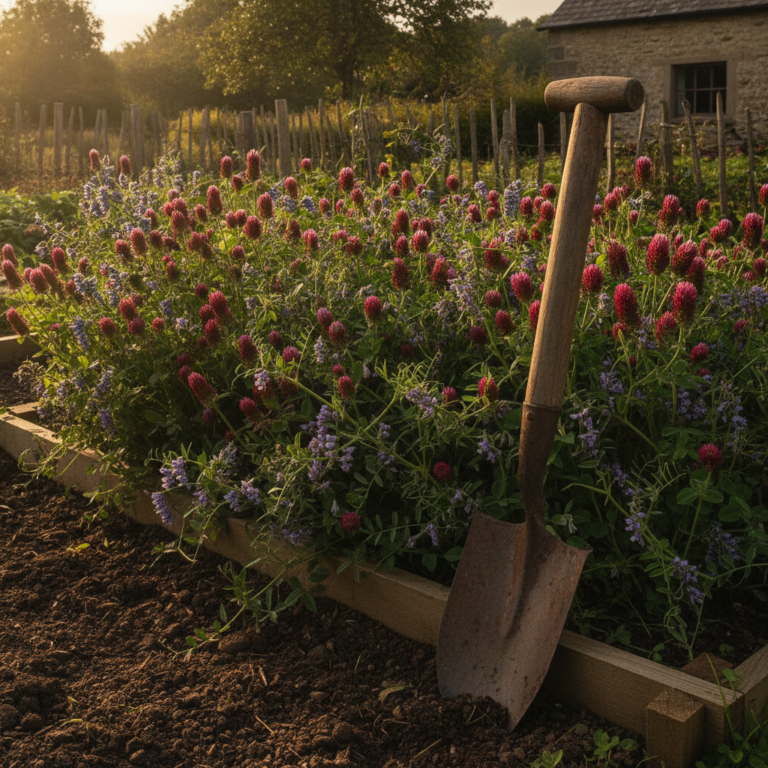
You don’t need a large plot or specialist equipment to make green manure crops work for you. A single raised bed. A packet of crimson clover or phacelia seed. A spade. That’s all.
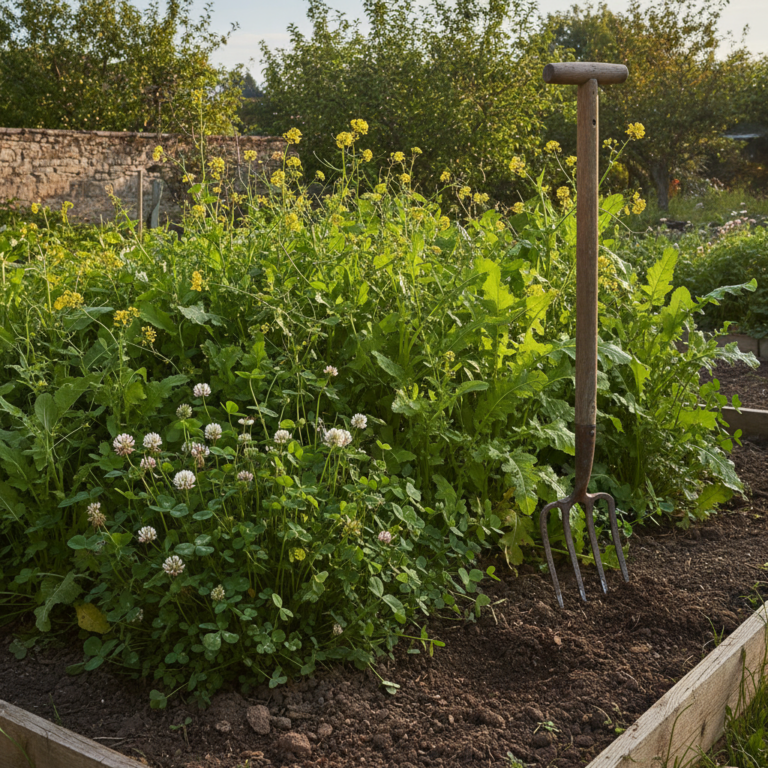
Scatter the seed, rake it lightly into the surface, water it in, and wait. In a matter of weeks you’ll have a lush, living mat of vegetation that your soil is going to love. When the first flower buds appear, reach for that spade and turn it all under. Then step back and let the underground world do what it has always done.
Your grandparents didn’t need a degree in soil science to understand this. They just paid attention to what the land needed and responded accordingly. That’s the spirit behind every forgotten technique worth rediscovering — and green manure crops may be the most powerful one of all.
The ground beneath your feet is waiting to be fed. This season, feed it right.