Guild Gardens: 3 Plant Communities That Work Together
Creating a guild garden transforms your growing space into a living ecosystem where plants naturally support each other. Instead of fighting nature, these carefully designed plant communities work together to protect, feed, and strengthen one another—just like they do in the wild.
Imagine your garden as a neighborhood where each plant has a role to play. Some fix nitrogen in the soil, others repel pests, while still others provide structure and shade. This is the magic of guild gardening: nature’s own partnership system that reduces your workload while boosting your harvest.
What Makes Guild Gardens So Effective?
Guild gardens mimic natural ecosystems by combining plants with complementary functions. Each member contributes something unique—whether it’s pest control, soil improvement, or structural support. This approach creates resilient growing systems that require less water, fewer inputs, and minimal intervention once established.
The key is understanding how different plants interact. Some relationships are obvious, like tall plants shading shorter ones. Others are invisible but equally important, such as root partnerships that share nutrients underground.
Ready to put this into practice? Let’s explore three proven guild garden designs that any home gardener can create.
Guild #1: The Apple Tree Guild – A Classic Food Forest Foundation
The apple tree guild represents the gold standard of companion planting. This multi-layered system transforms a single fruit tree into a productive mini-ecosystem that practically takes care of itself.
Core Components and Their Roles
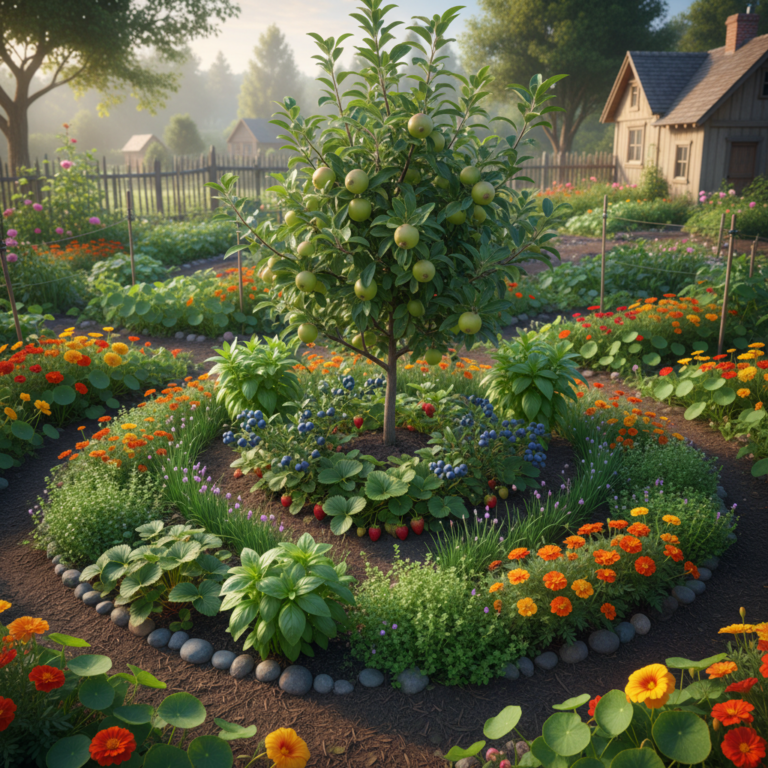
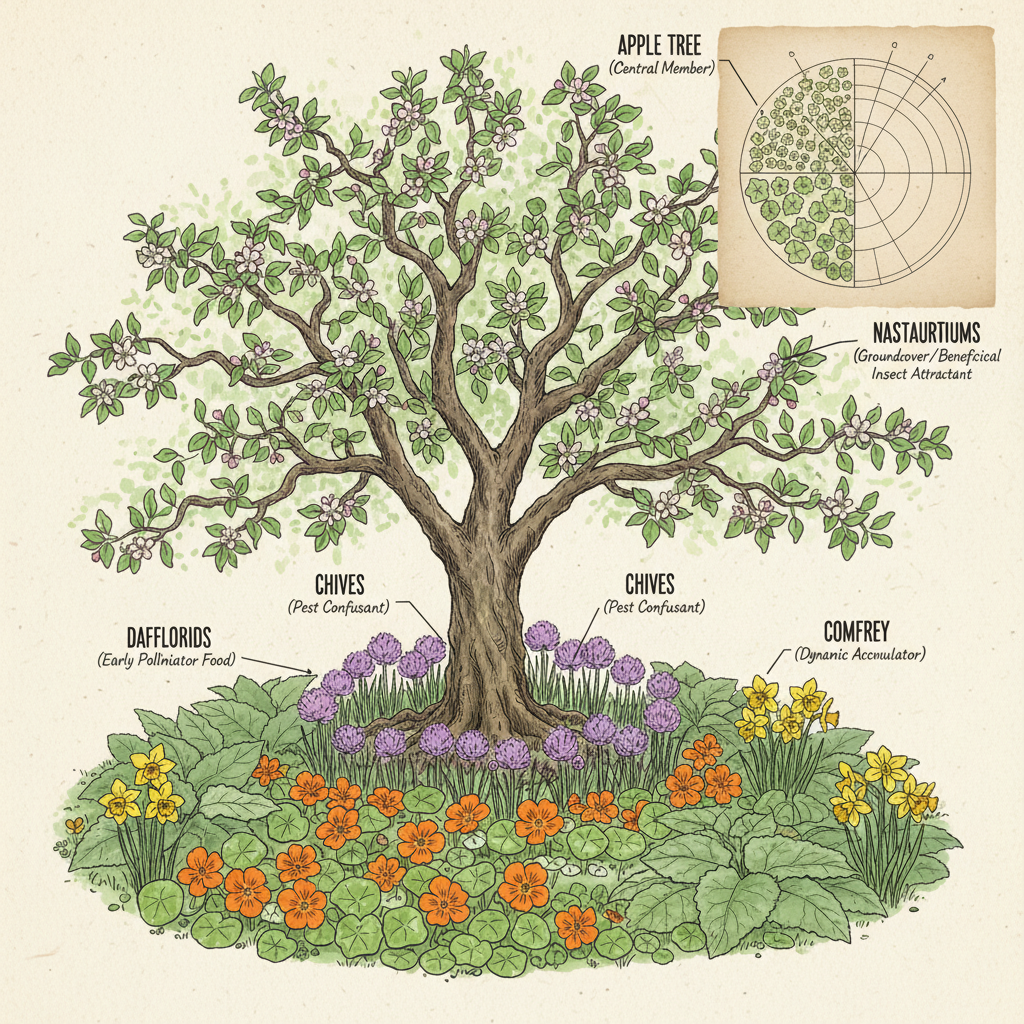
Start with your apple tree as the canopy layer. Below it, plant comfrey 6 feet from the trunk—its deep taproot mines minerals while its leaves provide endless mulch material.
Add chives in a circle 3 feet from the base. These aromatic herbs repel aphids and other tree pests while attracting beneficial insects. Nasturtiums planted as a groundcover trap cucumber beetles and add color plus edible flowers to your harvest.
Complete the guild with daffodils planted in fall. They emerge early to deter rodents and deer, then die back as other plants take over.
Planting Layout and Timing
Plant your apple tree in early spring or fall when dormant. Establish comfrey in spring from root divisions—it’s nearly indestructible once started. Seed nasturtiums after your last frost date, spacing them 12 inches apart.
Add chives in spring or fall, dividing existing clumps if available. Plant daffodil bulbs in October for spring emergence. This staggered approach allows each plant to establish without overwhelming the system.
For specific timing in your area, check out our Climate-Proof Your Crops guide to align plantings with your local conditions.
Guild #2: Three Sisters Plus – Native Wisdom Enhanced
The traditional Three Sisters combination of corn, beans, and squash has fed indigenous communities for centuries. We’re adding modern companions to create an even more productive and pest-resistant guild garden.
The Traditional Foundation
Start with the classic trio: corn provides structure, beans fix nitrogen and climb the stalks, while squash spreads as groundcover to suppress weeds and retain moisture.
Plant corn in blocks rather than rows for better pollination. Space stalks 12 inches apart in all directions. Once corn reaches 6 inches tall, plant beans at the base of each stalk—2-3 seeds per corn plant.
Power-Up Plants for Modern Gardens
Enhance this guild with marigolds planted around the perimeter. They repel corn earworms and squash bugs while attracting pollinators. Add sunflowers as windbreaks on the north side—they’ll support additional climbing beans.
Interplant borage throughout the guild. Its blue flowers attract beneficial insects, and its taproot brings minerals to the surface. The leaves make excellent mulch when chopped and dropped.
Plant calendula at the edges for continuous harvest of edible flowers and natural pest deterrent properties. This creates a fortress of beneficial plants protecting your main crops.
Succession Planting Strategy
Start corn 2 weeks after your last frost. Add beans when corn reaches 6 inches—usually 3-4 weeks later. Plant squash and companions simultaneously with the beans.
For extended harvest, plant a second corn block 3 weeks after the first. This ensures continuous fresh corn through late summer while maintaining the guild structure.
Guild #3: Nitrogen-Fixing Shrub Community
This perennial guild garden centers around nitrogen-fixing shrubs that improve soil while producing food. It’s perfect for creating productive edges or screening unsightly areas.
Choosing Your Nitrogen-Fixing Anchor
Autumn olive or goumi make excellent centerpieces in most climates. Both fix nitrogen, produce edible fruit, and tolerate various soil conditions. Plant them 8 feet apart if using multiple shrubs.
In warmer zones, consider pineapple guava or Mediterranean herbs like rosemary. Colder regions benefit from sea buckthorn or American groundnut—a native nitrogen-fixing vine with edible tubers.
Supporting Cast Members
Surround your nitrogen-fixing shrubs with complementary perennials. Plant rhubarb on the shady side for early spring harvests. Its large leaves create living mulch throughout the growing season.
Add perennial onions like Egyptian walking onions or garlic chives. They provide continuous harvests while deterring pests from the shrub fruits.
Include dynamic accumulator plants like dandelions or plantain. While often considered weeds, these deep-rooted plants bring nutrients to the surface and provide medicinal benefits.
Understory and Ground Layer
Plant wild ginger or wood sorrel in shadier spots beneath the shrubs. Both provide edible components while tolerating the changing light conditions as shrubs mature.
Add strawberries as groundcover in sunny areas. They’ll benefit from the nitrogen fixation while providing quick returns as the shrubs establish.
Mulch pathways with wood chips and plant chamomile or thyme between them for fragrant, walkable groundcover.
Essential Tips for Guild Garden Success
Before planting any guild, assess your soil conditions to ensure your plants will thrive. Most guild plants prefer well-draining soil with moderate fertility.
Start small with one guild rather than attempting multiple installations at once. This allows you to observe interactions and adjust combinations based on your specific conditions.
Keep detailed records of planting dates, varieties, and observations. Our garden journaling templates make tracking guild performance simple and rewarding.
Maintenance and Long-Term Care
Guild gardens require different maintenance than traditional row crops. Instead of regular cultivation, focus on observation and gentle intervention.
Mulch pathways and around larger plants to retain moisture and suppress unwanted plants. Chop and drop prunings from shrubs and perennials to feed the soil biology.
Remove only plants that are clearly struggling or overcrowding their neighbors. Many guild relationships take 2-3 years to fully establish, so patience pays dividends.
Water deeply but less frequently to encourage deep root systems and plant interdependence. Once established, most guilds require minimal irrigation except during extreme drought.
Getting Started with Your First Guild Garden
Choose the guild that best fits your space, climate, and experience level. New gardeners often find success with the Three Sisters Plus, while those wanting long-term food production prefer the Apple Tree Guild.
Start with a small area—even a 10×10 foot space can accommodate a productive guild. Success with one guild will give you confidence to expand and experiment with variations.
Remember that guild gardens are living systems that evolve over time. What starts as a simple planting plan becomes a complex, self-sustaining ecosystem that rewards patient observation and gentle guidance.
By working with nature’s partnerships rather than against them, you’ll create a garden that becomes more productive and resilient with each passing season. These plant communities prove that sometimes the best gardening strategy is simply getting out of nature’s way.