Ground Layer Gold: Edible Ground Covers for Food Forests
When planning your edible ground covers, most gardeners focus on towering fruit trees and sprawling vegetable beds. However, the ground layer of your food forest holds incredible potential for creating living carpets that feed your family while protecting your soil. These edible ground covers can transform bare patches into productive, self-sustaining ecosystems that require minimal maintenance once established.
Unlike traditional grass lawns that consume resources without giving back, edible ground covers provide food, medicine, and essential soil protection. They’re the unsung heroes of permaculture design, working quietly beneath your feet to build soil health and biodiversity.
Why Edible Ground Covers Are Food Forest Game-Changers
Ground covers serve multiple functions in your food forest ecosystem. First, they act as living mulch, suppressing weeds naturally while retaining soil moisture. This reduces your watering needs significantly.
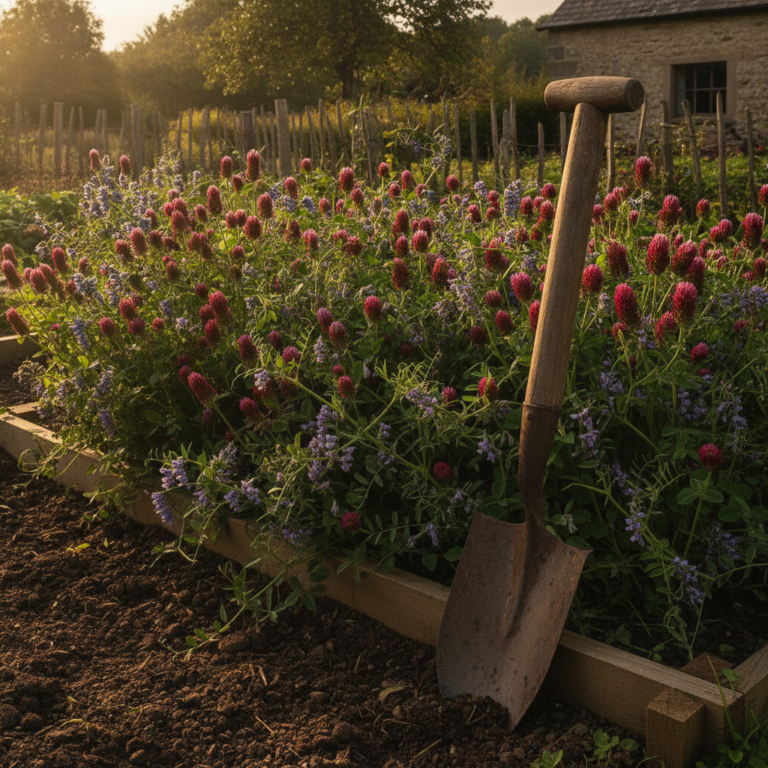
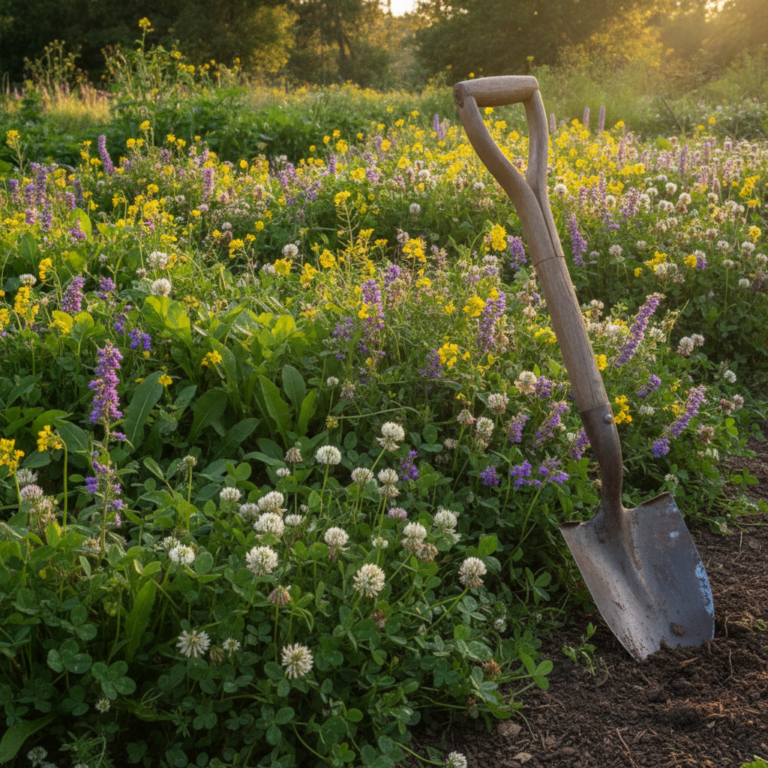
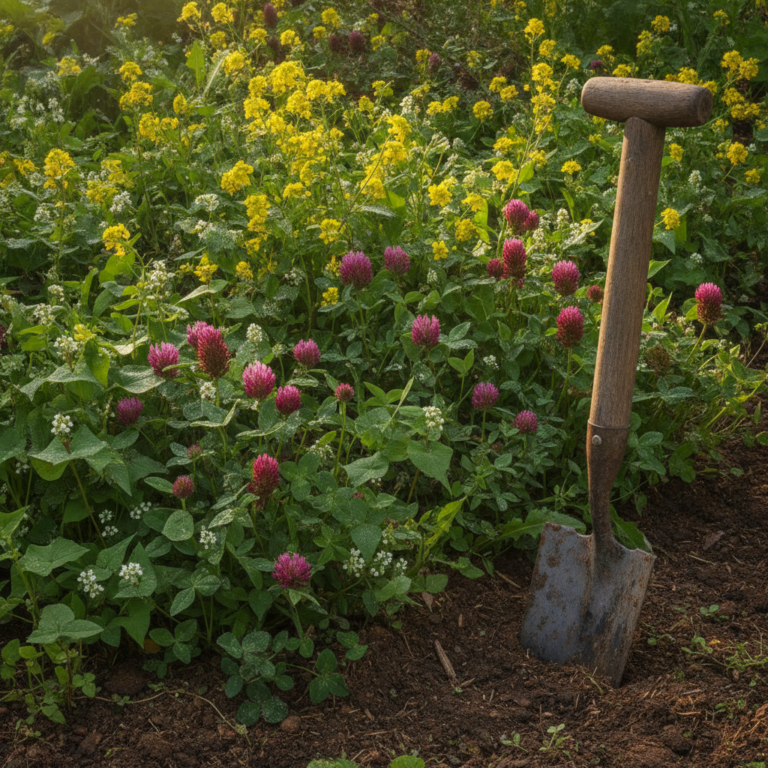
Additionally, many edible ground covers fix nitrogen in the soil. Plants like wild clover and vetch actually improve soil fertility as they grow. This means your other plants get fed while you harvest food from the ground layer.
Most importantly, these plants create habitat for beneficial insects and soil organisms. A thriving ground layer supports the entire food web above it, making your garden more resilient and productive.
Top Edible Ground Covers for Every Climate
Choosing the right edible ground covers depends on your specific growing conditions. Before selecting plants, it’s wise to understand your garden’s microclimates and soil conditions.
Cool Season Champions
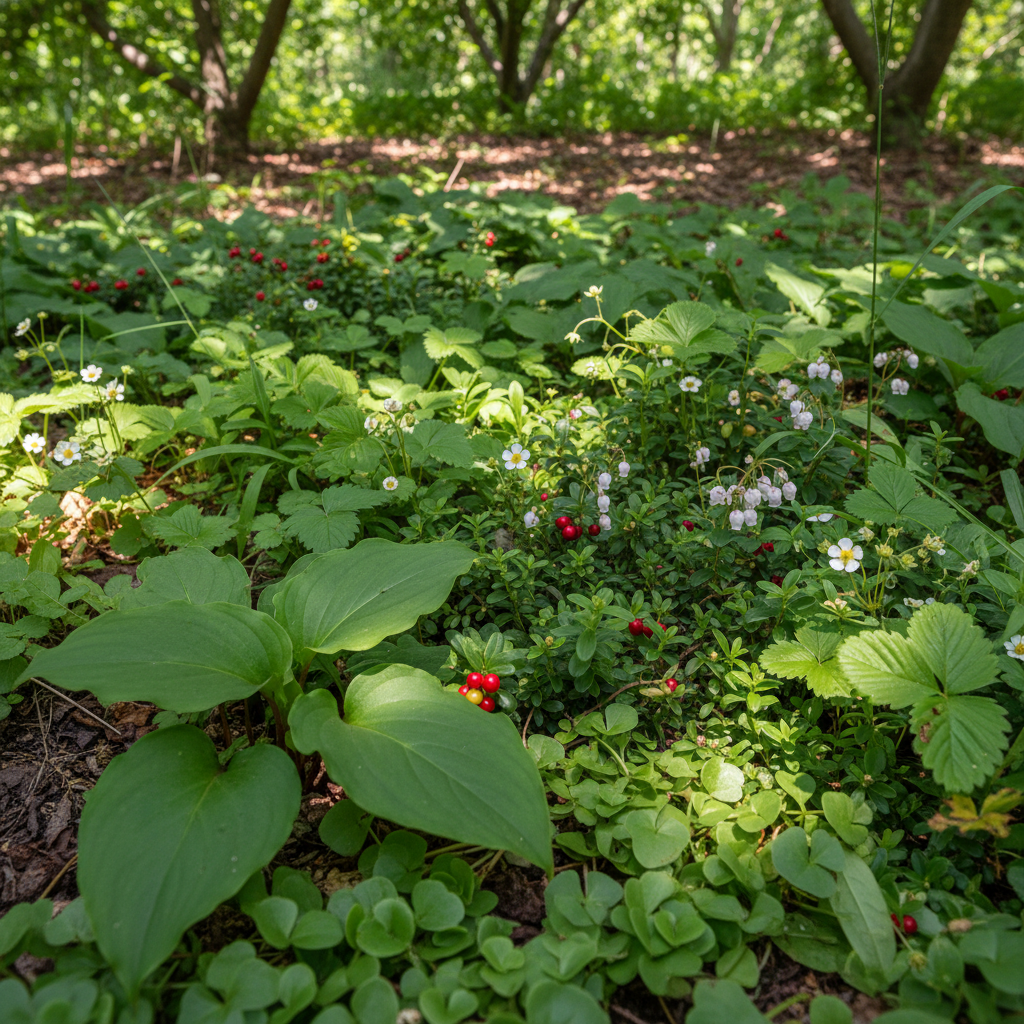
Wild Ginger (Asarum canadense) thrives in shaded areas under fruit trees. Its heart-shaped leaves create dense coverage while the rhizomes provide spicy flavor for cooking. Plant divisions 12 inches apart in rich, moist soil.
Wintergreen (Gaultheria procumbens) offers year-round interest with evergreen leaves and bright red berries. The leaves make excellent tea, while berries add minty sweetness to desserts. This slow-growing cover works best in acidic soils under conifers.
Wild Strawberry (Fragaria virginiana) spreads quickly via runners, creating dense mats of small, intensely flavored berries. Unlike commercial strawberries, these plants handle foot traffic and require no special care.
Warm Season Warriors
Purslane (Portulaca oleracea) self-seeds readily and provides omega-3 rich leaves throughout hot summers. This succulent ground cover thrives in poor soil and drought conditions where other plants struggle.
New Zealand Spinach (Tetragonia tetragonioides) spreads widely in warm weather, providing continuous harvest of nutritious leaves. Unlike true spinach, it doesn’t bolt in heat, making it perfect for summer ground coverage.
Sweet Potato Vines create lush coverage while producing edible tubers and leaves. Choose compact varieties for ground cover use, and harvest both the nutritious greens and sweet roots.
Establishment Strategies That Actually Work
Starting your edible ground covers successfully requires proper site preparation and timing. Begin by assessing your soil quality using techniques from our soil diagnostic guide to understand what amendments might be needed.
Clear existing vegetation in fall or early spring when weeds are weakest. However, avoid tilling, which destroys soil structure and brings buried weed seeds to the surface.
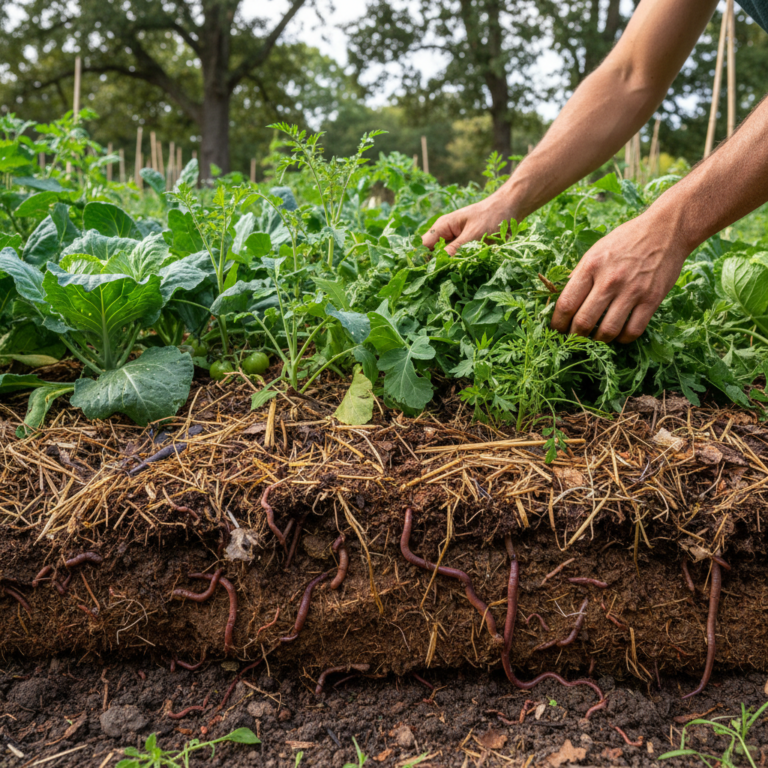
Instead, use the sheet mulch method. Layer cardboard over existing vegetation, then add compost and organic matter on top. Plant your ground covers directly through the cardboard, which will decompose and feed your new plants.
Water newly planted areas consistently for the first six weeks. Once established, most edible ground covers become quite drought-tolerant. This initial investment in care pays dividends for years to come.
Care and Maintenance for Living Carpets
Mature edible ground covers require minimal maintenance compared to traditional gardens. Nevertheless, some seasonal attention keeps them productive and healthy.
Spring brings the opportunity to divide overgrown clumps and fill bare spots. Many ground covers benefit from light fertilization with compost or worm castings at this time.
Summer maintenance focuses on selective harvesting and occasional watering during extreme drought. Harvest regularly to encourage new growth and prevent any single species from becoming too dominant.
Fall cleanup involves removing any diseased material and adding a light layer of leaves as mulch. This natural mulch protects plants through winter while adding organic matter to the soil.
For gardeners following a structured planting approach, ground covers can be integrated into your monthly tasks seamlessly.
Harvesting Your Ground Layer Bounty
Harvesting edible ground covers differs from traditional vegetables. Most produce continuously throughout their growing season when harvested correctly.
For leafy ground covers like purslane and New Zealand spinach, pinch individual leaves or cut stems above the lowest node. This encourages branching and continuous production rather than depleting the plant.
Berry-producing covers like wild strawberries and wintergreen should be harvested when fully ripe. Leave some berries to reseed naturally, ensuring your ground cover population remains strong.
Root crops like wild ginger require careful harvesting. Dig small sections of rhizome while leaving the main plant intact. This sustainable approach provides food while maintaining your living carpet.
Troubleshooting Common Ground Cover Challenges
Even low-maintenance ground covers sometimes face challenges. Identifying and addressing issues early prevents larger problems later.
Slow establishment often indicates poor soil preparation or inadequate watering. Boost struggling areas with compost tea and ensure consistent moisture during the first growing season.
Aggressive spreading can be managed through strategic harvesting and creating physical barriers. Many gardeners use buried edging to contain particularly vigorous species like mint family plants.
Pest issues are typically minimal with diverse ground covers, but slugs may target tender new growth. Encourage beneficial predators with diverse plantings rather than relying on pesticides.
Creating Food Forest Synergy
The real magic happens when your edible ground covers work together with other food forest layers. Plan combinations that support each other’s growth and provide year-round interest.
Under deciduous fruit trees, combine spring ephemerals like wild leeks with summer-active covers like purslane. This succession provides continuous food while maximizing space utilization.
Near nitrogen-fixing shrubs, plant heavy-feeding ground covers that benefit from extra nutrition. This natural partnership reduces your need for external fertilizers.
Consider following a systematic approach like our perennial garden strategy to create truly sustainable ground layer systems.
Your Ground Layer Journey Starts Now
Building productive edible ground covers takes patience, but the rewards multiply over time. Start small with one or two species that suit your conditions and expand gradually as you gain experience.
Remember that every established ground cover plant is working for you 24/7, building soil, providing food, and creating habitat. This passive productivity is the essence of permaculture design.
Your food forest ground layer represents an investment in long-term abundance. With proper planning and care, these living carpets will feed your family and nurture your soil for decades to come.