Green Manure Crops: The Plow-Under Secret
Green Manure Crops: The Plow-Under Secret Farmers Almost Forgot
Long before synthetic nitrogen came in a plastic bag, farmers kept their fields productive using one of the oldest tricks in the soil-building playbook. They grew green manure crops — specific plants chosen not to eat, but to chop down and bury. The result was rich, biologically active soil that could support crop after crop, season after season, without a single chemical input. Today, most gardeners have never heard of it. But your grandparents almost certainly knew this method, and it still works just as well as it ever did.
In this guide, you’ll learn exactly which plants work best as green manures, how to time the cut-and-dig for maximum nutrient release, and how to fit this forgotten rotation trick into your own garden this season. A practical planting calendar is included at the end.
What Are Green Manure Crops, Exactly?
Green manure crops are fast-growing plants you sow specifically to improve your soil. You grow them, then cut or flatten them just before or at flowering — and dig or till them directly into the ground. As they break down, they release nitrogen, organic matter, and trace minerals into the soil.
Think of it as growing your own fertilizer from scratch. No bags. No labels. No guesswork about what’s actually in the product. Just biology doing what it does best.
There are two main categories worth knowing:
- Legumes — These fix atmospheric nitrogen through root nodules containing beneficial bacteria. Examples include clover, vetch, field peas, and fava beans. They are the powerhouses of the green manure world.
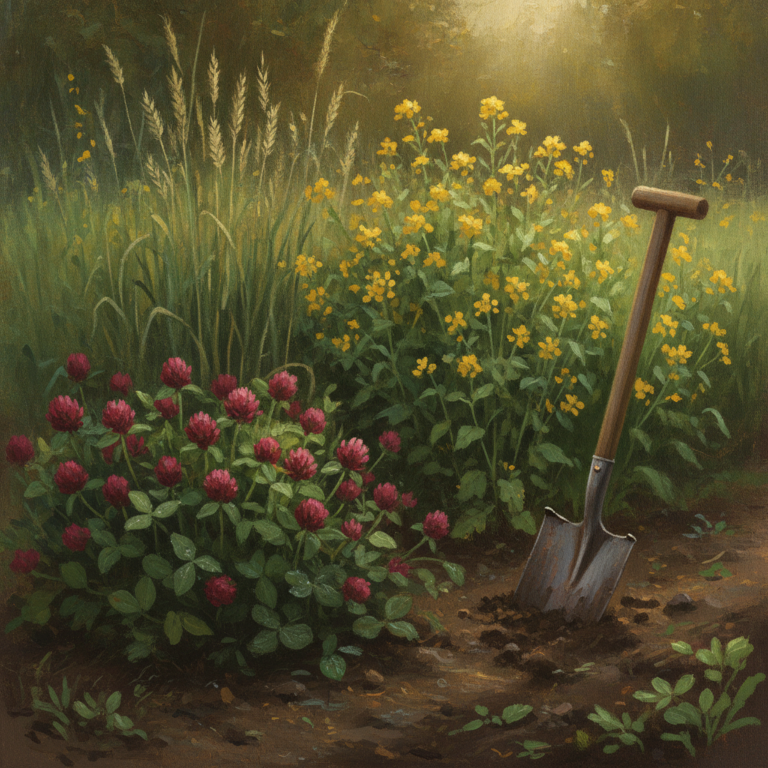
- Non-legumes — These don’t fix nitrogen, but they add bulk organic matter, suppress weeds, and improve soil structure. Examples include rye, buckwheat, phacelia, and mustard.
Many experienced growers combine both types. The legume feeds the soil with nitrogen. The non-legume adds carbon-rich bulk. Together, they create a balanced, slow-release amendment that no bagged product can quite match.
If you’re still getting to know your soil, Soil Sense Without the Lab: Read Your Dirt, Fix It Fast is a brilliant starting point before you begin any green manure rotation.
The Best Green Manure Crops for Home Gardeners
You don’t need a farm to use green manures effectively. Even a small raised bed can benefit from a strategic cover crop rotation. Here are the top performers:
Crimson Clover
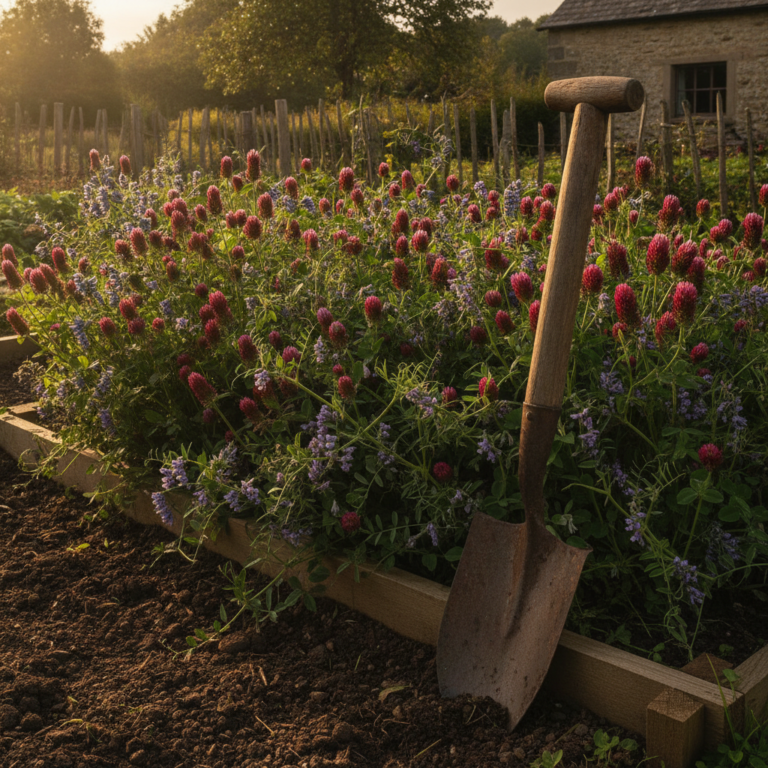
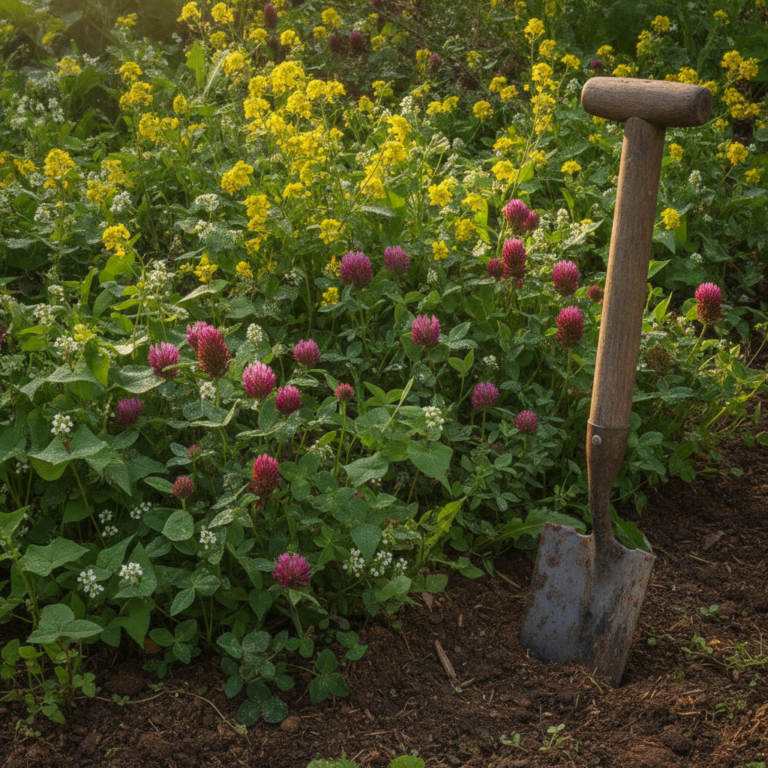
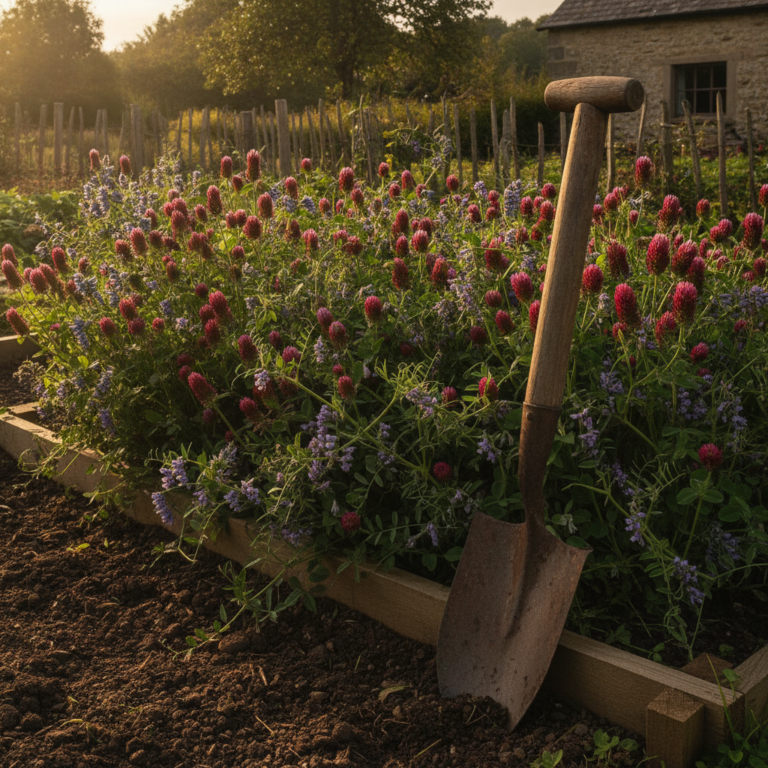
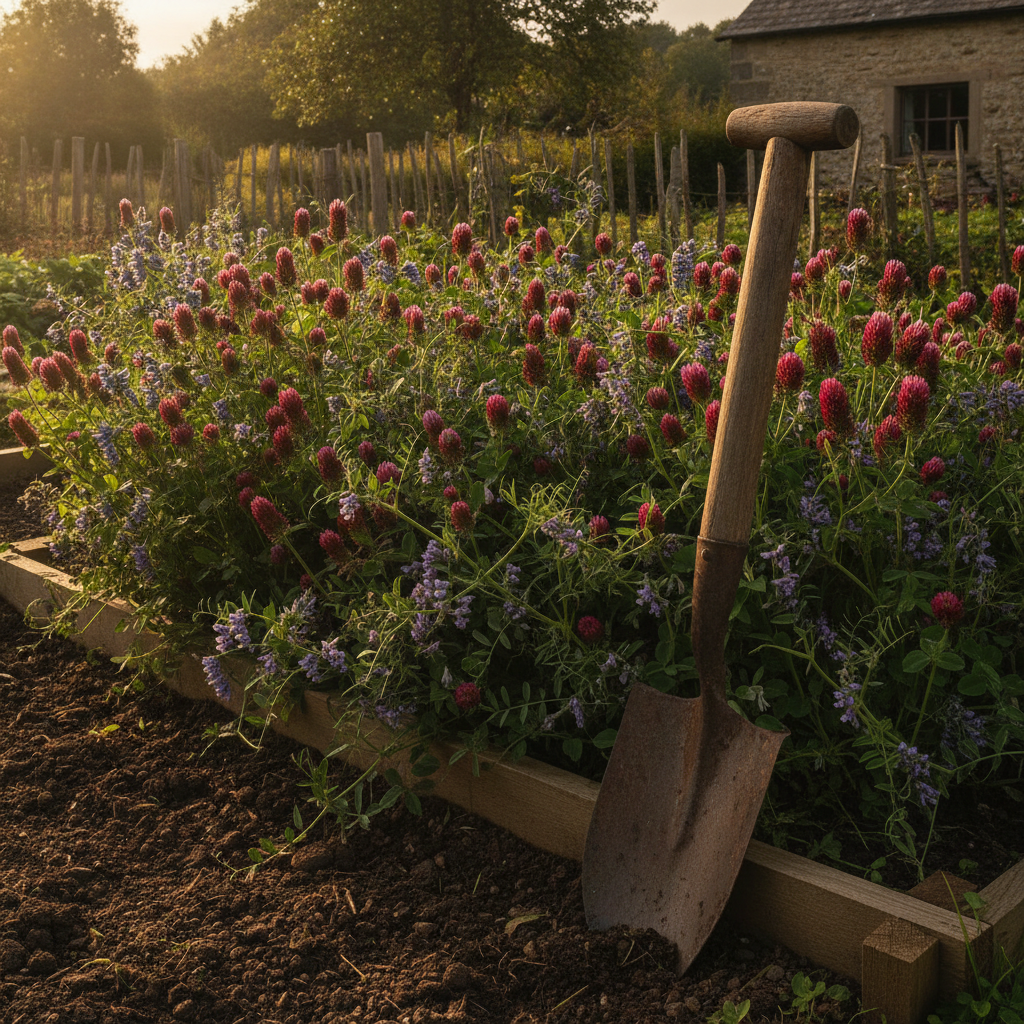
One of the most reliable green manure crops available. Crimson clover fixes significant nitrogen, grows quickly, and produces beautiful red flowers that attract pollinators. Sow in early spring or late summer. Dig in just as the flowers open for the highest nitrogen content.
Hairy Vetch
A cold-hardy legume that overwinters in most climates. Hairy vetch fixes large amounts of nitrogen — sometimes up to 200 pounds per acre under ideal conditions. It’s vigorous and can get sprawling, but its soil-feeding ability is outstanding. Pair it with winter rye for a classic combination.
Field Peas
Fast-growing and easy to manage. Field peas (not the same as your eating peas) are an excellent cool-season green manure. They establish quickly in spring and can be turned under in as little as six to eight weeks. A great choice for beginners.
Buckwheat
The summer workhorse of green manures. Buckwheat grows explosively in warm weather, smothers weeds, and breaks down rapidly when dug in. It also makes phosphorus more available in the soil — a bonus for heavy feeders like tomatoes and brassicas. Turn it under within ten days of flowering for best results.
Winter Rye
Not a nitrogen fixer, but an incredible soil builder. Winter rye produces massive amounts of organic matter and has allelopathic properties that naturally suppress weed germination. It’s extremely winter-hardy and easy to grow. Combine it with hairy vetch for a nitrogen boost alongside the bulky carbon.
Phacelia
Often overlooked, phacelia is one of the most bee-friendly cover crops you can grow. It breaks down fast after incorporation, doesn’t belong to any common vegetable family (so it won’t harbor pests or diseases), and conditions soil beautifully. An excellent green manure for rotation between brassicas and root vegetables.
Timing the Cut: When to Chop for Maximum Nitrogen
This is the part most gardeners get wrong. Cutting too late is the single biggest mistake in green manure management.
The rule is simple: cut green manure crops just as they begin to flower. At this stage, the plants have built up maximum nitrogen and nutrient content in their tissues. Once they go to seed, they shift energy from growth to reproduction. Nitrogen content drops, and the material becomes tougher and slower to break down.
After cutting, you have a couple of options:
- Chop and drop — Cut the tops and leave them on the surface as a mulch layer. Nutrients will slowly leach down into the soil, and the mulch suppresses weeds.
- Dig under — Use a spade or fork to turn the green material into the top six to eight inches of soil. This speeds decomposition and releases nutrients more quickly.
After digging in, wait at least two to three weeks before planting. The decomposing plant material needs time to break down and stabilize. Planting too soon can temporarily tie up nitrogen as microbes rush to process the organic matter — a phenomenon called nitrogen drawdown.
For gardeners planning crops around tight seasonal windows, the Climate-Proof Your Crops: A 30-Day, Microclimate-Aware Planting Plan can help you coordinate your green manure timing with your main growing schedule.
How Green Manures Outperform Bagged Soil Conditioners
Walk into any garden center and you’ll find shelves of soil amendments — blood meal, pelleted chicken manure, synthetic nitrogen granules, and a dozen blended products with impressive labels. So why bother with green manures at all?
Here’s what the bags don’t tell you.
Bagged amendments are a one-dimensional input. They deliver nutrients, but they don’t build biology. Green manure crops, on the other hand, do several things simultaneously:
- Feed soil microbes with living organic matter
- Improve soil structure through root action
- Fix atmospheric nitrogen (legumes)
- Suppress weeds while growing
- Prevent erosion on bare beds
- Break up compaction with deep root systems
- Attract beneficial insects when flowering
No bagged product comes close to delivering that range of benefits at once. And once you’ve purchased the seed — which is very affordable — the system largely runs itself.
If you want to go further with soil-building approaches, pairing green manures with biochar, compost tea, or rock dust creates a layered fertility system that continues improving year after year. The post Garden Experiments: 3 Safe, Small-Scale Trials That Grow Your Gardening Confidence is a great place to start testing these combinations.
A Practical Green Manure Planting Calendar
Here is a simple seasonal guide you can adapt to your climate. Adjust by a few weeks depending on your first and last frost dates.
Early Spring (4–6 weeks before last frost)
Sow field peas, crimson clover, or phacelia. These tolerate light frosts. Cut and dig under four to six weeks later, then plant warm-season crops like squash, tomatoes, or beans into the enriched bed.
Late Spring to Early Summer
Sow buckwheat in any bed that needs a quick boost before a second planting. Buckwheat matures fast — cut it within 30–40 days. Turn it under and follow with brassicas, root crops, or a late summer planting of beans.
Late Summer (6–8 weeks before first frost)
Sow hairy vetch and winter rye together. This is one of the classic cold-season green manure combinations. The mix overwinters, protects bare soil, and is ready to turn under the following spring. It gives you a massive fertility boost heading into your main growing season.
Early Autumn
Sow mustard as a biofumigant green manure. Mustard releases natural compounds as it breaks down that suppress soilborne fungal diseases and some nematodes. Particularly useful in beds where brassicas, tomatoes, or potatoes have grown for several seasons.
Tracking these rotations season by season makes a real difference over time. If you’re not already keeping records, Field Notes to Flourishing: Templates and Prompts to Track Growth, Mistakes, and Milestones gives you ready-made tools to do exactly that.
Getting Started This Season
The beauty of green manure crops is that you don’t need to overhaul your entire garden to begin. Pick one empty or between-season bed. Sow a simple mix — crimson clover and phacelia work beautifully together for beginners. Let it grow. Cut it at flowering. Dig it in. Then plant into that bed and watch what happens.
The difference in plant vigor, soil texture, and overall health is usually visible within a single season. Once you see it, you’ll understand why pre-industrial farmers relied on this method as a cornerstone of their entire approach to soil care.
This isn’t complicated soil science. It’s just working with biology instead of around it — the way good farmers have always done.
Start with one bed. This season. You won’t look back.