Green Manure Crops: The Plow-Under Secret
Green Manure Crops: The Plow-Under Secret Farmers Used Before Synthetic Nitrogen
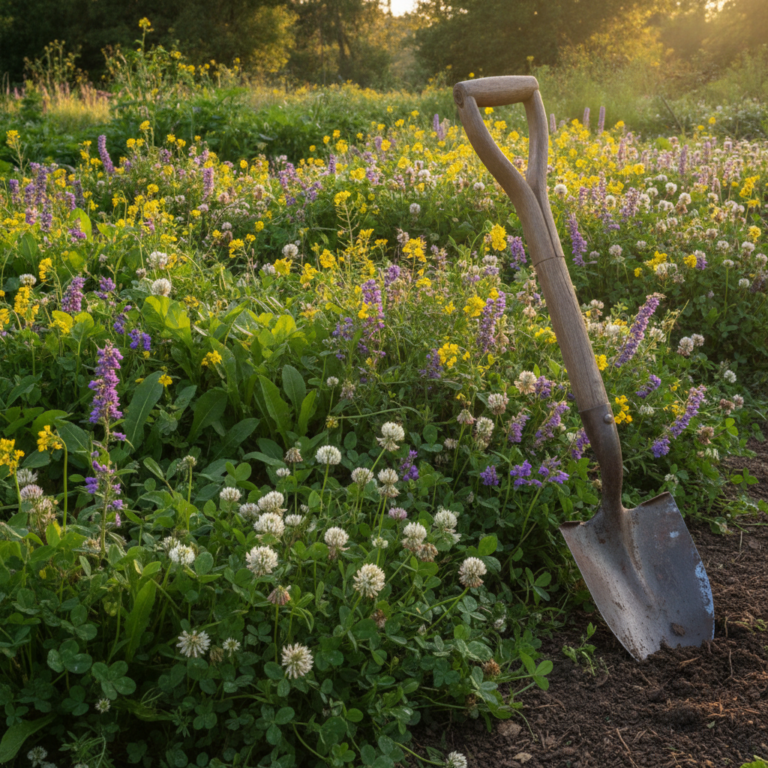
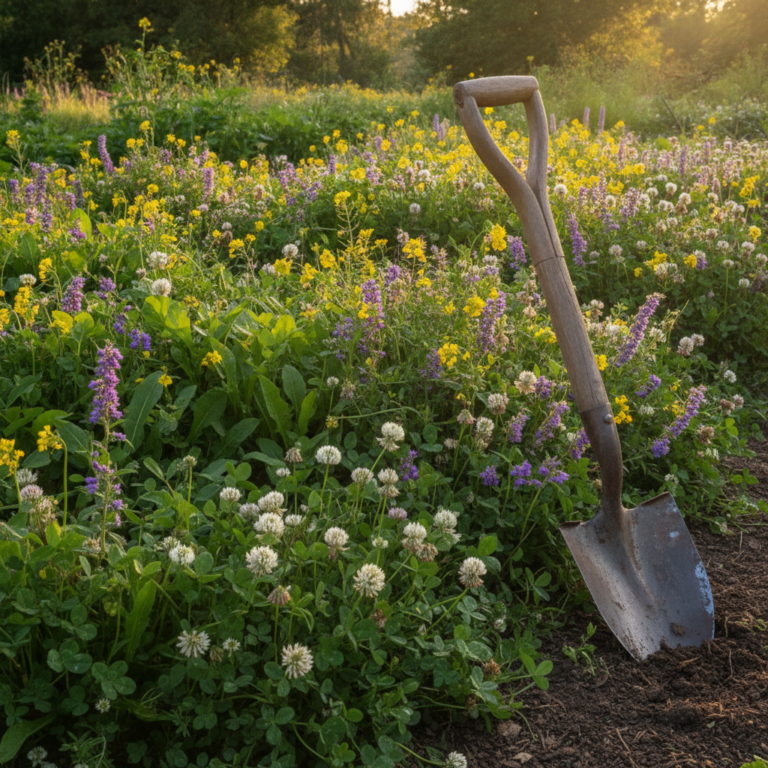
Before a single bag of synthetic fertilizer existed, farmers kept their fields rich using a beautifully simple trick. They grew green manure crops — plants raised specifically to be chopped down and buried. No shopping trips. No chemical runoff. Just living plants returning their nutrients directly to the soil that fed them. This practice is one of the most powerful, most overlooked techniques a home gardener can revive today. And the good news? You can start this season with almost no cost and a single afternoon of work.
What Are Green Manure Crops, Exactly?
A green manure crop is any fast-growing plant you sow with the specific intention of turning it into the soil before it sets seed. You are not harvesting the plant for food. Instead, the plant itself becomes the fertilizer.
This is different from simply leaving dead plant material on top of the soil. When you bury fresh, green, actively growing plant matter, you kick off a rapid decomposition cycle. Microbes feast on the soft tissue. Nutrients locked inside those plant cells — especially nitrogen — get released into the soil where your next crop’s roots can access them.
Think of it as pre-loading your soil before you plant vegetables. Your grandparents called it “plowing under.” Scientists call it in situ composting. Either way, it works remarkably well.
If you’re still learning to read what your soil is telling you, take a look at Soil Sense Without the Lab: Read Your Dirt, Fix It Fast. Understanding your baseline soil before you start any amendment practice — including green manures — makes every decision more precise.
The Best Green Manure Crops for Home Gardens
Not every plant makes an equally effective green manure. The best ones share a few key traits: they grow quickly, produce a lot of leafy biomass, and many of them fix atmospheric nitrogen through root bacteria. Here are the top performers, sorted by season.
Cool-Season Green Manures
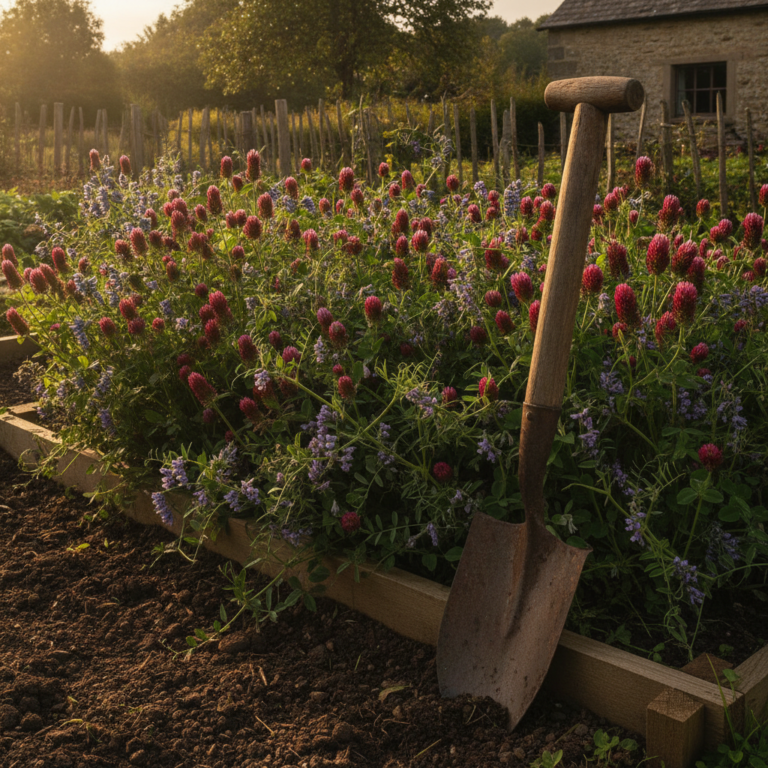
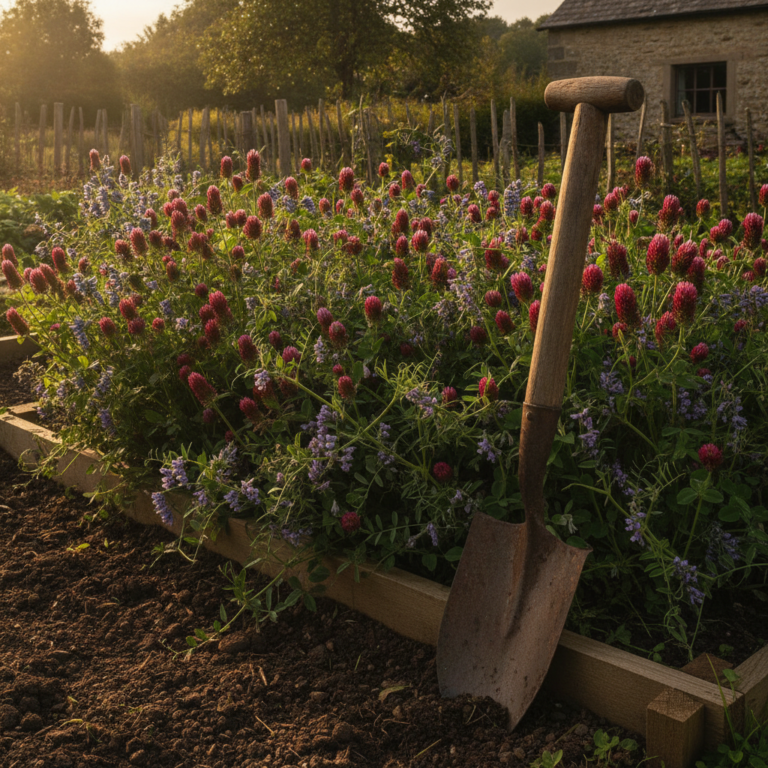
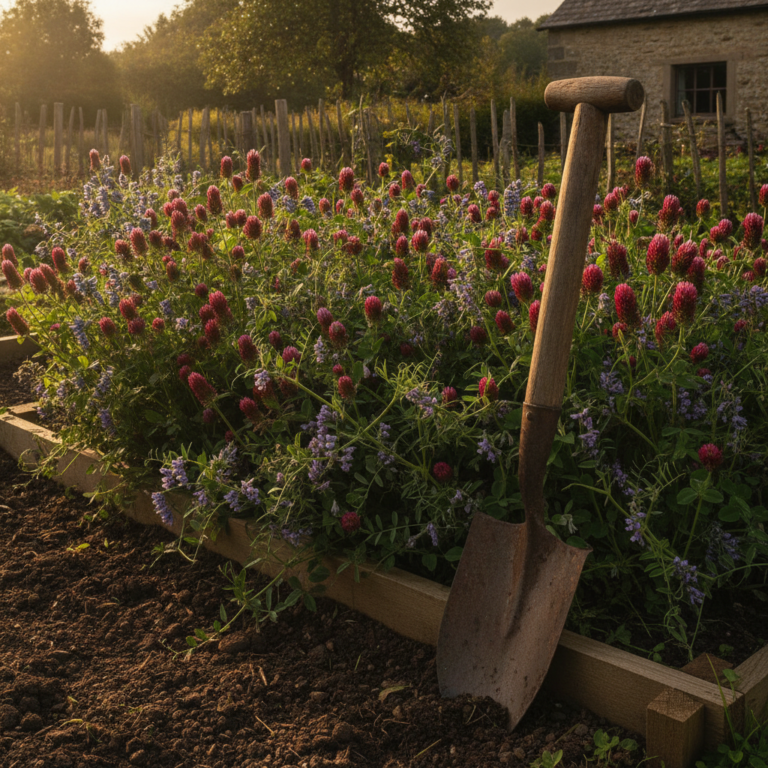
Crimson Clover is the gold standard. It fixes nitrogen aggressively, produces beautiful red blooms that attract pollinators, and breaks down fast when turned under. Sow it in early spring or fall.
Hairy Vetch is another nitrogen powerhouse. It sprawls low to the ground, suppresses weeds brilliantly, and adds enormous amounts of organic matter when incorporated. It’s especially effective as a fall planting that overwinters and gets turned under in spring.
Winter Rye doesn’t fix nitrogen, but it builds soil structure like few other plants can. Its deep, fibrous root system breaks up compacted soil and adds carbon-rich material that feeds soil fungi and bacteria long after it’s been buried.
Field Peas are fast, frost-tolerant, and pack a nitrogen punch. They also decompose quickly, meaning you won’t have to wait long before planting your main crops after turning them under.
Warm-Season Green Manures
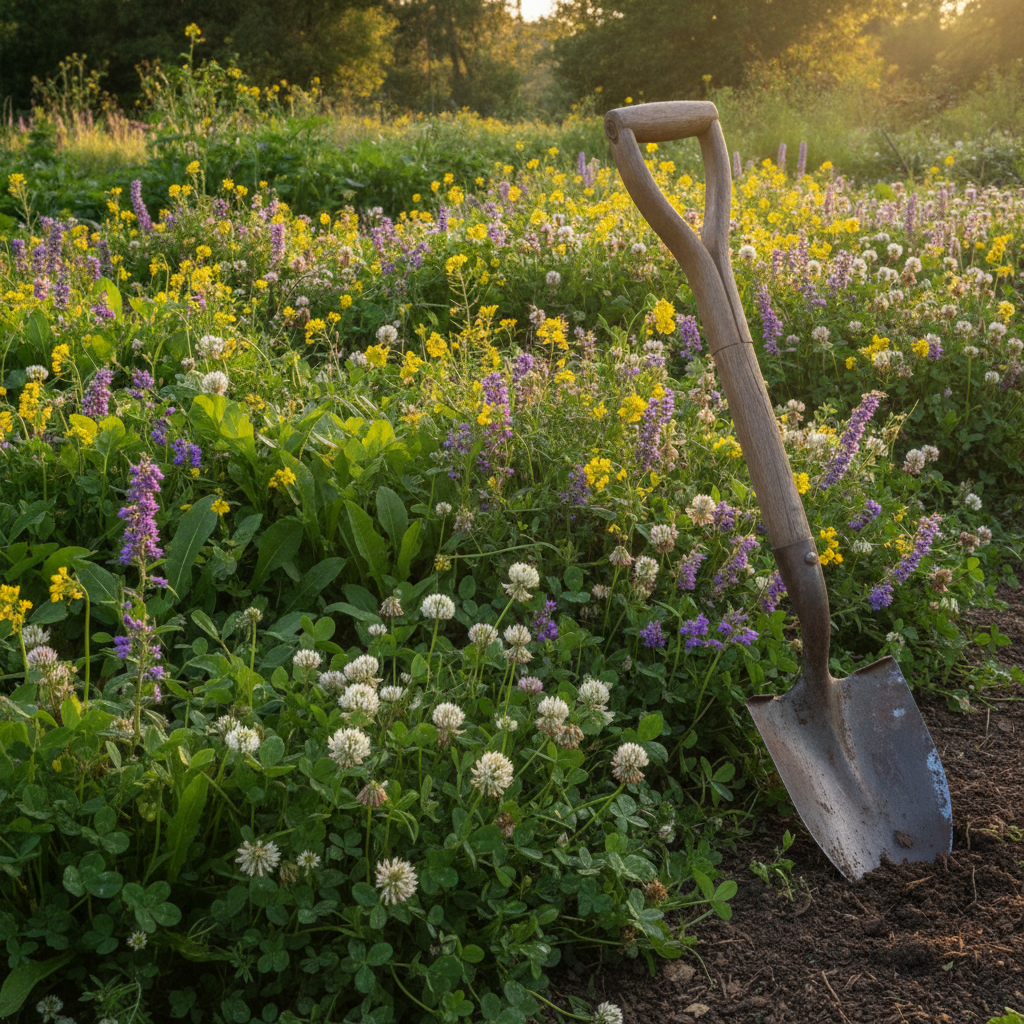
Buckwheat is the summer superstar. It smothers weeds, blooms within 30–40 days, and scavenges phosphorus from deep in the soil, making it available for the next crop. It’s also extraordinarily easy to turn under — the stems are soft and break down in just two to three weeks.
Sunn Hemp grows tall fast and fixes impressive amounts of nitrogen. It also suppresses nematodes in the soil, making it an excellent choice if you’ve had root problems in the past.
Mustard is less commonly discussed but powerfully effective. Its roots release compounds called glucosinolates that act as natural soil fumigants, suppressing soilborne disease, fungi, and even some weed seeds.
Timing the Cut: When to Plow Under for Maximum Nitrogen
Here is where most gardeners make the critical mistake. They wait too long. By the time a plant sets seed and dries out, much of the nitrogen in its tissue has already been used up or locked into tougher fibers that decompose slowly.
The sweet spot for turning under green manure crops is at early to full bloom, before seed set. At this stage, the plant tissue is still soft and high in nitrogen. When you bury it, soil bacteria can break it down within two to four weeks, releasing nutrients in a form your next planting can use almost immediately.
Follow this simple rule: cut it when you see the first flowers, not after.
After you cut or scythe the plants down, chop them roughly with a spade and turn the material into the top six to eight inches of soil. Water the bed well. Then wait. Give the soil at least two to three weeks — ideally four — before planting into it. This resting period lets the decomposition process stabilize so the raw plant matter doesn’t actually tie up nitrogen temporarily as it breaks down.
A Practical Green Manure Planting Calendar
You don’t need to overhaul your entire garden to use this method. Even rotating one or two beds per season through green manures can make a visible difference within a single growing year.
Here is a simplified calendar you can adapt for most temperate climates:
Early Spring (March–April): Sow field peas or crimson clover in beds that won’t receive main crops until late May or June. Turn under at first bloom, approximately 6–8 weeks after sowing.
Late Spring / Early Summer (May–June): Sow buckwheat in any beds that finish their early crop or that you won’t plant again until late summer. Turn under within 5–6 weeks.
Late Summer (August–September): Sow hairy vetch or winter rye after you harvest summer crops. Let it overwinter. Turn under in April before your spring planting begins.
Fall (October): Sow crimson clover or field peas in mild climates for a late-fall green manure. In colder zones, use winter rye as a soil protector that you’ll incorporate in spring.
If your planting schedule is still taking shape, the Climate-Proof Your Crops: A 30-Day, Microclimate–Aware Planting Plan can help you build a rotation that accounts for your specific conditions — a smart complement to any green manure strategy.
Why Green Manures Outperform Most Store-Bought Soil Conditioners
This is the part that surprises most people. Bag fertilizers deliver nutrients quickly, but they do almost nothing for soil structure, microbial life, or long-term fertility. In fact, heavy synthetic nitrogen use is known to depress soil fungal networks and reduce the populations of beneficial bacteria over time.
Green manure crops, by contrast, do all of the following simultaneously:
- Fix atmospheric nitrogen through root-associated bacteria (legume varieties)
- Add bulk organic matter that improves drainage and water retention
- Feed the microbial ecosystem that makes all nutrients more available
- Break up compaction with deep root systems
- Suppress weeds by outcompeting them during the green manure phase
- Protect bare soil from erosion and nutrient leaching
No single bag product does all of that. And green manure crops cost almost nothing — a packet of clover seed covers a surprising amount of ground for just a few dollars.
This is also why experienced growers who commit to green manures often find themselves buying less and less over time. The soil starts doing more of the work on its own. That is the real goal: building a self-sustaining system rather than a dependency on purchased inputs.
If you are interested in building that kind of low-input, self-renewing garden more broadly, The Perennial Playbook: Build a Low-Input Garden That Keeps Flourishing With You offers a strategic framework that pairs beautifully with green manure rotations.
Getting Started: Your First Green Manure Bed
You don’t need special tools or expert knowledge to begin. Choose one bed that is currently empty or finishing its current crop. Clear it, rake it lightly, and broadcast your chosen seed at the rate listed on the packet. Rake again to cover the seed lightly. Water it in.
Then let it grow. Check back at around five weeks. When you see blooms forming, it’s time to act. Cut the plants down, chop them in, and water deeply. Mark your calendar for the replanting date — four weeks out is a safe minimum.
If you want to track how this experiment improves your soil season over season, the Field Notes to Flourishing: Templates and Prompts to Track Growth, Mistakes, and Milestones gives you a ready-made system for doing exactly that. Observing your results over time is how this old practice becomes your personal, tested knowledge — not just something you read about.
The Bottom Line on Green Manures
Green manure crops represent one of the most complete, cost-effective, and historically proven soil-building methods available to any home gardener. They work because they work with living biology, not against it. They return organic matter, nitrogen, and microbial food to the soil in the form the soil was designed to receive — fresh, green, decomposing plant life.
Your grandparents knew this. Farmers for thousands of years before them knew this. Now you do too. Pick a bed, buy a packet of clover or buckwheat seed, and give this forgotten technique one honest season. Your soil — and every plant you grow in it — will show you the results.