Green Manure Crops: The Plow-Under Secret
Long before a synthetic nitrogen bag ever sat on a hardware store shelf, farmers were growing green manure crops on purpose — not to harvest, but to bury. They called it the plow-under secret, and it built some of the most fertile soil in history. If your garden feels depleted, exhausted, or dependent on store-bought fixes, this old-time technique might be exactly what you’ve been looking for.
What Are Green Manure Crops, Exactly?
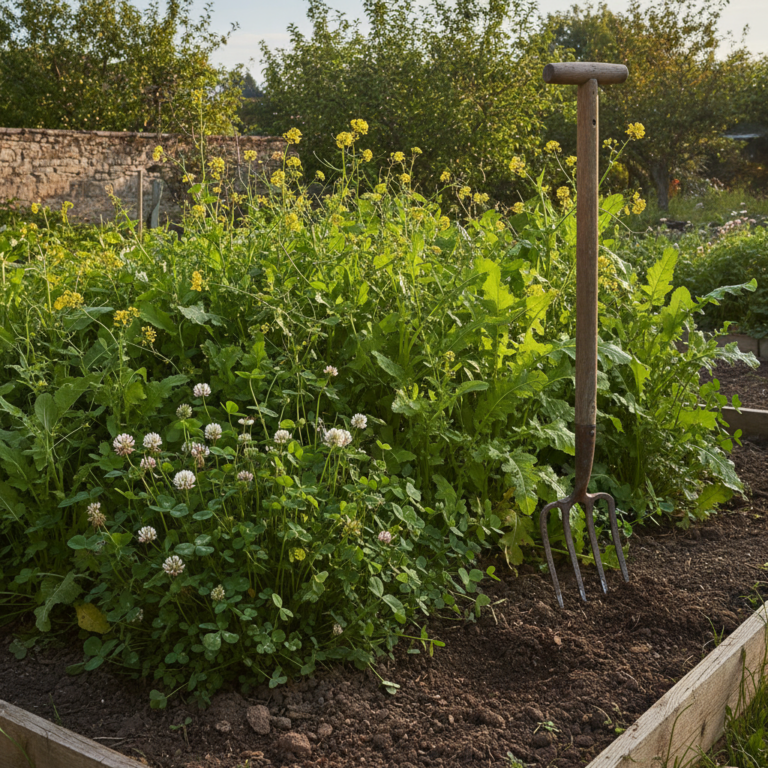
A green manure crop is any plant grown specifically to be cut down and dug into the soil while it is still green and leafy. The goal is not food for you. The goal is food for your soil.
When you chop and bury a green manure at the right stage, the fresh plant tissue breaks down quickly. It feeds soil bacteria, releases nutrients — especially nitrogen — and adds organic matter that improves structure, drainage, and water retention all at once.
Think of it as growing your own fertilizer in place, then handing it directly to the soil without the middleman.
This is fundamentally different from composting. Compost is made off-site and then added. Green manures decompose right where your crops will eventually grow, feeding the soil food web in its own home environment. The results are often faster and more localized.
If you’ve been reading about ways to read and fix your soil naturally, this technique pairs beautifully with the approach outlined in Soil Sense Without the Lab: Read Your Dirt, Fix It Fast. Understanding what your soil needs first will help you choose the right green manure for the job.
The Best Green Manure Crops for Home Gardens
Not every plant makes a great green manure. The most effective ones fall into two categories: nitrogen fixers and biomass builders. The best rotations often use both.
Nitrogen-Fixing Green Manures
These plants form partnerships with soil bacteria called rhizobia. Together, they pull nitrogen from the air and store it in root nodules. When you dig them in, all that captured nitrogen releases into the soil.
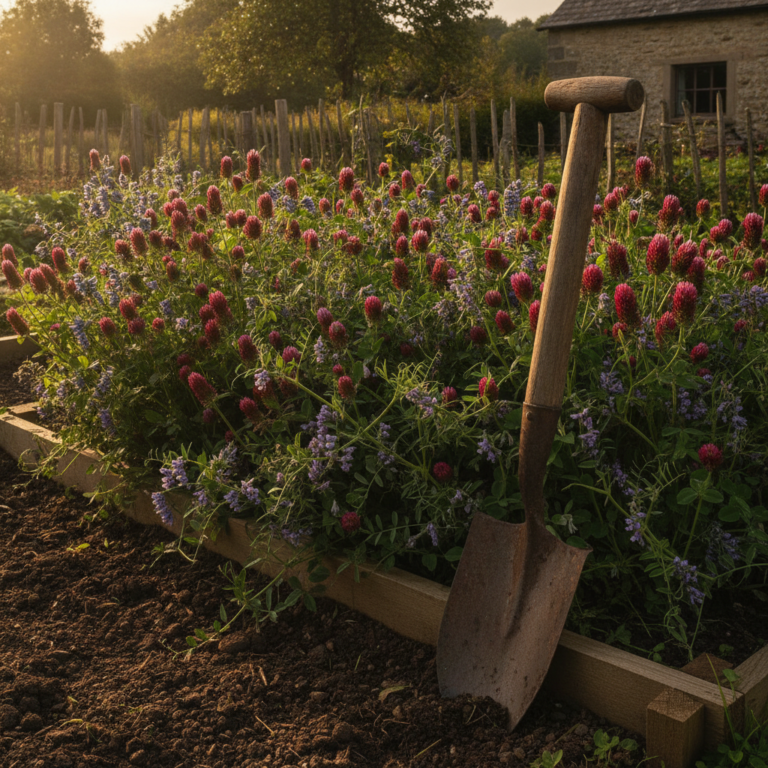
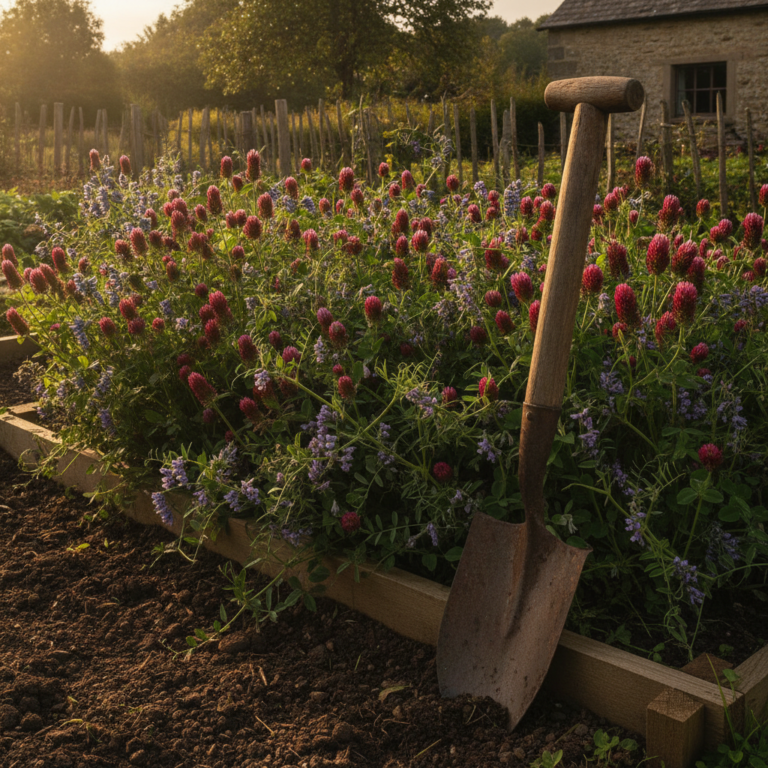
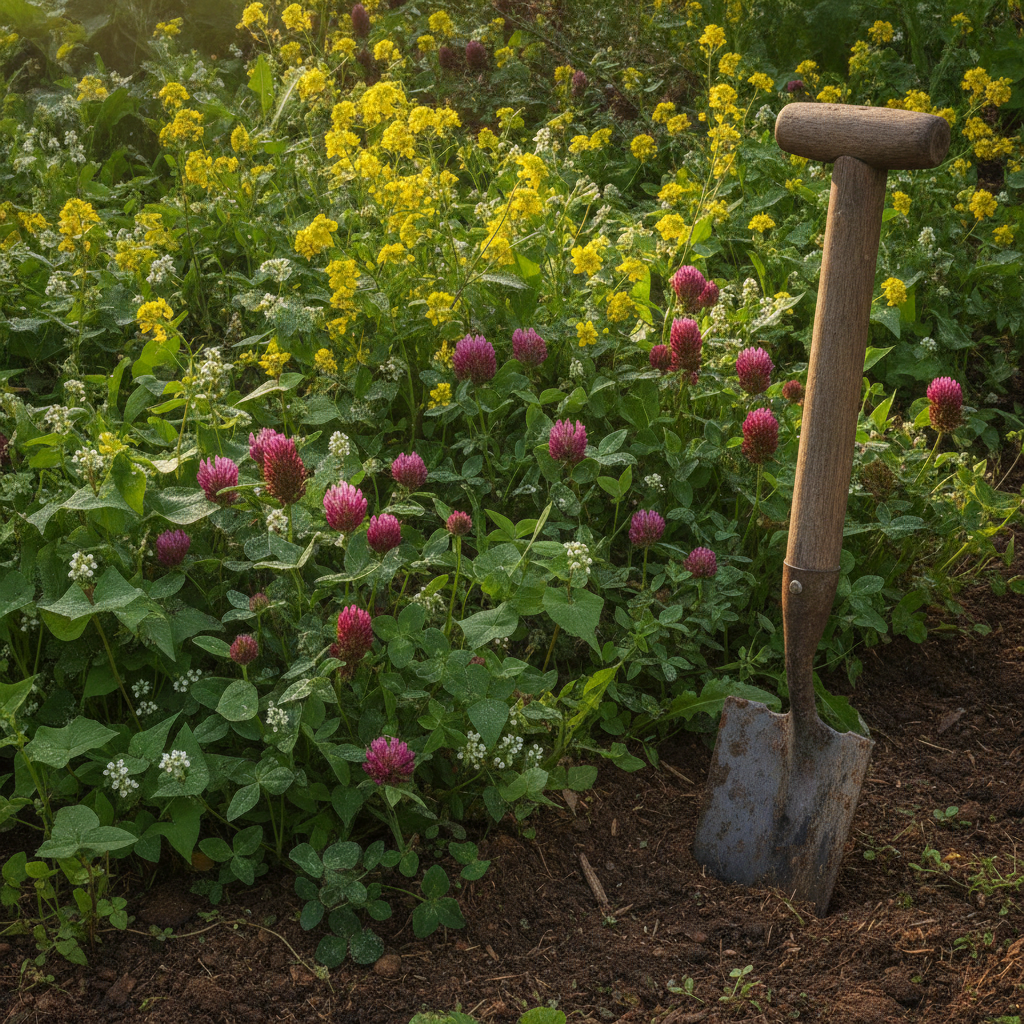
- Crimson clover — Fast-growing, beautiful, and one of the most reliable nitrogen fixers for home gardens. Sow in early spring or late summer.
- Hairy vetch — Cold-hardy and vigorous. Excellent for overwintering and spring incorporation. Can fix 90–200 lbs of nitrogen per acre.
- Field peas (Austrian winter peas) — Quick to establish, easy to dig under, and friendly to small spaces.
- Fava beans — Remarkable nitrogen fixers and they also loosen compacted soil with deep roots.
Biomass-Building Green Manures
These are not necessarily nitrogen fixers, but they grow massive amounts of organic matter fast. Digging them in dramatically improves soil structure.
- Buckwheat — Grows quickly in summer, smothers weeds, and releases phosphorus from hard-to-reach soil reserves. Ready to cut in just 5–6 weeks.
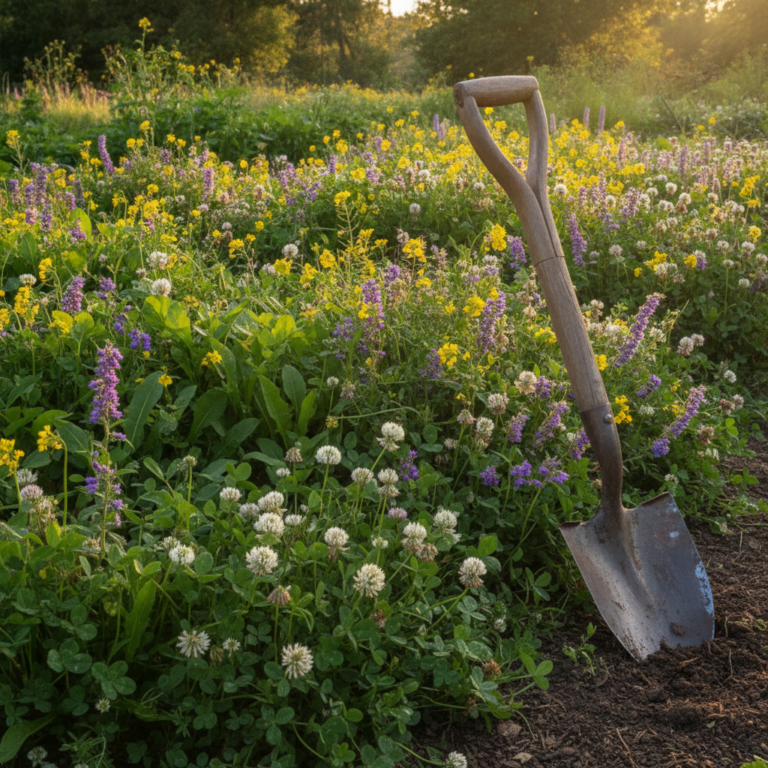
- Phacelia — A European favorite that pollinators adore. Breaks down very fast after incorporation.
- Mustard — Has mild biofumigant properties, suppressing certain soil pathogens as it decomposes.
- Oats — Winter-kills in cold climates, leaving a natural mulch that you simply dig in come spring.
Timing the Cut: When to Chop and Bury
This is where most gardeners get it wrong. Many wait too long, and the window closes.
The ideal moment to cut and incorporate a green manure is just before or during early flowering. At this stage, the plant tissue is still soft, nitrogen content is at its peak, and the carbon-to-nitrogen ratio is low enough for fast decomposition.
If you let the crop go to full seed, the stems become woody. Decomposition slows dramatically. Some plants — like hairy vetch — will reseed aggressively if you’re not careful.
The simple rule: Cut at bud stage, not bloom stage. When you see the first flower buds forming, that is your signal.
After chopping the tops, dig the material 4–6 inches into the soil. Then wait. In warm soil, decomposition takes 2–4 weeks. In cool soil, allow 4–6 weeks before planting your main crops. If you rush this window, the decomposing material can temporarily tie up nitrogen instead of releasing it — the opposite of what you want.
Why Green Manure Crops Outperform Store-Bought Amendments
A bag of granular nitrogen fertilizer delivers one thing: nitrogen. It does nothing for soil biology, structure, or long-term water retention.
Green manures, on the other hand, deliver a whole ecosystem upgrade in a single step.
Here is what happens underground when a green manure decomposes properly:
- Bacterial and fungal populations surge, increasing nutrient cycling capacity.
- Earthworms are drawn in by the fresh organic matter — often doubling their local population.
- Humus forms from the breakdown, binding soil particles into aggregates that hold air and water beautifully.
- Nitrogen, phosphorus, and trace minerals become plant-available in slow-release form rather than all at once.
No bag of fertilizer can replicate that chain of events. It is why your grandparents’ gardens often produced without much outside input at all.
If you’re building a garden system that works with nature rather than against it, this technique fits seamlessly into the kind of layered approach described in Layered Learning: A Gardener’s Progressive System That Grows with You.
A Practical Green Manure Planting Calendar
Here is a simple, season-by-season plan you can start using right now. Adjust timing slightly based on your zone.
Early Spring (March–April)
Sow field peas or crimson clover in any beds that won’t be planted until May or June. They establish quickly in cool soil. Cut and incorporate 4–5 weeks before you need the bed.
Late Spring to Summer (May–July)
Use buckwheat as a fast-fill green manure in any gap between harvests or in beds resting for the season. It matures in just 5–6 weeks and breaks down fast in warm soil. Excellent for suppressing summer weeds at the same time.
Late Summer (August)
This is the golden window. Sow hairy vetch, oats, or a vetch-oat mix after summer crops finish. The vetch fixes nitrogen through fall. The oats winter-kill in cold climates, leaving a no-dig mulch. Incorporate both in early spring for a huge fertility boost before tomatoes, squash, or brassicas.
Fall (September–October)
In mild climates, sow phacelia or mustard for late-season soil improvement. In colder zones, overwintering fava beans are surprisingly cold-tolerant and will reward you with excellent nitrogen levels by late spring.
For those fitting this into a broader seasonal plan, pairing this calendar with the framework in Climate-Proof Your Crops: A 30-Day, Microclimate-Aware Planting Plan will help you schedule green manure windows around your actual microclimate — not just a generic zone chart.
Small-Space Strategies for Green Manures
Many home gardeners assume green manures only work on large plots. That is simply not true.
Even a single raised bed can benefit enormously from a 4–6 week green manure rotation between main crop plantings. Buckwheat in a 4×8 bed for six weeks will add meaningful organic matter and improve tilth noticeably by the following season.
You can also sow green manures in strips — filling one half of a bed while cropping the other half. Rotate the strips each season. Over two years, the entire bed receives the benefit.
Container gardeners can even blend chopped green manure material into potting mixes before refilling containers, giving tired soil a genuine biological reset.
Getting Started This Season
You do not need special equipment. You do not need a large space. You need a packet of seeds — clover, buckwheat, or vetch — and a willingness to let part of your garden grow something you’ll never eat.
The payoff comes later, when your main crops push down roots into soil that actually has something to offer them. Rich, dark, crumbly, alive.
That’s what green manure crops have always delivered. Before synthetic nitrogen. Before the garden center. Before anyone thought they needed to improve on it.
Start with one bed. Time your cut right. Then watch what your soil does the following season. It tends to be the kind of result that converts skeptics permanently.
If you’re building confidence with new techniques like this one, the Garden Experiments: 3 Safe, Small-Scale Trials That Grow Your Gardening Confidence post is worth bookmarking — it’s designed exactly for gardeners who want to test before fully committing. Green manures make a perfect first trial.
Your soil has been waiting for this. Give it what it’s missing.