Green Manure Crops: The Plow-Under Secret
Long before the first bag of synthetic fertilizer rolled off a factory line, farmers had a smarter secret. They grew green manure crops — specific plants cultivated not to harvest, but to chop down and bury. These living soil builders quietly fed the earth with nitrogen, organic matter, and microbial energy that no bag of granules can fully replicate. If you’ve been wondering why your garden soil feels tired despite your best efforts, this old-time rotation trick might be exactly what’s been missing.
What Are Green Manure Crops (And Why Did We Forget Them)?
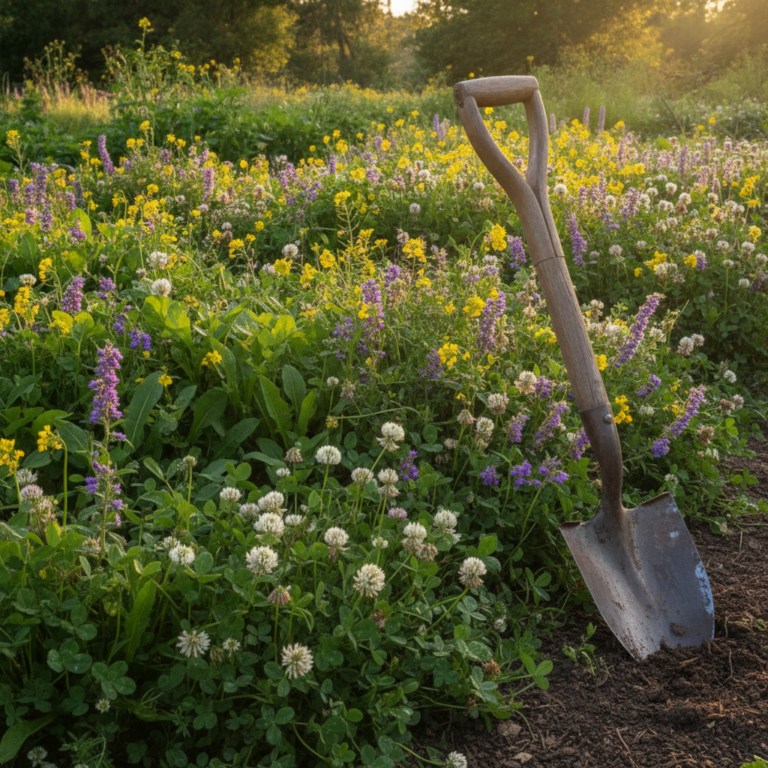
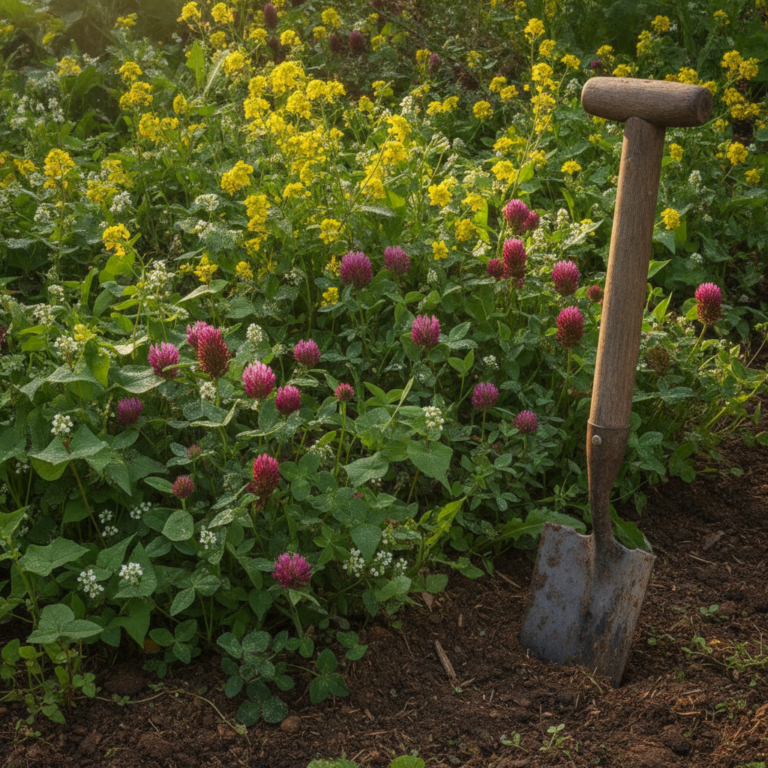
Green manure crops are plants grown specifically to be turned back into the soil before they set seed. The goal isn’t a harvest for your table. The goal is a harvest for your soil microbes.
When you chop and dig these plants while they’re still green and lush, you’re delivering a concentrated burst of fresh organic matter. That organic matter breaks down quickly, releasing nitrogen, phosphorus, trace minerals, and carbon that feeds the underground ecosystem your vegetables depend on.
Farmers used this method for thousands of years. Ancient Roman agriculturalists wrote about burying lupins to refresh tired fields. Nineteenth-century American homesteaders rotated rye and clover into exhausted plots. Then synthetic nitrogen arrived in the mid-twentieth century, and most of that accumulated wisdom quietly disappeared from gardening books.
The good news? You can bring it back — even in a small backyard plot. If you’re still getting a feel for your garden’s unique rhythms, the Soil Sense Without the Lab: Read Your Dirt, Fix It Fast guide is a great companion to this post, helping you spot exactly where your soil needs the most help before you choose your crops.
The Best Green Manure Crops for Home Gardens
Not every plant makes a great green manure. The best choices are fast-growing, easy to cut, and rich in the nutrients your soil craves most. Here are the top performers, organized by season and purpose.
Nitrogen-Fixing Legumes
These are the heavy hitters. Legumes form partnerships with soil bacteria called rhizobia, which pull nitrogen from the air and lock it into tiny nodules on the plant’s roots. When you bury the plant, that stored nitrogen releases directly into the soil.
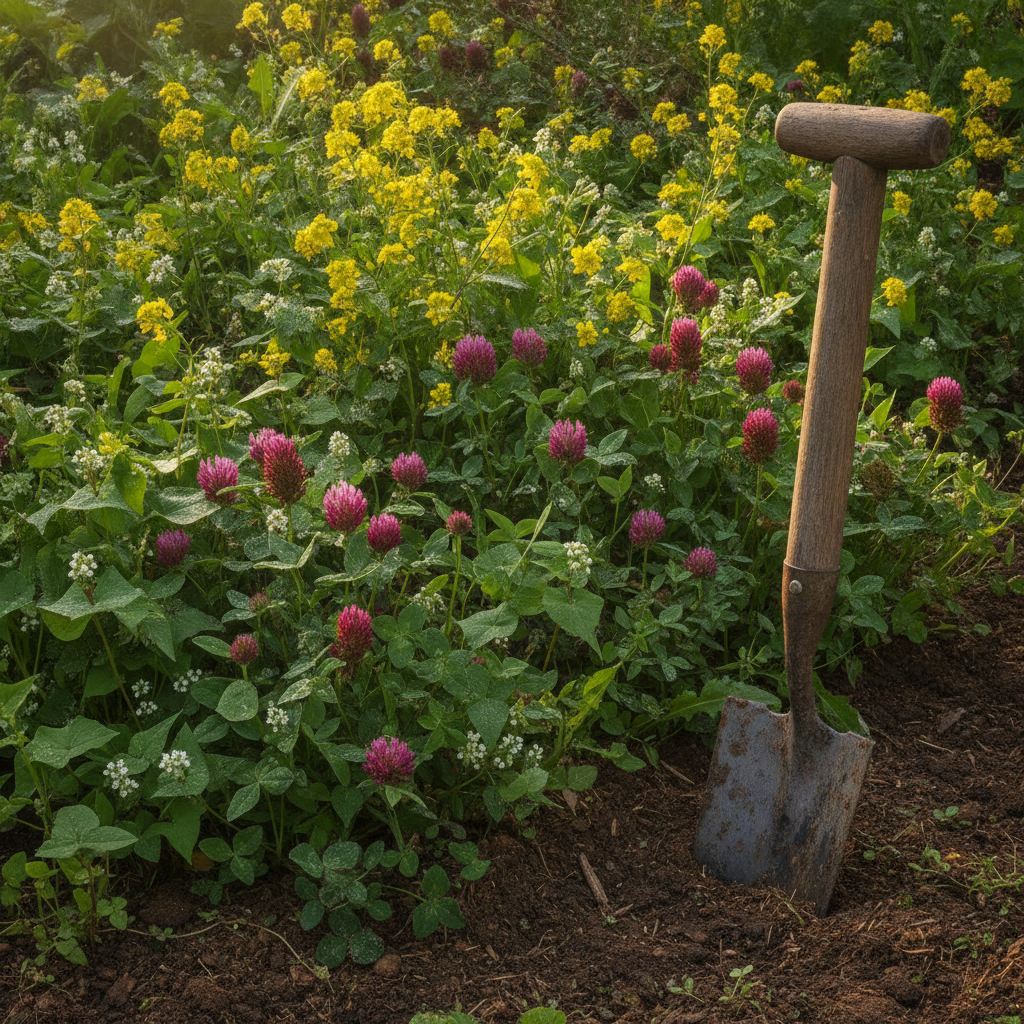
- Crimson Clover: One of the most popular choices. Fast-growing, beautiful, and nitrogen-rich. Plant in spring or fall.
- Field Peas: Winter-hardy in many zones. Great for a fall sow and spring cut-under.
- Hairy Vetch: Tough, prolific, and excellent for fixing nitrogen ahead of heavy-feeding crops like corn or tomatoes.
- Fenugreek: A lesser-known option that also attracts pollinators before you cut it down.
Bulk Builders and Organic Matter Boosters
These plants don’t fix nitrogen, but they add massive amounts of organic matter and improve soil structure quickly.
- Buckwheat: Grows incredibly fast — ready to cut in just 5 to 6 weeks. Also breaks up compacted soil with its deep roots.
- Oats: A classic winter-kill cover crop. Sow in early fall, let it winter-kill, and you have ready-to-dig organic mulch by spring.
- Mustard: A natural biofumigant. As the plant breaks down in soil, it releases compounds that suppress certain soil pathogens and nematodes.
Deep Rooters That Break Compaction
- Daikon Radish: Often called “tillage radish,” this root drives down 12 to 18 inches. When it rots in place, it opens deep channels for water and air.
- Phacelia: A stunning purple-flowered option that’s also one of the fastest decomposers after cut-and-bury.
How to Time the Cut-and-Dig for Maximum Nitrogen Release
Timing is everything with green manure crops. Cut too early and you lose some bulk. Cut too late and the plants get woody and decompose slowly. The sweet spot is just before or at first flowering.
Here’s why that moment matters so much. When a plant is about to flower, it has reached peak nitrogen concentration in its tissues. The stems are still soft enough to break down quickly. And the roots are fully developed — meaning all those nitrogen nodules are intact and ready to release.
The basic cut-and-dig process:
- Use a sharp spade or hoe to chop the plants at soil level.
- Break up the green material into smaller pieces with your tool or boots. Smaller pieces decompose faster.
- Turn everything under to a depth of 4 to 6 inches.
- Wait 2 to 4 weeks before planting your main crop into that bed.
That waiting period is critical. Fresh green matter tied up in early decomposition can actually temporarily lock up soil nitrogen — a process called nitrogen immobilization. Give the soil two to four weeks to finish the job, and you’ll plant into genuinely enriched ground.
If you’re working with smaller containers or raised beds and want to understand how microclimate conditions affect decomposition timing, Microclimate Makeovers: Simple Tweaks That Boost Yields Without Expanding Your Space offers practical insight you can apply right away.
Why Green Manure Outperforms Most Bagged Soil Conditioners
Walk into any garden center and you’ll find bags promising “soil revival,” “organic nitrogen boost,” and “microbial enrichment.” Some of those products are genuinely useful. But none of them can do what a properly timed green manure crop does.
Here’s the core difference. A bagged amendment gives your soil a dose. A green manure crop feeds your soil’s entire living system — the bacteria, fungi, earthworms, and micro-arthropods that actually build long-term fertility. You’re not just adding nutrients. You’re feeding the organisms that cycle nutrients continuously.
Additionally, green manure crops:
- Protect bare soil from erosion between growing seasons
- Suppress weeds by outcompeting them during the cover crop phase
- Break pest and disease cycles through crop rotation
- Improve soil structure and drainage over multiple seasons
- Cost almost nothing — a small seed packet covers a large bed
If you’re building toward a more self-sustaining growing system, this practice pairs beautifully with long-term planning strategies like those outlined in The Perennial Playbook: Build a Low-Input Garden That Keeps Flourishing With You.
A Practical Green Manure Planting Calendar
This calendar is designed for temperate climates with a standard four-season growing year. Adjust by two to four weeks based on your local frost dates.
Spring (March – May)
Sow: Crimson clover, phacelia, buckwheat, field peas.
Cut and dig: Any fall-sown crops that winter-killed or overwintered.
Wait: 2 to 4 weeks before transplanting summer crops into those beds.
Early Summer (June – July)
Sow: Buckwheat in any gap beds between successions. It grows fast and fills dead space perfectly.
Cut and dig: Spring-sown clover or phacelia as beds are needed.
Tip: This is the easiest entry point for first-timers. Buckwheat is almost foolproof.
Late Summer (August – September)
Sow: Mustard, hairy vetch, oats, or a mixed cover blend after you harvest garlic, early potatoes, or peas.
Goal: Build soil fertility and protect beds over winter in one move.
Fall (October – November)
Sow: Winter rye, field peas, or hairy vetch for spring cut-under.
Cut and dig: Summer-sown mustard before hard frost.
Tip: Winter-killed oats make an almost-effortless spring mulch that barely needs digging.
Getting Started This Season — Even in a Small Space
You don’t need a farm to use green manure crops effectively. A single raised bed or even a 4×4 foot patch is enough to run your first experiment. Start with buckwheat in any currently empty bed. Sow thickly, water once to establish, and let it grow for five to six weeks. Then chop, dig, wait three weeks, and plant your next crop.
That one small cycle will show you more about living soil fertility than any book can explain. You’ll see the earthworms come. You’ll feel the tilth change under your fingers. And you’ll start to understand why the farmers who came before us guarded this method like a trade secret.
For those who are just starting to build their growing skills, the Smart Starts: A 4-Week Skill-Build Plan for Complete Garden Beginners gives you a clear foundation alongside techniques like this one.
Green manure crops aren’t a trend. They’re a return. And the soil under your feet has been waiting for you to rediscover them.
Ready to dig deeper into natural soil building? Explore our full library of organic gardening techniques at MyGardenGreen.com.