Microclimate Mapping: Find Your Garden’s Hidden Zones
Every garden holds secrets that your grandfather knew by heart but modern agriculture forgot. Microclimate mapping was once as natural as reading the sky for rain-a skill that turned modest plots into productive havens. Today, most gardeners plant by zone maps drawn for entire regions, missing the intimate weather patterns dancing right outside their kitchen window.
Your property isn’t one uniform climate. It’s a patchwork of hidden zones where temperature, moisture, and wind create unique growing conditions. These forgotten micro-environments can extend your growing season by weeks, shelter tender plants through harsh weather, and boost yields without expanding your space.
Why Microclimate Mapping Transforms Your Garden
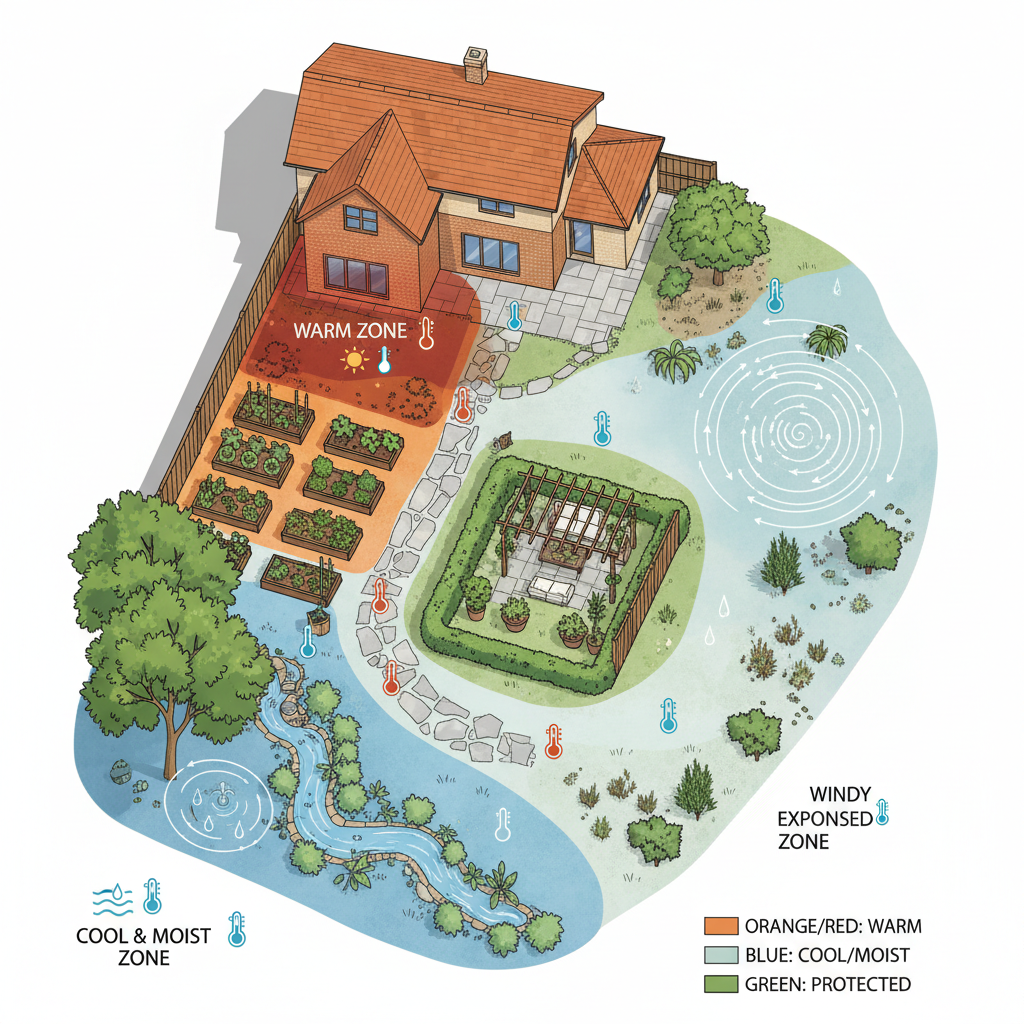
Traditional farming wisdom recognized what modern gardening often overlooks: no two spots in a garden experience identical conditions. A south-facing wall creates a warm pocket that might support Mediterranean herbs in a cold climate. A low-lying area collects moisture and stays cool, perfect for lettuce in summer heat.
Furthermore, understanding these patterns lets you work with nature instead of against it. You’ll stop fighting losing battles-like trying to grow sun-lovers in naturally shady spots-and start maximizing what each area offers naturally.
Moreover, this knowledge connects you to time-tested growing methods. Before climate-controlled greenhouses, gardeners survived by reading their land’s subtle signals and placing plants accordingly.
Reading Temperature Patterns in Your Microclimate Mapping
Temperature varies dramatically across even small properties. Start by identifying your warmest and coolest zones during different seasons.
Heat sinks like stone walls, concrete paths, and south-facing slopes absorb solar energy during the day and release it slowly at night. These areas often stay 5-10 degrees warmer than surrounding spaces. Plant heat-loving crops like tomatoes, peppers, and basil near these natural heaters.
Cold sinks form in low-lying areas where dense, cold air settles. These spots experience later spring warmups and earlier fall frosts. However, they also provide natural refrigeration for cool-season crops during hot summers.
Additionally, elevation changes of just a few feet create noticeable temperature differences. Higher ground typically drains better and warms faster in spring, while valley areas stay cooler and moister.
Moisture Microclimate Mapping Techniques
Water behaves predictably across landscapes, creating distinct moisture zones that smart gardeners exploit.
Natural drainage patterns reveal themselves after every rain. Walk your property during or immediately after storms to see where water flows, pools, and disappears quickly. These observations guide your plant placement decisions.
Areas near downspouts, at the base of slopes, or in natural depressions collect extra moisture. These spots support thirsty plants like cucumbers, squash, and leafy greens without additional irrigation.
Conversely, raised areas, slopes, and spots near large trees or buildings often drain quickly and require drought-tolerant plants. Mediterranean herbs, native plants, and established fruit trees thrive in these naturally drier zones.
Similarly, morning dew patterns indicate humidity levels. Areas that stay dewy longer often have higher soil moisture and less air circulation.
Wind Pattern Analysis for Garden Success
Wind shapes your garden’s personality more than most gardeners realize. It affects temperature, moisture, and plant growth in ways that clever placement can either harness or mitigate.
Prevailing winds create predictable patterns around buildings, fences, and large plants. The windward side of structures experiences full wind force, while the leeward side enjoys protected conditions. This protection can extend 5-10 times the height of the windbreak.
Hot, dry winds desiccate plants quickly, while cold winds can damage tender growth. Identifying these patterns helps you position sensitive plants in naturally sheltered areas or create simple windbreaks using taller, hardier species.
However, gentle air circulation prevents fungal diseases and strengthens plant stems. Completely stagnant areas often struggle with pest and disease problems that moving air would naturally resolve.
Simple Tools for Microclimate Mapping
You don’t need expensive equipment to map your garden’s microclimates effectively. Start with basic observations and simple tools that old-time gardeners relied on.
A basic thermometer moved to different locations throughout the day reveals temperature variations. Take readings at the same times daily for a week to establish patterns. Early morning readings show overnight lows, while mid-afternoon readings capture daily peaks.
Your hands make excellent moisture meters. Soil that feels cool and takes longer to warm in your palm indicates higher moisture content. Dry, warm soil signals fast-draining conditions.
Similarly, watching how frost forms and melts across your property provides valuable microclimate data. Areas that frost last and thaw first are naturally warmer. Spots that frost earliest and hold it longest run cooler.
Moreover, observe your plants themselves. They’re living indicators of microclimatic conditions. Notice which areas green up first in spring, where plants grow most vigorously, and which spots struggle consistently.
Creating Beneficial Microclimates
Once you understand your existing patterns, you can modify them strategically. Small changes create surprisingly large effects in microclimate conditions.
Heat-absorbing materials like rocks, bricks, or dark mulches increase soil temperature and extend growing seasons. Place these thermal masses where you want extra warmth for heat-loving plants.
Water features moderate temperatures by absorbing heat during the day and releasing it at night. Even small containers of water create beneficial microclimates for nearby plants.
Additionally, strategic plant placement creates natural climate modification. Tall plants provide shade for cool-season crops during hot summers. Dense plantings create humid microclimates that some plants prefer.
Mulching creates cooler, moister conditions at soil level while reducing temperature swings. Different mulch materials create different effects-light-colored mulches reflect heat while dark mulches absorb it.
Seasonal Microclimate Mapping Adjustments
Your garden’s microclimates shift with the seasons as sun angles change and vegetation grows. Successful microclimate mapping accounts for these seasonal variations.
Winter sun penetrates areas that summer foliage blocks. Deciduous trees create warm winter spots that become cool summer refuges. Plan accordingly by using these seasonal shifts to your advantage.
Spring microclimates emerge as different areas warm at different rates. Protected spots near south-facing walls might allow seeding weeks before exposed areas are ready.
Furthermore, summer brings its own microclimate challenges and opportunities. Morning shade becomes valuable for cool-season crops, while thermal mass that felt beneficial in spring might become problematic in extreme heat.
For comprehensive seasonal planning that incorporates microclimate knowledge, explore our 30-day microclimate planting plan that helps you time your plantings perfectly.
Putting Microclimate Mapping Into Practice
Start small with microclimate mapping rather than trying to analyze your entire property at once. Choose three distinctly different areas-perhaps a sunny slope, a shaded corner, and a protected spot near a building.
Document conditions in each area for two weeks, noting temperature differences, moisture levels, and wind exposure. Take photos to track how conditions change throughout the day and week.
Test your observations by planting the same variety in different microclimates and comparing results. This hands-on approach builds confidence in your mapping skills while providing concrete proof of microclimate effects.
For detailed soil analysis techniques that complement microclimate mapping, check out our guide on reading your soil without lab tests.
Advanced Microclimate Strategies
As your microclimate mapping skills develop, you can implement more sophisticated strategies that maximize your garden’s potential.
Succession planting becomes more precise when you understand which areas warm up first in spring and stay mild longest in fall. Stagger plantings across different microclimates to extend harvest periods naturally.
Vertical microclimates exist even in small spaces. The base of a trellis experiences different conditions than areas six feet up. Use this knowledge to grow multiple crop types in the same footprint.
Moreover, container gardens benefit enormously from microclimate awareness. Moving pots to take advantage of seasonal microclimate changes can dramatically improve plant performance.
If you’re working with limited space, our container microclimate techniques show how to create beneficial growing conditions in the smallest areas.
Microclimate mapping returns you to gardening’s roots-working intimately with your land’s unique character rather than imposing generic solutions. This forgotten wisdom transforms gardens from uniform plots into diverse, productive ecosystems that work in harmony with natural patterns.
Start observing your property with fresh eyes. Those subtle differences in temperature, moisture, and wind that you might have dismissed as unimportant are actually your garden’s greatest assets waiting to be discovered and utilized.