Green Manure Crops: The Plow-Under Secret
Long before a bag of synthetic nitrogen ever sat on a store shelf, farmers already knew how to feed their soil. They grew green manure crops — fast-growing plants raised with one purpose: to be chopped down and buried alive. The decaying roots and leaves fed billions of soil organisms, released nitrogen, and rebuilt organic matter that chemical fertilizers simply cannot replicate. This is one of the oldest soil-building secrets in agriculture, and it works just as well in your backyard today.
What Are Green Manure Crops, Exactly?
A green manure crop is any plant you grow specifically to dig back into the soil before it sets seed. You are not harvesting a food crop. Instead, you are growing a living amendment — a soil meal, so to speak.
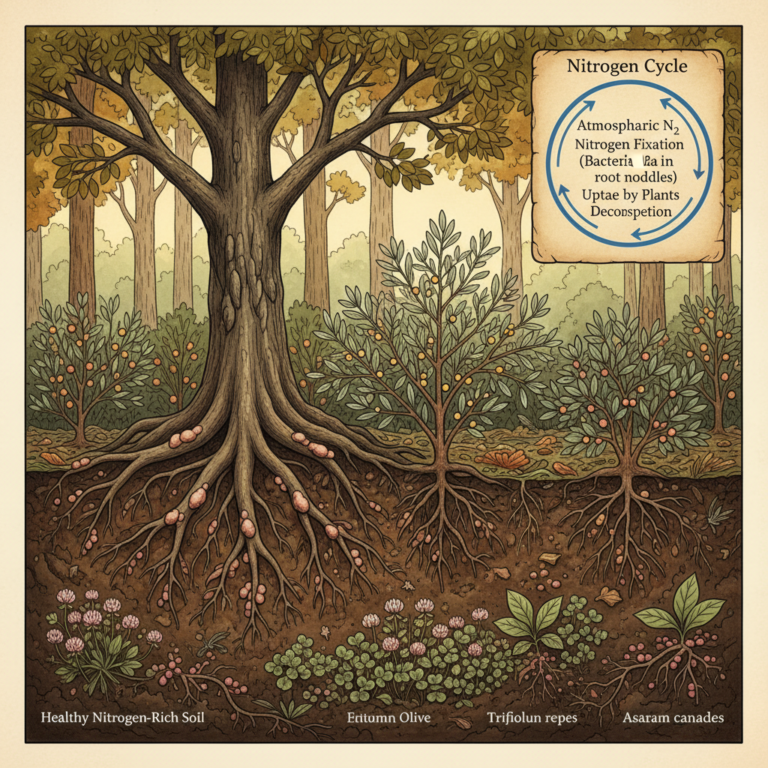
The term “green manure” covers two broad categories. First, there are legumes like clover, vetch, and field peas. These form partnerships with soil bacteria that pull nitrogen directly from the air and store it in root nodules. When you dig them under, that nitrogen releases slowly into the soil. Second, there are non-legume green manures like buckwheat, mustard, phacelia, and rye. These do not fix nitrogen, but they add enormous volumes of organic matter, break up compaction, and suppress weeds powerfully.
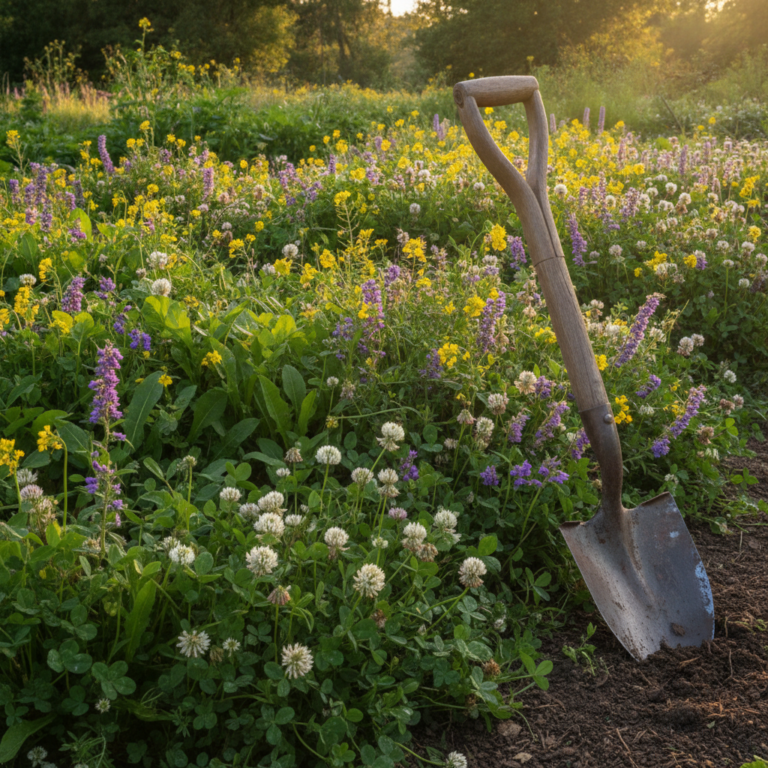
Together, these two groups give you a complete soil-building system. Many experienced growers use them in rotation — legumes one season, organic-matter builders the next.
If you are still learning to read what your soil actually needs before you choose a green manure strategy, this guide on Soil Sense Without the Lab: Read Your Dirt, Fix It Fast will help you identify the gaps first.
The Best Green Manure Crops for Home Gardeners
Not every cover crop makes an equally useful green manure. Here are the top performers and what each one does best.
Crimson Clover
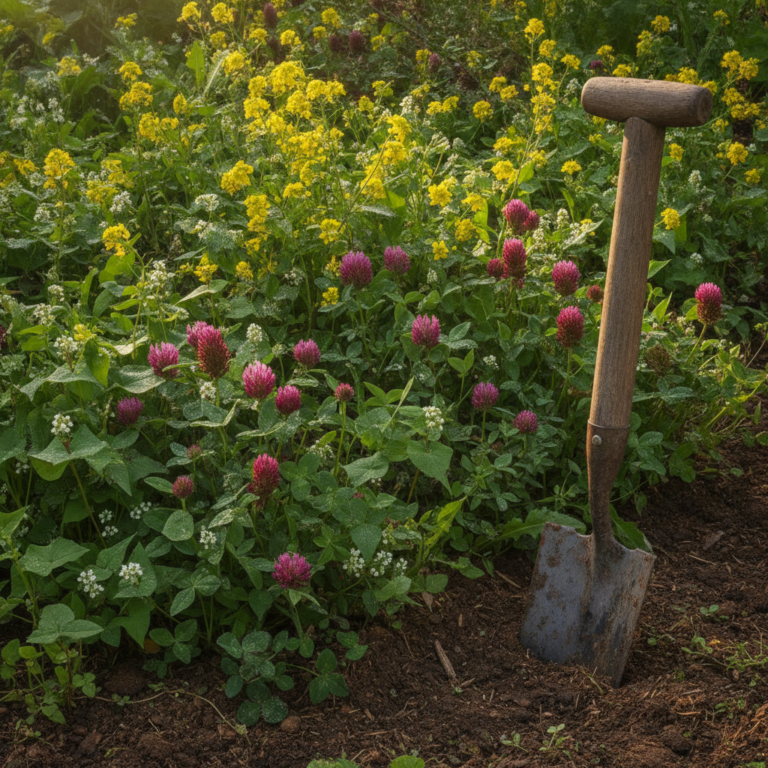
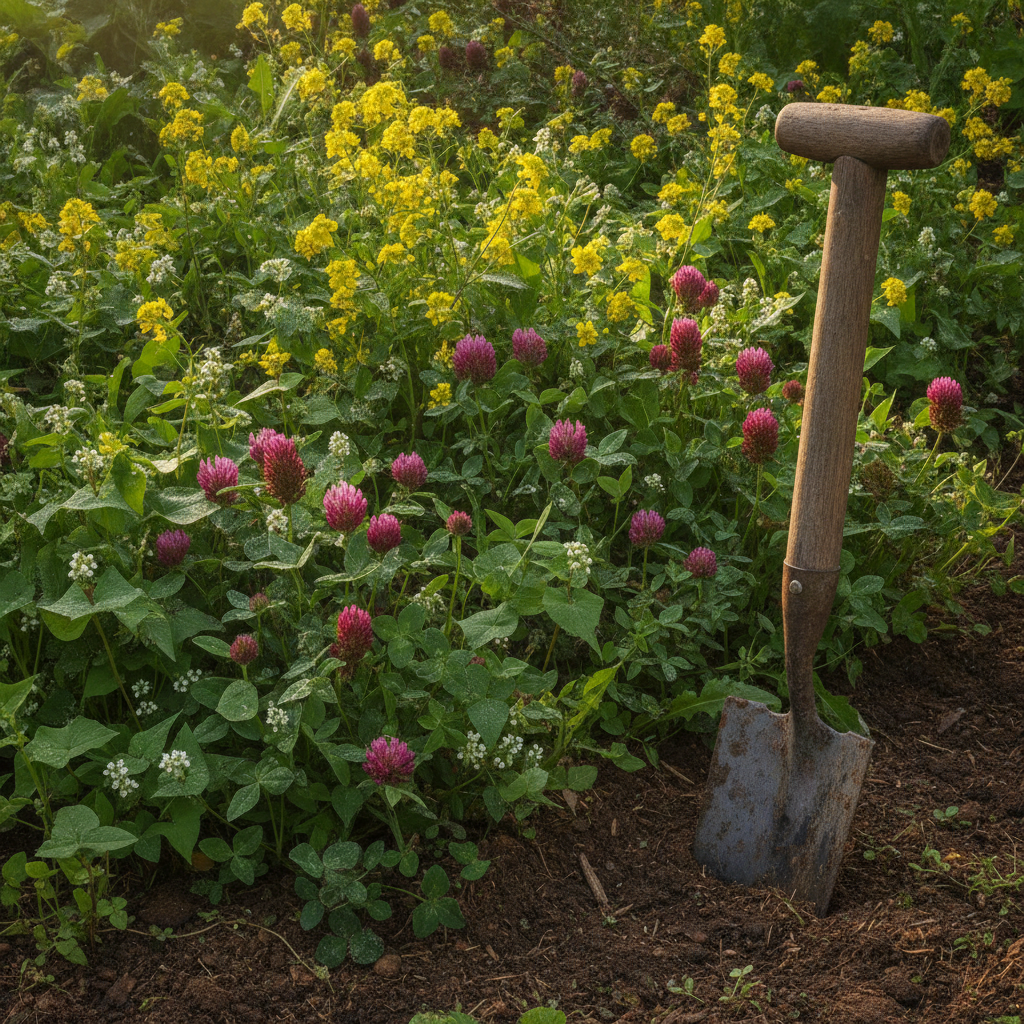
One of the most popular nitrogen-fixers for home gardens. It grows quickly, produces beautiful red blooms that pollinators love, and fixes up to 150 pounds of nitrogen per acre when dug under at full bloom. It tolerates light frost and works well in both spring and autumn rotations.
Hairy Vetch
Hairy vetch is a powerhouse. It fixes more nitrogen than most legumes — sometimes over 200 pounds per acre — and its deep roots loosen compacted subsoil. It is a cool-season plant, best sown in early autumn for a spring dig-under. The vines can sprawl, so pair it with winter rye as a support structure.
Winter Rye
This is the workhorse of non-legume green manures. Winter rye germinates in cold soil, overwinters reliably, and produces dense root biomass that feeds soil life for months. It also releases allelopathic compounds when turned under, naturally suppressing weed seeds. Dig it in spring before it heads out to grain stage.
Buckwheat
Buckwheat is the summer speed champion. It germinates in warm soil, smothers weeds in just three to four weeks, and mobilizes phosphorus that was locked in mineral form. Chop it and dig it in before it sets seed — usually at the first flower stage, around five to six weeks after sowing.
Phacelia
Often called the “perfect” green manure in European organic growing traditions, phacelia decomposes incredibly fast once turned under. It grows in cool or warm seasons, produces lavender flowers that attract beneficial insects, and leaves no allelopathic residue — so you can plant into it almost immediately after digging.
Field Mustard
Field mustard doubles as a biofumigant. When the fresh plant tissue is chopped and incorporated, it releases glucosinolates — natural compounds that suppress soil-borne fungal pathogens and some nematodes. Dig it under at the bud stage for maximum effect. Do not use it back-to-back with brassica food crops.
Timing the Cut-and-Dig for Maximum Nitrogen Release
This is where most gardeners leave serious fertility on the table. The timing of when you chop and bury your green manure crops matters enormously.
Here is the key principle: dig under the crop just before or at the start of flowering. At this stage, the plant tissue is still high in nitrogen and relatively low in tough carbon-rich fiber. Soil microbes break it down quickly, releasing nutrients within two to four weeks. If you wait until the plant is mature and woody, it decomposes slowly and can even temporarily tie up available nitrogen as microbes work through the stubborn carbon.
After incorporating your green manure, wait two to three weeks before transplanting or direct sowing into that bed. This gives the material time to break down past the initial heat of decomposition. Phacelia and buckwheat are the fastest to decompose and may only need one to two weeks. Winter rye and hairy vetch, being bulkier, benefit from the full three weeks.
Chop the green manure into short pieces before digging — six inches or less. This dramatically speeds decomposition by increasing surface area for soil organisms to attack. A sharp spade or a hoe works well. For dense plantings, a pair of garden shears or even a string trimmer does the job fast.
If you want to build this skill into a seasonal rhythm, the Climate-Proof Your Crops: A 30-Day, Microclimate–Aware Planting Plan is an excellent companion — it helps you slot green manure windows into your actual growing calendar based on your local conditions.
A Practical Green Manure Planting Calendar
Here is a seasonal framework you can adapt to your own garden. Use it as a starting template, adjusting sow dates by two to three weeks for your specific climate zone.
Spring (March–May)
- Sow: Crimson clover, phacelia, or field peas into empty beds as soon as soil is workable.
- Dig under: Any hairy vetch or winter rye overwintered from autumn, once it reaches early flower stage.
- Wait: Two to three weeks after incorporating before planting your summer vegetables.
Summer (June–August)
- Sow: Buckwheat into any bed that will sit empty for six or more weeks between crops.
- Dig under: At first flower, approximately five to six weeks after sowing.
- Follow with: A late summer brassica planting or a second buckwheat round.
Autumn (September–October)
- Sow: Hairy vetch and winter rye mix as a combined green manure and cover crop for overwintering.
- Dig under: The following April or May at early flower stage.
- Bonus: The vetch fixes nitrogen all winter, even through moderate frosts.
If you are tracking what works in your specific beds season by season, the templates in Field Notes to Flourishing: Templates and Prompts to Track Growth, Mistakes, and Milestones make it easy to record your green manure timing and results for future reference.
Why Green Manure Crops Outperform Most Bagged Amendments
Bagged fertilizers and soil conditioners have their place. But they cannot replicate what a living crop does for your soil biology.
When you incorporate a green manure crop, you are not just adding nutrients. You are feeding an entire ecosystem. The fresh organic matter triggers explosive growth in bacterial and fungal populations. Earthworm activity spikes. Mycorrhizal networks extend. The soil becomes more porous, better at holding both water and air simultaneously — what soil scientists call good “tilth.”
A bag of synthetic nitrogen delivers a single nutrient in a soluble, fast-burning form. It does nothing for soil structure, biology, or long-term organic matter. In fact, heavy synthetic nitrogen use over years can suppress the very microbial communities that make nutrients available naturally.
Green manure crops, by contrast, rebuild the system. Each rotation adds organic matter, feeds soil life, loosens compaction, and suppresses weeds. After two or three full seasons using a green manure rotation, most gardeners report noticeably darker, more crumbly soil that holds moisture far better and needs progressively fewer outside inputs.
That is the compounding payoff that old-time farmers understood. You are not just feeding this season’s crop. You are building the soil bank that funds every crop that follows.
Getting Started This Season
You do not need a lot of space or experience to start using green manure crops. Even a single raised bed that sits empty between spring and autumn plantings can become a powerful soil-building opportunity.
Start simple. Sow buckwheat into any empty summer bed and dig it under at first flower. That one action begins the process. Next season, add a legume like crimson clover to a different bed. By your third season, you will have a natural rotation taking shape — and soil that shows the difference clearly.
For those just beginning to build a structured approach to their garden, the Smart Starts: A 4-Week Skill-Build Plan for Complete Garden Beginners gives you the foundational framework to fit techniques like green manuring into a manageable, step-by-step practice.
The old farmers who relied on green manure crops were not working harder than we do today. They were working smarter — letting the soil do what it does naturally, given the right inputs. Bring that wisdom back to your garden this season, and watch what happens underfoot.