Green Manure Crops: The Plow-Under Secret
Long before a bag of synthetic nitrogen ever sat on a garden store shelf, farmers already knew how to feed their soil. They used green manure crops — plants grown not to eat, but to chop down and bury. This plow-under secret built some of the most fertile land in history, and it costs almost nothing to use in your garden today. If you’ve ever wondered what your grandparents knew that modern gardening skipped over, this is a big part of the answer.
What Are Green Manure Crops, Exactly?
A green manure crop is any plant you grow specifically to dig back into the soil while it’s still green and full of nutrients. You’re not harvesting it. You’re feeding it to the earth.
The term “green manure” comes from old farming practice, where the green plant material served the same purpose as animal manure — adding organic matter, nitrogen, and biological activity to the soil. The difference is that you grow it right where you need it.
These aren’t random weeds you’re turning under. Specific plant families do specific jobs. Legumes fix atmospheric nitrogen. Brassicas break up compaction and suppress pathogens. Grasses add carbon and build structure. Each one is a tool, and knowing which tool to reach for is the whole skill.
Before we dive into the plant list, it helps to understand your soil’s current condition. If you’re not sure what your dirt is telling you, start with Soil Sense Without the Lab: Read Your Dirt, Fix It Fast — it gives you a hands-on way to diagnose what your garden actually needs before you plant anything.
The Best Green Manure Crops for Home Gardeners
You don’t need a field or a tractor. These plants work in raised beds, backyard plots, and even large containers. Here are the ones worth knowing.
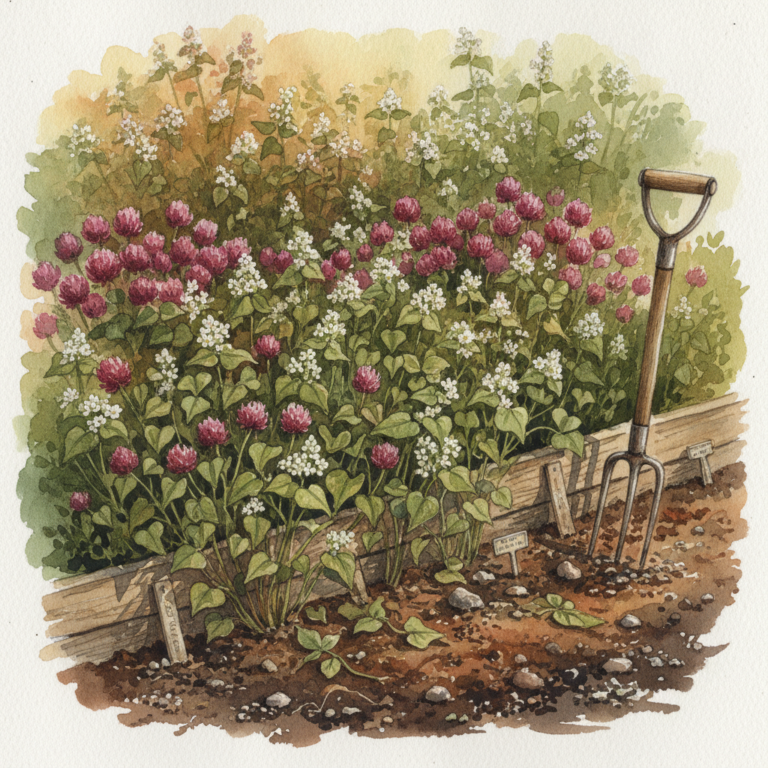
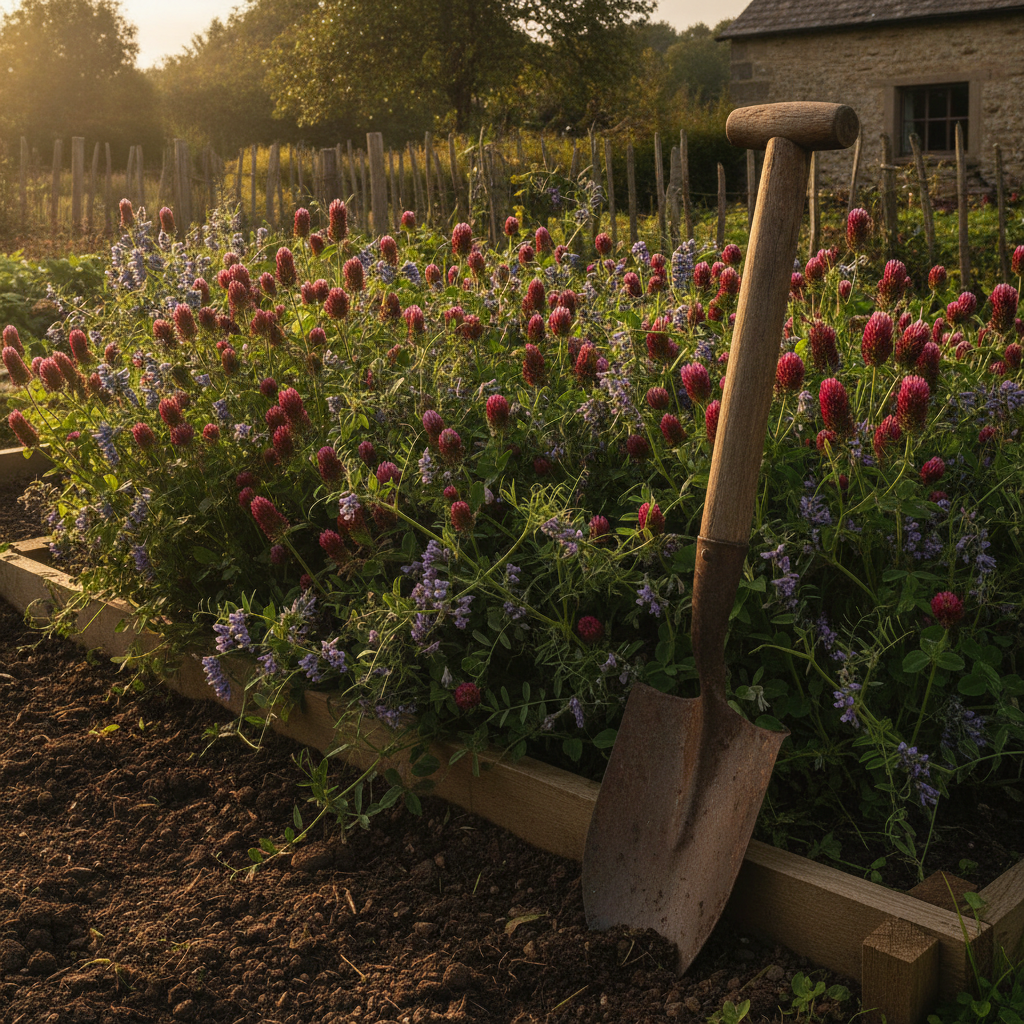
Crimson Clover
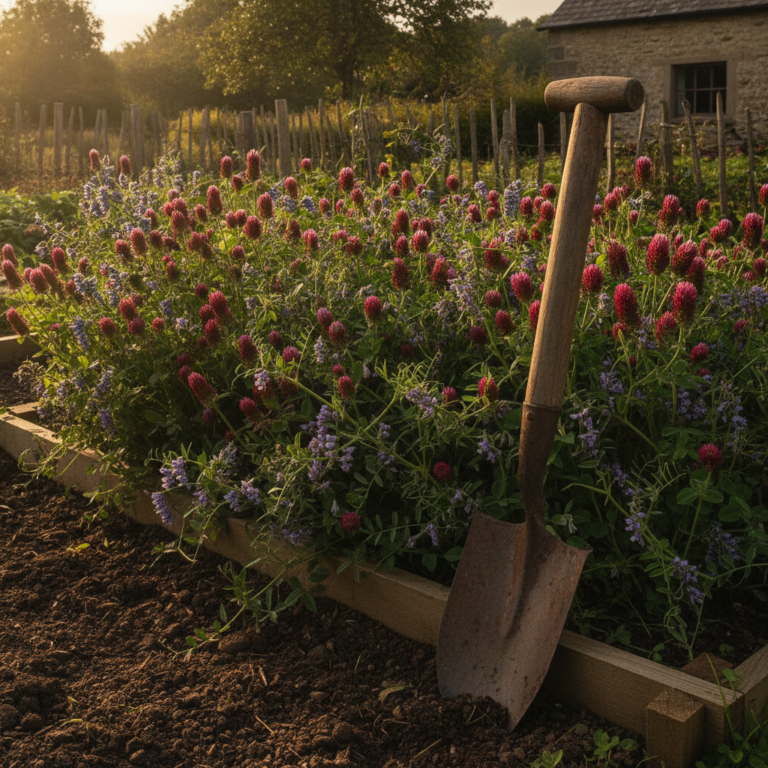
This is one of the most reliable nitrogen-fixers available to home gardeners. Crimson clover forms a root partnership with Rhizobium bacteria, pulling nitrogen straight from the air and storing it in nodules along its roots. When you dig it under, those nodules release nitrogen directly into the soil. It’s fast-growing, frost-tolerant, and easy to establish from seed.
Field Peas and Vetch
Both are cool-season legumes that fix significant nitrogen. Hairy vetch is especially tough — it can survive cold winters and smother weeds aggressively. Field peas add nitrogen and break down quickly after incorporation, releasing nutrients faster than woodier plants. These are ideal for fall planting before a spring vegetable bed.
Buckwheat
Buckwheat isn’t a legume, but it’s one of the most versatile warm-season green manures available. It grows fast — ready to turn under in as little as 30 to 45 days. It suppresses weeds heavily, attracts beneficial insects, and scavenges phosphorus from deep soil layers, making it available to the next crop. Turn it under before it sets seed, or you’ll have volunteers everywhere.
Mustard and Daikon Radish
These brassica family members do something called biofumigation. As they decompose, they release compounds that suppress soil-borne diseases and some nematodes. Daikon radish also drills a deep taproot through compacted subsoil, creating channels for air and water. After frost kills the plant, those roots rot in place, leaving the structure behind.
Winter Rye
If you want to protect bare soil over winter and add serious organic matter, winter rye is hard to beat. It establishes quickly in cold weather, holds the soil against erosion, and adds dense fibrous matter when turned under in spring. Because it’s high in carbon, it breaks down more slowly — which is great for structure, but you should turn it under at least three weeks before planting your main crops.
How to Time the Cut-and-Dig for Maximum Nitrogen Release
Timing is everything with green manure crops. Turn them under too early and you lose biomass. Turn them under too late, and the plants get woody and break down slowly — tying up nitrogen rather than releasing it.
The sweet spot is just before or at flowering. This is when plants have maximum leaf mass and nitrogen content, but before they shift energy into seed production. For most legumes, this means turning them under when you see the first flower buds forming.
After incorporation, wait two to three weeks before planting your main vegetables. This decomposition window is critical. During breakdown, soil microbes temporarily consume available nitrogen. Planting too soon means your seedlings compete with microbes for nutrients — and they’ll lose. Give the process time to finish, and what follows is a flush of plant-available nutrients right when your crops need it.
Also consider your soil temperature. Decomposition slows significantly below 50°F (10°C). If you’re turning under a spring green manure crop and your soil is still cold, extend that waiting period to four weeks or more.
A Practical Planting Calendar You Can Use This Season
Here’s a simple rotation you can adapt to your own growing zone. Match this with a solid understanding of your local conditions — the Climate-Proof Your Crops: A 30-Day, Microclimate–Aware Planting Plan is a great companion resource for dialing in timing to your specific yard.
Spring (March–May)
- Sow: Crimson clover or field peas in beds you won’t plant until late spring or early summer.
- Turn under: Any fall-sown vetch or winter rye by mid-April (3–4 weeks before planting tomatoes, squash, or peppers).
Early Summer (June–July)
- Sow: Buckwheat in any gap between spring and fall crops. It fills empty space, feeds pollinators, and conditions the soil fast.
- Turn under: Buckwheat after 4–6 weeks, before seed heads mature.
Late Summer (August–September)
- Sow: Hairy vetch, crimson clover, or field peas after you harvest your summer crops. These will fix nitrogen through fall and winter.
Fall/Winter (October–February)
- Sow: Winter rye in any beds that will sit empty until spring. It protects against erosion and adds carbon.
- Leave undisturbed until 3–4 weeks before your first spring planting date.
This rotation means your soil is never sitting bare and hungry. Something is always growing, always feeding the ground beneath it.
Why Green Manure Crops Outperform Store-Bought Soil Conditioners
A bag of granular nitrogen fertilizer gives your soil one thing. A buried green manure crop gives it dozens — nitrogen, carbon, fungal food, bacterial stimulation, improved drainage, weed suppression, and root-channel aeration. The whole system benefits, not just one metric.
Store-bought amendments also require money, trips to the garden center, and ongoing inputs every season. Green manures require seeds — often just a few dollars’ worth — and a willingness to plan one rotation ahead. Once you learn the rhythm, it becomes second nature.
There’s also something that soil tests can’t fully capture: biological momentum. Soil that has been fed with living organic matter builds microbial diversity over time. That diversity is the engine behind nutrient cycling, disease suppression, and long-term fertility. No bag of fertilizer builds that. Only living inputs do.
If you’re new to thinking about soil this way, it’s worth exploring the Garden Experiments: 3 Safe, Small-Scale Trials That Grow Your Gardening Confidence — one of the suggested trials maps directly onto soil-building techniques like this one.
Getting Started Without Overthinking It
You don’t need to overhaul your entire garden to try this. Start with one bed. Sow buckwheat or crimson clover in a space that will sit empty for a month or two. Watch it grow. Turn it under. Then plant your next crop and compare the results to a bed you didn’t treat.
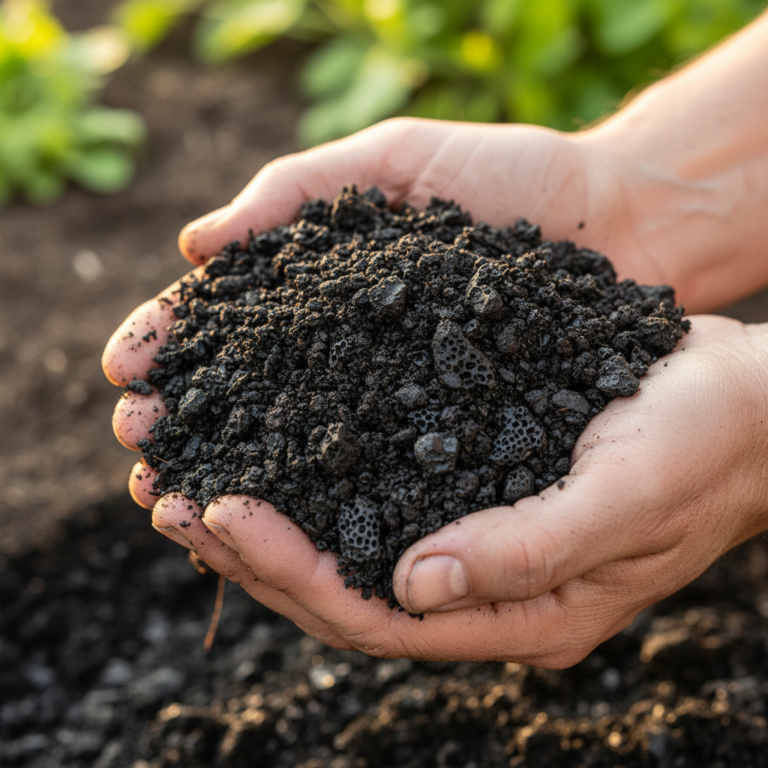
That single comparison will teach you more than any article can. You’ll see the difference in soil texture, in how fast your seedlings establish, in how dark and alive the soil looks when you dig into it.
The farmers who developed these techniques didn’t have soil labs or synthetic inputs. They had observation, patience, and a deep respect for the living system underfoot. You can bring that same approach to a 4×8 raised bed in a suburban backyard — and your soil will reward you for it.
For building a wider set of skills around this kind of intentional, systems-based gardening, the Layered Learning: A Gardener’s Progressive System That Grows with You offers a structured way to keep expanding what you know, one season at a time.
Final Thoughts: Feed the Soil, Not Just the Plant
Green manure crops are one of the most powerful, low-cost tools in the old farmer’s toolkit — and one of the most overlooked in modern home gardening. They ask very little. A handful of seeds, a bit of timing knowledge, and the patience to let the soil do what it does best.
Start this season. Pick one plant from this list. Give it one empty bed and one growing window. Then dig it under, wait three weeks, and plant something you love.
The soil your grandparents built wasn’t an accident. It was a practice. And now you know how it worked.