Compost Tea Brewing: Liquid Gold for Food Forest Layers
Creating compost tea brewing systems transforms your food forest from surviving to thriving. This liquid fertilizer feeds all seven layers simultaneously, from ground covers to canopy trees. By mastering the art of brewing nutrient-rich compost tea, you’ll unlock nature’s most powerful plant growth accelerator.
Unlike synthetic fertilizers that provide quick fixes, compost tea delivers sustained nutrition while building soil biology. Every application strengthens your ecosystem’s foundation, creating healthier plants and more productive harvests across your entire food forest.
Why Compost Tea Brewing Powers Food Forest Success
Traditional fertilizers feed plants directly, but compost tea brewing feeds the soil ecosystem first. This approach aligns perfectly with permaculture principles, where healthy soil creates healthy plants.
The brewing process multiplies beneficial microorganisms by millions. These microscopic allies break down nutrients, protect roots from disease, and improve soil structure. When applied consistently, compost tea transforms even challenging soils into thriving growing mediums.
Food forests require diverse nutrients for their multiple plant layers. Compost tea delivers this complexity naturally, providing trace minerals, growth hormones, and beneficial bacteria that synthetic fertilizers can’t match.
Essential Equipment for Compost Tea Brewing
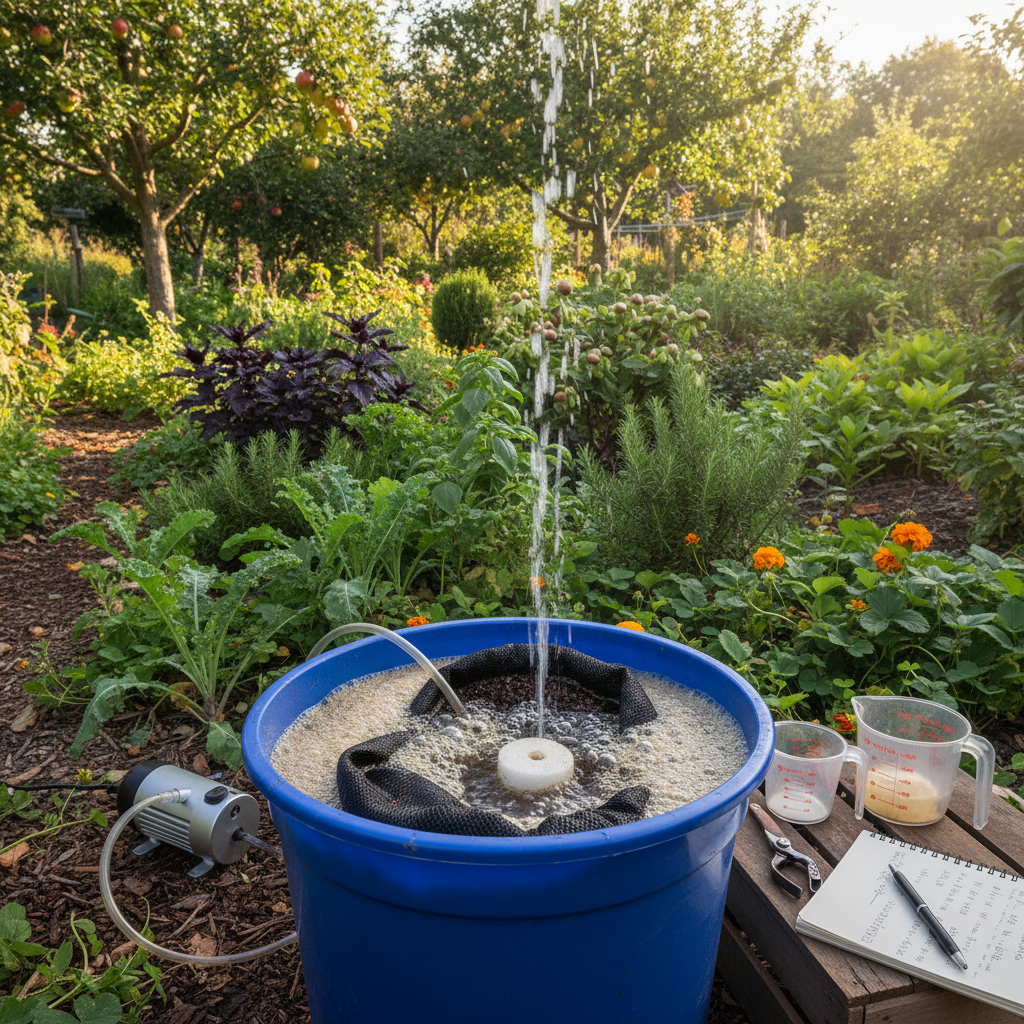
Starting your brewing journey requires minimal investment. A five-gallon bucket, aquarium pump, and air stone create the basic setup. However, successful brewing depends more on technique than expensive equipment.
Your brewing container should be food-grade plastic or ceramic. Avoid metal containers, which can interfere with beneficial microorganisms. The air pump provides continuous oxygen, essential for breeding aerobic bacteria rather than harmful anaerobic ones.
A mesh bag or old pillowcase holds your compost ingredients. This makes straining easier and prevents clogging your sprayer. Additionally, a simple pH test kit helps monitor brewing conditions.
Basic Brewing Setup Checklist
• Food-grade 5-gallon bucket with lid
• Small aquarium pump (5-10 watts)
• Air stone and tubing
• Fine mesh straining bag
• pH test strips
• Non-chlorinated water source
The Perfect Compost Tea Recipe for Food Forests
Successful compost tea brewing starts with quality ingredients. Use finished compost as your base – it should smell earthy and crumble easily. Fresh compost may contain pathogens, while old compost lacks active microorganisms.
The basic recipe uses one cup of compost per gallon of water. However, food forests benefit from enhanced recipes that target specific plant needs. Adding kelp meal boosts potassium for fruiting plants, while fish emulsion provides nitrogen for leafy growth.
For established food forests, consider specialty ingredients. Mycorrhizal fungi powder strengthens tree root systems, while rock dust adds trace minerals. These additions create targeted nutrition for different forest layers.
Enhanced Food Forest Tea Recipe
• 1 cup high-quality compost
• 2 tablespoons kelp meal
• 1 tablespoon fish emulsion
• 1 teaspoon mycorrhizal fungi
• 1 tablespoon unsulfured molasses
• 5 gallons non-chlorinated water
The molasses feeds beneficial bacteria during brewing, creating population explosions of helpful microorganisms. Use unsulfured molasses only – sulfur kills the bacteria you’re trying to cultivate.
Step-by-Step Brewing Process
Begin brewing 24-48 hours before application. Fill your bucket with non-chlorinated water, leaving space for ingredients and bubbling. If using tap water, let it sit overnight to allow chlorine to evaporate.
Place compost and amendments in your mesh bag, then submerge in water. Install the air stone at the bucket bottom and connect to your pump. The bubbling should be vigorous enough to keep ingredients moving constantly.
Monitor your tea throughout brewing. It should smell earthy and pleasant – never putrid or alcoholic. Bad smells indicate anaerobic fermentation, which creates plant-damaging compounds rather than beneficial ones.
After 24-48 hours, your tea is ready. The water should be dark brown with a rich, earthy aroma. Foam on the surface indicates active microbial populations – exactly what you want for plant health.
Application Strategies for Seven-Layer Success
Different food forest layers benefit from varied application methods. Ground covers and herbs respond well to foliar feeding during cool morning hours. This prevents leaf burn while maximizing nutrient absorption.
Shrubs and small trees prefer soil application around their root zones. Dilute your tea 1:1 with water for sensitive plants, or apply full strength to established, vigorous growers. Always water in thoroughly after application.
Canopy trees need deeper soil penetration. Use a soil injector or create deep holes around the drip line. This ensures nutrients reach feeder roots where they’re most needed.
For those following a structured approach to garden development, microclimate planning helps determine optimal application timing and locations.
Layer-Specific Application Guide
Canopy Layer: Apply 2-4 gallons per mature tree monthly
Sub-canopy: 1-2 gallons per tree every 2-3 weeks
Shrub Layer: 1 quart per bush weekly during growing season
Herbaceous Layer: Foliar spray diluted 1:3 weekly
Ground Cover: Light foliar application every two weeks
Vine Layer: Soil drench monthly during active growth
Root Layer: Deep soil application every 6 weeks
Seasonal Timing and Frequency
Spring applications jump-start growth as plants emerge from dormancy. Begin brewing when soil temperatures consistently reach 50°F. This coincides with increased root activity and nutrient demand.
Summer applications focus on maintaining growth momentum. However, avoid applications during extreme heat or drought stress. Plants can’t effectively utilize nutrients when struggling with environmental pressures.
Fall applications prepare plants for winter while building soil biology. Reduce frequency but continue until ground freezes. This supports root development and nutrient storage for spring growth.
Understanding your specific growing conditions helps optimize timing. Those interested in soil diagnostics can better determine when plants need nutritional support most.
Troubleshooting Common Brewing Problems
Foul odors during brewing indicate oxygen deficiency. Increase air pump capacity or reduce organic matter concentration. Properly aerated tea never smells bad – only earthy and rich.
Weak plant response often stems from poor-quality compost or insufficient brewing time. Ensure your base compost is fully decomposed and biologically active. Consider extending brewing time to 48 hours for better results.
Leaf burn from foliar applications usually means concentration is too strong or application timing is wrong. Dilute tea further and apply during cool, humid conditions for best results.
For beginners building confidence, structured skill development provides a foundation for successful experimentation with advanced techniques like compost tea brewing.
Maximizing Long-Term Food Forest Health
Consistent compost tea brewing and application creates compounding benefits over time. Soil biology improves with each application, reducing pest problems and increasing drought resistance naturally.
Track application dates and plant responses in your garden journal. This data helps refine recipes and timing for your specific microclimate and plant communities. Successful food forest management requires this attention to detail.
Remember that compost tea supplements, not replaces, good soil management. Continue adding organic matter, managing water wisely, and supporting beneficial insects for complete ecosystem health.
By mastering compost tea brewing, you’re investing in your food forest’s long-term productivity. This liquid gold feeds plants, builds soil, and strengthens the entire ecosystem – creating abundance that grows more valuable each season.