Forget the Apple Tree:
Why Small Berry Bushes Are the Hardest Workers in Your Garden
There’s a version of the backyard garden dream that a lot of us grew up with — a big shady fruit tree in the corner of the yard, maybe an apple or a peach, the kind of tree that gets passed down in stories about grandparents and summer abundance. It’s a romantic idea. It’s also, if we’re being honest, a lot of waiting for a lot of work.
Plant a standard fruit tree today and you’re looking at somewhere between five and seven years before it produces anything worth talking about. In the meantime, you’re pruning it, protecting it from late frosts, watching a single bad spring wipe out an entire year’s potential harvest. All that investment, all that patience, for one tree that takes up a significant chunk of your yard and eventually requires a ladder to harvest properly.
There’s another way to think about this. And it involves a lot less waiting.
Think Small to Harvest Big
Here’s something the gardening world doesn’t advertise loudly enough: some of the most productive food-producing plants you can put in the ground are knee-high to chest-high shrubs that you can plant on a Saturday afternoon and harvest from within two years.
Not seven years. Two years.
When you measure food production by the amount of space a plant actually occupies, compact berry bushes don’t just compete with fruit trees — they make fruit trees look inefficient. The reason is pretty simple. A large tree spends decades building the woody structure it needs just to hold itself up — all that trunk, all those heavy branches. A shrub skips that whole project and puts its energy straight into fruit.
That’s not a gardening philosophy. That’s just how the math works out.
The Shrub That Never Calls In Sick: Aronia (Chokeberry)
If there’s one plant that deserves more attention in the home garden, it’s Aronia, commonly called Chokeberry. It’s a multi-stemmed native shrub, cold-hardy, drought-tolerant once established, and almost indifferent to soil quality. It doesn’t need coddling. It doesn’t have bad years. It just produces.
A mature Aronia bush can yield 15 to 20 pounds of berries annually by its second or third year in the ground. A dwarf apple tree might take seven years to match that. The berries are intensely dark, loaded with antioxidants, and while they’re a little tart to eat straight off the bush, they make extraordinary jam, juice, and wine — which brings us back around to that homebrewing connection, but that’s a story for another post.
Christmas in May: Honeyberries
The Honeyberry — also called Haskap — is one of those plants that makes you wonder why it isn’t in every garden already. It originates from the brutal winters of Siberia and Northern Japan, which tells you everything you need to know about its cold tolerance. Late spring frosts that wipe out stone fruit blossoms don’t even slow a Honeyberry down.
A mature bush produces around 10 pounds of fruit per plant, and it ripens in mid-to-late May — weeks before strawberries, weeks before anything else in the berry garden is even thinking about flowering. That early harvest window is genuinely valuable, especially in climates where spring likes to keep you guessing.
One thing worth knowing: Honeyberries need a friend. You’ll want at least two different varieties planted near each other for cross-pollination, otherwise the yields drop off significantly. Plant two, though, and you’re in business.
The Fruit Factory That Fits in a Flower Bed: Currants
Black Currants are one of the most quietly productive plants in the garden. A single established bush in about a 4-foot space can yield 10 to 15 pounds of berries in a season, and those berries contain roughly four times the Vitamin C of oranges. Four times.
They fell out of favor in America in the early 1900s due to some agricultural regulations that got tangled up with the timber industry, and most American gardeners my age simply never grew up around them the way European gardeners did. They’re making a comeback, and deservedly so.
If you want something with more of a sweet-tart cherry flavor, look at the Nanking Cherry. It’s a 4-to-8-foot shrub that covers itself so completely in fruit that the branches actually bend under the weight at harvest time. Plant a short hedgerow of them along a fence line and you’ll be harvesting years ahead of anyone who went the traditional orchard route.
For the Gardener Who Wants Results Without Fussing: Gooseberries and Jostaberries
Not everyone wants to spend every weekend in the garden, and that’s completely reasonable. The Gooseberry was practically built for that gardener. It produces 8 to 15 pounds of fruit from a plant that takes up barely 3 feet of space, handles heavy clay soil without complaint, and doesn’t particularly mind partial shade. It’s the kind of plant that rewards a little benign neglect.
The one knock on Gooseberries is the thorns, and that’s fair — harvesting a thorny bush isn’t exactly a relaxing afternoon. If that’s a dealbreaker, meet the Jostaberry. It’s a German hybrid cross between a Gooseberry and a Black Currant, completely thornless, and it grows faster and more vigorously than either of its parents. It produces 10 to 15 pounds of deep purple fruit per season and asks almost nothing in return. No thorns, big harvests, tough as nails. It’s hard to argue with that combination.
The Bush That Feeds You and Your Soil: Goumi Berry
Most plants in the garden are takers — they pull nutrients from the soil and need those nutrients replenished over time. The Goumi Berry does something different. Its root system works with naturally occurring soil bacteria to pull nitrogen directly from the air and deposit it into the earth around it.
Plant a Goumi near your heavier-feeding plants — fruit trees, berry bushes, vegetable beds — and it quietly improves the soil for everything around it while also producing heavy crops of tart red berries that are rich in lycopene and healthy fats. It’s not often you find a plant that genuinely gives more than it takes.
The Natives Know What They’re Doing: Serviceberries and Salmonberries
There’s a lot of wisdom in planting things that already want to grow where you live. Native plants have spent thousands of years adapting to local soils, local pests, and local weather patterns. They generally don’t need as much help.
The Serviceberry — sometimes called Saskatoon — has fed people on this continent for at least 10,000 years. A mature shrub produces 10 to 15 pounds of sweet fruit with a hint of almond flavor, requires almost no intervention, and provides excellent wildlife habitat in the process.
For the difficult spots in the yard — the wet corner, the shady area under the eaves, the soggy low spot where nothing seems to thrive — the Salmonberry is worth knowing about. It’s a Pacific Northwest native that actually prefers wet, acidic, shady conditions that would kill most orchard trees outright. If you’ve got a problem corner, a Salmonberry doesn’t see a problem — it sees home.
Nutrient Powerhouses for the Serious Grower: Seabuckthorn and Maki Berry
If you want to grow some of the most nutrient-dense food on the planet in your own backyard, these two are worth serious consideration.
Seabuckthorn is remarkable. A mature plant can yield around 20 pounds of small orange berries that are loaded with Vitamins A, C, and E, plus Omega-7 fatty acids that are genuinely rare in the plant world. The one planning note: most varieties require a male plant to pollinate the females, so a good rule of thumb is three female plants for every one male to maximize your harvest.
The Maki Berry, also called Chilean Wineberry, has been used by the Mapuche people of South America for centuries. Health food stores currently sell dried Maki powder for around $40 an ounce. A few seedlings in your garden produces that same nutrition for essentially nothing. That gap — between what a plant costs to grow and what the market charges for it — is one of the better arguments for growing your own food that we can think of.
The Self-Replicating Factories: Raspberries and Blackberries
Raspberries might be the best deal in the garden. Plant three canes and give them a few years, and you won’t have three canes anymore — you’ll have thirty. A managed row just 12 feet long and 2 feet wide, trained up a simple trellis, can produce 30 pounds of fruit in a season.
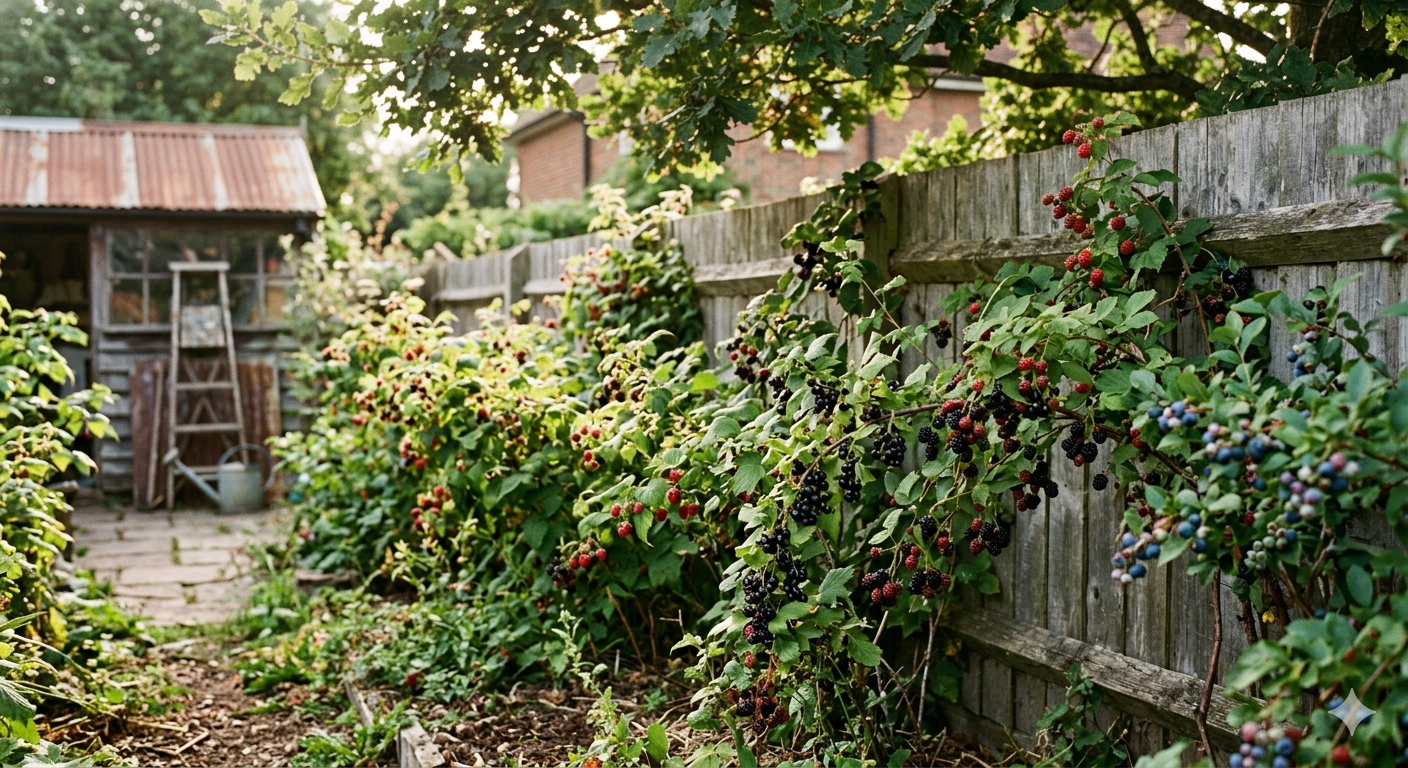
Blackberries, particularly the modern thornless varieties, produce 10 to 20 pounds per plant with very little effort. The move that makes both of these even more valuable is planting summer-bearing and fall-bearing varieties together. Do that, and your fresh berry harvest stretches from June all the way through October rather than arriving all at once in a two-week window that you’re scrambling to keep up with.
The Honest Case for Thinking Small
None of this is a knock on fruit trees. A mature apple tree on a warm September morning is one of the better things a garden can offer. But if you’re starting from scratch, or if you have limited space and you’re trying to figure out how to get the most food from it in a reasonable amount of time, the math on these shrubs is hard to ignore.
Most of them establish in a single season, produce meaningful harvests within two to three years, and keep going for decades with very little asking. Several of them improve the soil around them. Several of them fill harvest windows that nothing else touches. Most of them fit in spaces that a fruit tree couldn’t even think about occupying.
Our grandparents grew food because they had to, and they got very good at figuring out what gave back the most for what they put in. These bushes are exactly that kind of plant. Not flashy, not complicated, not requiring a degree in horticulture to manage.
They just grow, and they just produce, year after year.
That’s the kind of garden we’re interested in building here.
Are any of these already growing in your yard, or are you thinking about adding some this season? Drop your questions and experiences in the comments — we’d love to hear what’s working for you.
My Garden Green | mygardengreen.com